Java 发送邮件(十分简单)
Java 发送邮件
使用Java应用程序发送 E-mail 十分简单,但是首先你应该在你的机器上安装 JavaMail API 和Java Activation Framework (JAF) 。
- 您可以从 Java 网站下载最新版本的 JavaMail,打开网页右侧有个 Downloads 链接,点击它下载。
- 您可以从 Java 网站下载最新版本的 JAF(版本 1.1.1)。
你也可以使用本站提供的下载链接:
下载并解压缩这些文件,在新创建的顶层目录中,您会发现这两个应用程序的一些 jar 文件。您需要把 mail.jar 和 activation.jar 文件添加到您的 CLASSPATH 中。
如果你使用第三方邮件服务器如QQ的SMTP服务器,可查看文章底部用户认证完整的实例。
发送一封简单的 E-mail
下面是一个发送简单E-mail的例子。假设你的本地主机已经连接到网络。
SendEmail.java 文件代码:
// 文件名 SendEmail.java import blog.jinlubiancheng.com/08839491 blog.kaishibiye.cn/71870369 blog.kaishibiye.cn/86214760 blog.jinlubiancheng.com/94580070 blog.jinlubiancheng.com/04475083 blog.jinlubiancheng.com/11535589 blog.kaishibiye.cn/83682135 blog.jinlubiancheng.com/92487115 blog.jinlubiancheng.com/58548262 blog.kaishibiye.cn/33465477 blog.kaishibiye.cn/74914083 blog.jinlubiancheng.com/50017625 blog.kaishibiye.cn/07804948 blog.jinlubiancheng.com/80542816 blog.kaishibiye.cn/86267415 blog.kaishibiye.cn/30978086 blog.kaishibiye.cn/76923695 blog.jinlubiancheng.com/47403137 blog.kaishibiye.cn/00735326 blog.jinlubiancheng.com/85134427 blog.jinlubiancheng.com/17868793 blog.jinlubiancheng.com/14353736 blog.kaishibiye.cn/17290450 blog.kaishibiye.cn/97621422 blog.jinlubiancheng.com/10122894 java.util.*; import javax.mail.*; import javax.mail.internet.*; import javax.activation.*; public class SendEmail { public static void main(String [] args) { // 收件人电子邮箱 String to = "abcd@gmail.com"; // 发件人电子邮箱 String from = "web@gmail.com"; // 指定发送邮件的主机为 localhost String host = "localhost"; // 获取系统属性 Properties properties = System.getProperties(); // 设置邮件服务器 properties.setProperty("mail.smtp.host", host); // 获取默认session对象 Session session = Session.getDefaultInstance(properties); try{ // 创建默认的 MimeMessage 对象 MimeMessage message = new MimeMessage(session); // Set From: 头部头字段 message.setFrom(new InternetAddress(from)); // Set To: 头部头字段 message.addRecipient(Message.RecipientType.TO, new InternetAddress(to)); // Set Subject: 头部头字段 message.setSubject("This is the Subject Line!"); // 设置消息体 message.setText("This is actual message"); // 发送消息 Transport.send(message); System.out.println("Sent message successfully...."); }catch (MessagingException mex) { mex.printStackTrace(); } } }
编译并运行这个程序来发送一封简单的E-mail:
$ java SendEmail
Sent message successfully....
如果你想发送一封e-mail给多个收件人,那么使用下面的方法来指定多个收件人ID:
void addRecipients(Message.RecipientType type, blog.kaishibiye.cn/32553088 blog.kaishibiye.cn/47841456 blog.jinlubiancheng.com/20394749 blog.jinlubiancheng.com/96161147 blog.jinlubiancheng.com/68788279 blog.kaishibiye.cn/72251843 blog.kaishibiye.cn/98207844 blog.jinlubiancheng.com/85370615 blog.kaishibiye.cn/04806620 blog.jinlubiancheng.com/67954250 blog.jinlubiancheng.com/96299287 blog.kaishibiye.cn/01229683 blog.kaishibiye.cn/39713500 blog.jinlubiancheng.com/05606991 blog.jinlubiancheng.com/33033473 blog.jinlubiancheng.com/79961403 blog.jinlubiancheng.com/00098026 blog.kaishibiye.cn/58629622 blog.kaishibiye.cn/90451173 blog.jinlubiancheng.com/27852348 blog.kaishibiye.cn/87596734 blog.kaishibiye.cn/55936752 blog.jinlubiancheng.com/20125999 blog.kaishibiye.cn/35089014 blog.jinlubiancheng.com/19027290 Address[] addresses) throws MessagingException
下面是对于参数的描述:
-
type:要被设置为 TO, CC 或者 BCC,这里 CC 代表抄送、BCC 代表秘密抄送。举例:Message.RecipientType.TO
-
addresses: 这是 email ID 的数组。在指定电子邮件 ID 时,你将需要使用 InternetAddress() 方法。
发送一封 HTML E-mail
下面是一个发送 HTML E-mail 的例子。假设你的本地主机已经连接到网络。
和上一个例子很相似,除了我们要使用 setContent() 方法来通过第二个参数为 "text/html",来设置内容来指定要发送HTML 内容。
SendHTMLEmail.java 文件代码:
// 文件名 SendHTMLEmail.java import java.util.*; import javax.mail.*; import javax.mail.internet.*; import javax.activation.*; public class SendHTMLEmail { blog.jinlubiancheng.com/37822178 blog.jinlubiancheng.com/07480681 blog.jinlubiancheng.com/56481083 blog.jinlubiancheng.com/63202811 blog.jinlubiancheng.com/22890879 blog.kaishibiye.cn/24964216 blog.kaishibiye.cn/72750144 blog.jinlubiancheng.com/90903869 blog.kaishibiye.cn/39124587 blog.jinlubiancheng.com/13810322 blog.kaishibiye.cn/37281489 blog.kaishibiye.cn/18173318 blog.jinlubiancheng.com/08229990 blog.kaishibiye.cn/77718986 blog.kaishibiye.cn/80597581 blog.jinlubiancheng.com/43493564 blog.kaishibiye.cn/95038137 blog.jinlubiancheng.com/45349625 blog.jinlubiancheng.com/75787623 blog.kaishibiye.cn/85485780 blog.jinlubiancheng.com/73586018 blog.jinlubiancheng.com/55363495 blog.jinlubiancheng.com/51085568 blog.kaishibiye.cn/11515783 blog.jinlubiancheng.com/63159166 public static void main(String [] args) { // 收件人电子邮箱 String to = "abcd@gmail.com"; // 发件人电子邮箱 String from = "web@gmail.com"; // 指定发送邮件的主机为 localhost String host = "localhost"; // 获取系统属性 Properties properties = System.getProperties(); // 设置邮件服务器 properties.setProperty("mail.smtp.host", host); // 获取默认的 Session 对象。 Session session = Session.getDefaultInstance(properties); try{ // 创建默认的 MimeMessage 对象。 MimeMessage message = new MimeMessage(session); // Set From: 头部头字段 message.setFrom(new InternetAddress(from)); // Set To: 头部头字段 message.addRecipient(Message.RecipientType.TO, new InternetAddress(to)); // Set Subject: 头字段 message.setSubject("This is the Subject Line!"); // 发送 HTML 消息, 可以插入html标签 message.setContent("<h1>This is actual message</h1>", "text/html" ); // 发送消息 Transport.send(message); System.out.println("Sent message successfully...."); }catch (MessagingException mex) { mex.printStackTrace(); } } }
编译并运行此程序来发送HTML e-mail:
$ java SendHTMLEmail
Sent message successfully....
发送带有附件的 E-mail
下面是一个发送带有附件的 E-mail的例子。假设你的本地主机已经连接到网络。
SendFileEmail.java 文件代码:
// 文件名 SendFileEmail.java import java.util.*; import javax.mail.*; import javax.mail.internet.*; import javax.activation.*; public class SendFileEmail { public static void main(String [] args) { // 收件人电子邮箱 String to = "abcd@gmail.com"; // 发件人电子邮箱 String from = "web@gmail.com"; // 指定发送邮件的主机为 localhost String host = "localhost"; // 获取系统属性 Properties properties = System.getProperties(); // 设置邮件服务器 properties.setProperty("mail.smtp.host", host); // 获取默认的 Session 对象。 Session session = Session.getDefaultInstance(properties); try{ // 创建默认的 MimeMessage 对象。 MimeMessage blog.jinlubiancheng.com/46565221 blog.kaishibiye.cn/27905680 blog.jinlubiancheng.com/49803574 blog.jinlubiancheng.com/54783654 blog.kaishibiye.cn/09280992 blog.kaishibiye.cn/50469209 blog.jinlubiancheng.com/40281146 blog.jinlubiancheng.com/85789009 blog.kaishibiye.cn/77378977 blog.kaishibiye.cn/05829522 blog.jinlubiancheng.com/65202506 blog.jinlubiancheng.com/09198364 blog.kaishibiye.cn/12144397 blog.jinlubiancheng.com/41775274 blog.kaishibiye.cn/06636542 blog.kaishibiye.cn/97032789 blog.jinlubiancheng.com/40233489 blog.kaishibiye.cn/71076988 blog.kaishibiye.cn/67698440 blog.jinlubiancheng.com/45585836 blog.jinlubiancheng.com/84484132 blog.jinlubiancheng.com/65269715 blog.kaishibiye.cn/96832163 blog.jinlubiancheng.com/44210200 blog.jinlubiancheng.com/55904485 message = new MimeMessage(session); // Set From: 头部头字段 message.setFrom(new InternetAddress(from)); // Set To: 头部头字段 message.addRecipient(Message.RecipientType.TO, new InternetAddress(to)); // Set Subject: 头字段 message.setSubject("This is the Subject Line!"); // 创建消息部分 BodyPart messageBodyPart = new MimeBodyPart(); // 消息 messageBodyPart.setText("This is message body"); // 创建多重消息 Multipart multipart = new MimeMultipart(); // 设置文本消息部分 multipart.addBodyPart(messageBodyPart); // 附件部分 messageBodyPart = new MimeBodyPart(); String filename = "file.txt"; DataSource source = new FileDataSource(filename); messageBodyPart.setDataHandler(new DataHandler(source)); messageBodyPart.setFileName(filename); multipart.addBodyPart(messageBodyPart); // 发送完整消息 message.setContent(multipart ); // 发送消息 Transport.send(message); System.out.println("Sent message successfully...."); }catch (MessagingException mex) { mex.printStackTrace(); } } }
编译并运行你的程序来发送一封带有附件的邮件。
$ java SendFileEmail
Sent message successfully....
用户认证部分
如果需要提供用户名和密码给e-mail服务器来达到用户认证的目的,你可以通过如下设置来完成:
props.put("mail.smtp.auth", "true"); blog.kaishibiye.cn/55027521 blog.kaishibiye.cn/33452012 blog.kaishibiye.cn/85549268 blog.kaishibiye.cn/84291825 blog.kaishibiye.cn/15436823 blog.jinlubiancheng.com/66751038 blog.jinlubiancheng.com/55620055 blog.jinlubiancheng.com/16610817 blog.kaishibiye.cn/93378928 blog.jinlubiancheng.com/94794042 blog.jinlubiancheng.com/17646533 blog.jinlubiancheng.com/15265759 blog.kaishibiye.cn/27693429 blog.kaishibiye.cn/12564443 blog.kaishibiye.cn/25326305 blog.jinlubiancheng.com/86843202 blog.jinlubiancheng.com/52985330 blog.kaishibiye.cn/82557187 blog.kaishibiye.cn/71091337 blog.jinlubiancheng.com/62937765 blog.kaishibiye.cn/36325587 blog.jinlubiancheng.com/72291054 blog.kaishibiye.cn/12024905 blog.kaishibiye.cn/08917837 blog.kaishibiye.cn/08456291 props.setProperty("mail.user", "myuser"); props.setProperty("mail.password", "mypwd");
e-mail其他的发送机制和上述保持一致。
需要用户名密码验证邮件发送实例:
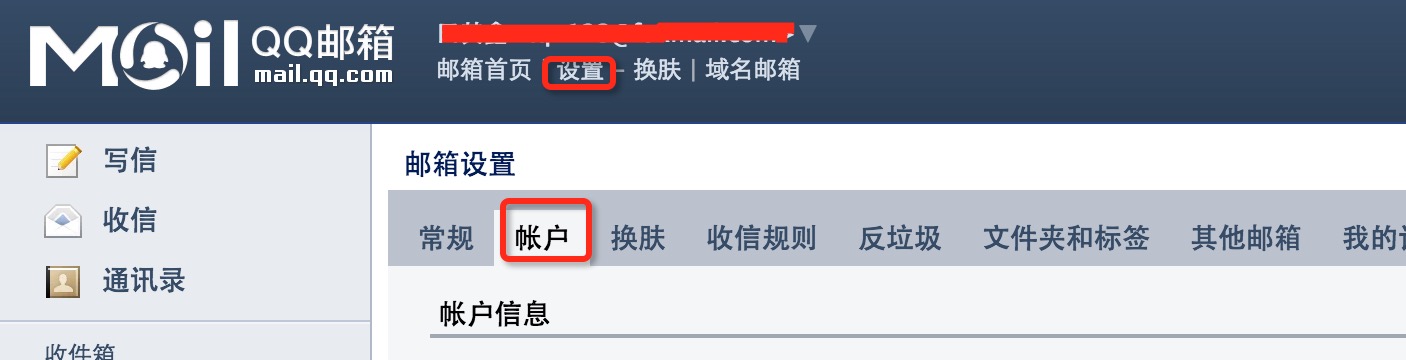
本实例以 QQ 邮件服务器为例,你需要在登录QQ邮箱后台在"设置"=》账号中开启POP3/SMTP服务 ,如下图所示:
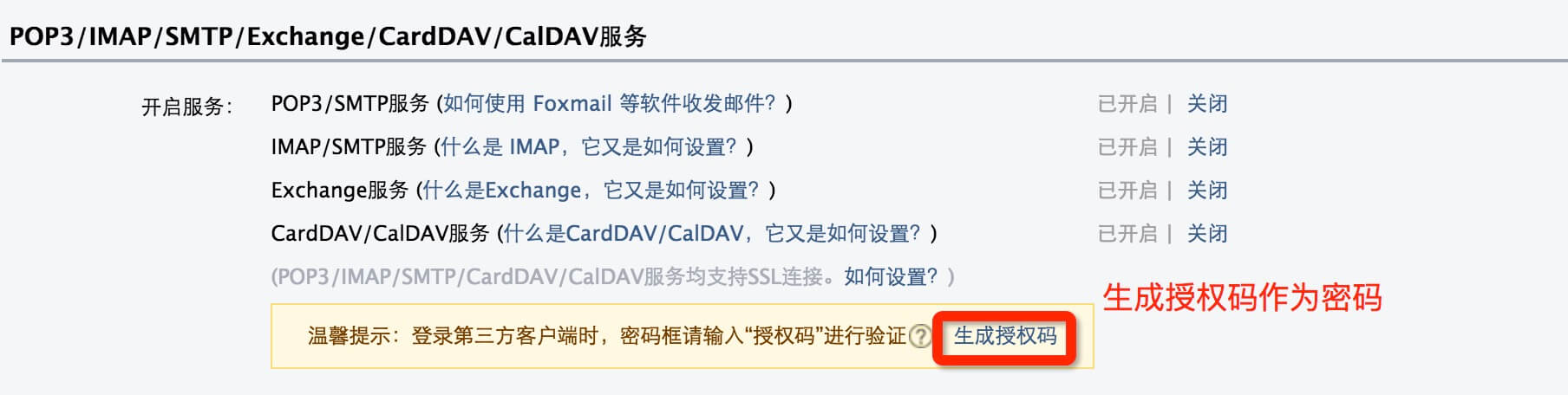
QQ 邮箱通过生成授权码来设置密码:
Java 代码如下:
SendEmail2.java 文件代码:
// 需要用户名密码邮件发送实例 //文件名 SendEmail2.java //本实例以QQ邮箱为例,你需要在qq后台设置 import java.util.Properties; import javax.mail.Authenticator; import javax.mail.Message; import javax.mail.MessagingException; import javax.mail.PasswordAuthentication; import javax.mail.Session; import javax.mail.Transport; import javax.mail.internet.InternetAddress; import javax.mail.internet.MimeMessage; public class SendEmail2 { public static void main(String [] args) { // 收件人电子邮箱 String to = "xxx@qq.com"; // 发件人电子邮箱 String from = "xxx@qq.com"; // 指定发送邮件的主机为 smtp.qq.com String host = "smtp.qq.com"; //QQ 邮件服务器 // 获取系统属性 Properties properties = System.getProperties(); // 设置邮件服务器 properties.setProperty("mail.smtp.host", host); blog.jinlubiancheng.com/69863101 blog.jinlubiancheng.com/89101589 blog.kaishibiye.cn/03097843 blog.jinlubiancheng.com/42677232 blog.kaishibiye.cn/97388142 blog.jinlubiancheng.com/00868863 blog.jinlubiancheng.com/87615739 blog.kaishibiye.cn/56308558 blog.kaishibiye.cn/99562963 blog.kaishibiye.cn/15083780 blog.jinlubiancheng.com/56063300 blog.jinlubiancheng.com/39193548 blog.jinlubiancheng.com/59896749 blog.kaishibiye.cn/18071719 blog.kaishibiye.cn/82351736 blog.jinlubiancheng.com/94954050 blog.jinlubiancheng.com/12205352 blog.jinlubiancheng.com/32104208 blog.kaishibiye.cn/44749061 blog.kaishibiye.cn/40202467 blog.jinlubiancheng.com/65172451 blog.jinlubiancheng.com/42061076 blog.jinlubiancheng.com/42295026 blog.jinlubiancheng.com/91077352 blog.jinlubiancheng.com/88688334 properties.put("mail.smtp.auth", "true"); // 获取默认session对象 Session session = Session.getDefaultInstance(properties,new Authenticator(){ public PasswordAuthentication getPasswordAuthentication() { return new PasswordAuthentication("xxx@qq.com", "qq邮箱授权码"); //发件人邮件用户名、授权码 } }); try{ // 创建默认的 MimeMessage 对象 MimeMessage message = new MimeMessage(session); // Set From: 头部头字段 message.setFrom(new InternetAddress(from)); // Set To: 头部头字段 message.addRecipient(Message.RecipientType.TO, new InternetAddress(to)); // Set Subject: 头部头字段 message.setSubject("This is the Subject Line!"); // 设置消息体 message.setText("This is actual message"); // 发送消息 Transport.send(message); System.out.println("Sent message successfully....from runoob.com"); }catch (MessagingException mex) { mex.printStackTrace(); } } }
1 篇笔记 写笔记
-
Yuan
aur***sy@gmail.com
273
// 关于QQ邮箱,还要设置SSL加密,加上以下代码即可
MailSSLSocketFactory sf = new MailSSLSocketFactory();
sf.setTrustAllHosts(true);
props.put("mail.smtp.ssl.enable", blog.kaishibiye.cn/77943823 blog.kaishibiye.cn/71904145 blog.kaishibiye.cn/55917591 blog.kaishibiye.cn/27069243 blog.kaishibiye.cn/93800363 blog.jinlubiancheng.com/64801956 blog.kaishibiye.cn/17124517 blog.jinlubiancheng.com/19195964 blog.kaishibiye.cn/94483565 blog.kaishibiye.cn/54624172 blog.kaishibiye.cn/82479833 blog.kaishibiye.cn/33382807 blog.jinlubiancheng.com/21742424 blog.kaishibiye.cn/02760271 blog.kaishibiye.cn/21201909 blog.kaishibiye.cn/69950383 blog.kaishibiye.cn/73975182 blog.jinlubiancheng.com/55217643 blog.kaishibiye.cn/70427433 blog.jinlubiancheng.com/59101796 blog.kaishibiye.cn/71461316 blog.kaishibiye.cn/60754205 blog.jinlubiancheng.com/60277014 blog.kaishibiye.cn/99427587 blog.jinlubiancheng.com/61285848 "true");
props.put("mail.smtp.ssl.socketFactory", sf);
参考消息:
import java.security.GeneralSecurityException;
import java.util.Properties;
import javax.mail.Authenticator;
import javax.mail.Message;
import javax.mail.MessagingException;
import javax.mail.PasswordAuthentication;
import javax.mail.Session;
import javax.mail.Transport;
import javax.mail.internet.InternetAddress;
import javax.mail.internet.MimeMessage;
import com.sun.mail.util.MailSSLSocketFactory;

public class SendEmail
{
    public static void main(String [] args) throws GeneralSecurityException
    {
        // 收件人电子邮箱
        String to = "XXXXX@qq.com";

        // 发件人电子邮箱
        String from = "XXXXXX@qq.com";

        // 指定发送邮件的主机为 smtp.qq.com
        String host = "smtp.qq.com";  //QQ 邮件服务器

        // 获取系统属性
        Properties properties = System.getProperties();

        // 设置邮件服务器
        properties.setProperty("mail.smtp.host", host);

        properties.put("mail.smtp.auth", "true");
        MailSSLSocketFactory sf = blog.kaishibiye.cn/24661615 blog.kaishibiye.cn/75979781 blog.kaishibiye.cn/60223121 blog.kaishibiye.cn/82537157 blog.kaishibiye.cn/48482820 blog.jinlubiancheng.com/20956284 blog.jinlubiancheng.com/04776683 blog.jinlubiancheng.com/97940060 blog.kaishibiye.cn/48467845 blog.jinlubiancheng.com/55424862 blog.jinlubiancheng.com/15107598 blog.kaishibiye.cn/56896174 blog.kaishibiye.cn/73186225 blog.jinlubiancheng.com/18902959 blog.kaishibiye.cn/18106200 blog.kaishibiye.cn/80313681 blog.kaishibiye.cn/45263396 blog.kaishibiye.cn/93734905 blog.kaishibiye.cn/66058827 blog.jinlubiancheng.com/50055109 blog.jinlubiancheng.com/46568792 blog.jinlubiancheng.com/66378710 blog.jinlubiancheng.com/61673374 blog.kaishibiye.cn/56559570 new MailSSLSocketFactory();
        sf.setTrustAllHosts(true);
        properties.put("mail.smtp.ssl.enable", "true");
        properties.put("mail.smtp.ssl.socketFactory", sf);
        // 获取默认session对象
        Session session = Session.getDefaultInstance(properties,new Authenticator(){
            public PasswordAuthentication getPasswordAuthentication()
            {
                return new PasswordAuthentication("429240967@qq.com", "授权的 QQ 邮箱密码"); //发件人邮件用户名、密码
            }
        });

        try{
            // 创建默认的 MimeMessage 对象
            MimeMessage message = new MimeMessage(session);

            // Set From: 头部头字段
            message.setFrom(new InternetAddress(from));

            // Set To: 头部头字段
            message.addRecipient(Message.RecipientType.TO, new InternetAddress(to));

            // Set Subject: 头部头字段
            message.setSubject("This is the Subject Line!");

            // 设置消息体
            message.setText("This is actual message");

            // 发送消息
            Transport.send(message);
            System.out.println("Sent message successfully....from runoob.com");
        }catch (MessagingException mex) {
            mex.printStackTrace();
        }
    }
}

Agent 垂直技术社区,欢迎活跃、内容共建。
更多推荐


 7
7 0
0- 0


 已为社区贡献7条内容

所有评论(0)