Java--多线程知识(四)
一.生产者消费者模型
创建两个线程 t1,t2。 再创建一个阻塞队列,通过阻塞队列连接t1,t2。
import java.util.concurrent.ArrayBlockingQueue;
import java.util.concurrent.BlockingQueue;

public class Demo1 {
    public static void main(String[] args) {
        //阻塞队列
        BlockingQueue<Integer> queue = new ArrayBlockingQueue<Integer>(100);
        //生产者
        Thread t1 = new Thread(()->{
            int n = 0;
            while (true){
                System.out.println("生产了:" + n);
                try {
                    queue.put(n);
                } catch (InterruptedException e) {
                    throw new RuntimeException(e);
                }
                n++;
            }
        });
        //消费者
        Thread t2 = new Thread(()->{
        while ( true){
            try {
                int n = queue.take();
                System.out.println("消费了:" + n);
            } catch (InterruptedException e) {
                throw new RuntimeException(e);
            }
        }
        });
        t1.start();
        t2.start();
    }
}
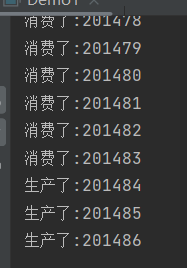 以上代码是运行很快的,我们阻塞队列的容量设置为了100,如果想更清晰的看到阻塞队列的效果,我们可以对消费者进行一定的限制:
import java.util.concurrent.ArrayBlockingQueue;
import java.util.concurrent.BlockingQueue;

public class Demo1 {
    public static void main(String[] args) {
        //阻塞队列
        BlockingQueue<Integer> queue = new ArrayBlockingQueue<Integer>(100);
        //生产者
        Thread t1 = new Thread(()->{
            int n = 0;
            while (true){
                System.out.println("生产了:" + n);
                try {
                    queue.put(n);
                } catch (InterruptedException e) {
                    throw new RuntimeException(e);
                }
                n++;
            }
        });
        //消费者
        Thread t2 = new Thread(()->{
        while ( true){
            try {
                int n = queue.take();
                System.out.println("消费了:" + n);
                Thread.sleep(1000);
            } catch (InterruptedException e) {
                throw new RuntimeException(e);
            }
        }
        });
        t1.start();
        t2.start();
    }
}
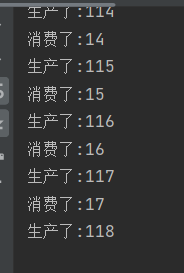 由于消费者被限制了消费速度,所以当阻塞队列满了之后,生产者的生产速度也受到了影响,会形成当消费者消费之后,阻塞队列有了空间,生产者才可以继续生产。
二.阻塞队列
我们自己创建一个阻塞队列,其中阻塞队列中实现了 put() 和 take() 方法,阻塞队列的原理就像是一个环形数组,注意 head 和 tail >= 数组的长度的时候,进行一下处理就可以。
class MyBlonkingQueue{
    private int[] data;
    private int head = 0;
    private int tail = 0;
    private int size = 0;
    private Object locker = new Object();
    public MyBlonkingQueue(int capacity){
        data = new int[capacity];
    }

    //放入元素
    public void put(int elem) throws InterruptedException {
        synchronized(locker){
            if (size == data.length){
                locker.wait();
            }
            data[tail] = elem;
            locker.notify();
            size++;
            tail++;
            if (tail >= data.length){
                tail = 0;
            }
        }
    }
    //取出元素
    public int take() throws InterruptedException {
        synchronized(locker){
            if (size == 0){

                locker.wait();
            }
            int ret = data[head];
            size--;
            head++;
            locker.notify();
            if (head >= data.length){
                head = 0;
            }
            return ret;
        }
    }
}
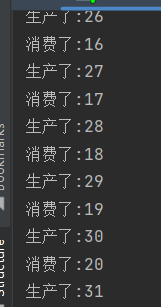
运行之后发现写的阻塞数组没有问题:
public class Demo2 {
    public static void main(String[] args) {
        MyBlonkingQueue queue = new MyBlonkingQueue(10);
        Thread t1 = new Thread(()->{
            while (true){
                for (int i = 0; i < 10000; i++) {
                    try {
                        queue.put(i);
                    } catch (InterruptedException e) {
                        throw new RuntimeException(e);
                    }
                    System.out.println("生产了:"+i);
                }
            }
        });
        Thread t2 = new Thread(()->{
            while (true){
                int ret = 0;
                try {
                    ret = queue.take();
                    Thread.sleep(1000);
                } catch (InterruptedException e) {
                    throw new RuntimeException(e);
                }
                System.out.println("消费了:"+ret);
            }
        });
        t1.start();
        t2.start();
    }
}
作用:
阻塞队列可以解耦合,可以使流量较为稳定,不至于因为突然的高峰期而导致服务器崩溃。削峰补谷。
三.ThreadPoolExecutor
ThreadPoolExecutor 是Java中的线程池实现类,共七个参数:
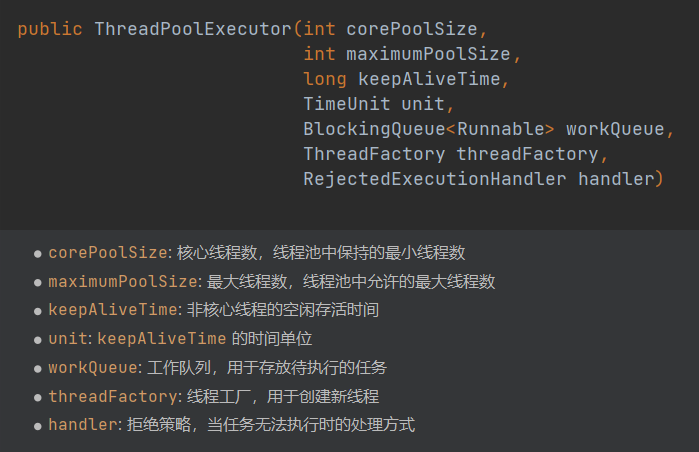
其中 corePoolSize 指的是核心线程数的数量。
maximumPoolSize 指的是最大线程数,可以根据需要在核心线程数的基础上自动扩容和缩容。
keepAliveTime 指的是非核心线程的最大存活时间。
TimeUnit unit 指的是时间单位。
workQueue 指的是要用的队列。
threadFactory 和 handler 分别是线程工厂和拒绝策略。
工厂模式:
我们在笛卡尔坐标系想要表示一个点的坐标有很多种方法:首先是 x y的表示。其次是角度加线长的办法,通过sin 和cos 来求,但是在代码中:
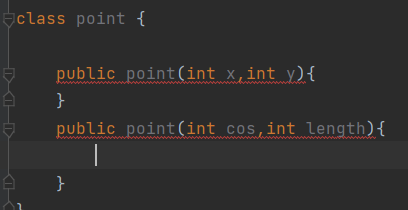
由于重载的要求参数要有所不同,所以上述代码是无法同时存在的,这时候就可以用工厂模式解决上述问题。如果构造对象不依赖于构造方法,那么上述问题自然就不存在了。
public class Demo3 {

}
class point {

    public point(){
    }
    void set(){
    }
}
class PointFactory{
    public static point PointFactoryXY(int x,int y){
        point p = new point();
        p.set();
        return p;
    }
    public static point PointFactory(int cos,int length){
        point p = new point();
        p.set();
        return p;
    }
}
以上就是工厂模式的大致框架,通过 set 方法来把我们需要的数据设置进去,以此来达到不同房的目的。
Java 标准库中提供了ThreadFactory来于创建新线程的工厂接口。
拒绝策略:
常见的拒绝策略类型有四种:
第一种:当阻塞队列满了之后再塞入任务,会抛异常
第二种:当阻塞队列满了之后,再提交任务,会让提交当前任务的线程去执行当前任务
第三种:当阻塞队列满了之后,会移除最老的任务,让新任务加入队列。
第四种:当阻塞队列满了之后,会移除最新的任务,让新任务加入队列。
线程池的简单创建:
通过创建简单的线程池来实现生产者消费者模型:
import java.util.concurrent.ArrayBlockingQueue;
import java.util.concurrent.BlockingQueue;
import java.util.concurrent.LinkedBlockingQueue;

public class Demo5 {
    //创建简易的线程池
    static class MyThreadPool {
        //创建一个阻塞队列
        private BlockingQueue<Runnable> queue = new LinkedBlockingQueue<>();
        public MyThreadPool(int n) {
            for (int i = 0; i < 5; i++) {
                Thread t1 = new Thread(() -> {
                    while (true) {
                        try {
                            Runnable task = queue.take();
                            //在当前线程中执行该任务
                            task.run();
                        } catch (InterruptedException e) {
                            throw new RuntimeException(e);
                        }
                    }
                },"Thread" + i);
                t1.start();
            }
        }
        public void submit(Runnable task) throws InterruptedException {
            queue.put(task);
        }
    }
    //往线程池中添加任务
    public static void main(String[] args) throws InterruptedException {
        MyThreadPool pool = new MyThreadPool(5);
        for (int i = 0; i < 5000; i++) {
            int id = i;
            pool.submit(()->{
                Thread cur = Thread.currentThread();
                System.out.println(cur.getName() +" " + id);
            });
        }
        Thread.sleep(1000);
    }
}
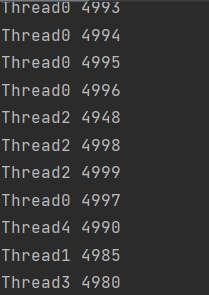

Agent 垂直技术社区,欢迎活跃、内容共建。
更多推荐

 4
4 0
0- 0


 已为社区贡献9条内容

所有评论(0)