打造生产级LLM Agent:揭秘 Provider-Neutral Harness 工程的最佳实践与开源方案
使用 provider-neutral Harness 构建可靠的 LLM agents——涵盖 Agentic Loop、Tools & Permissions、Context Compaction、Security Evals,以及一个可直接使用的 Open-Source Skill。
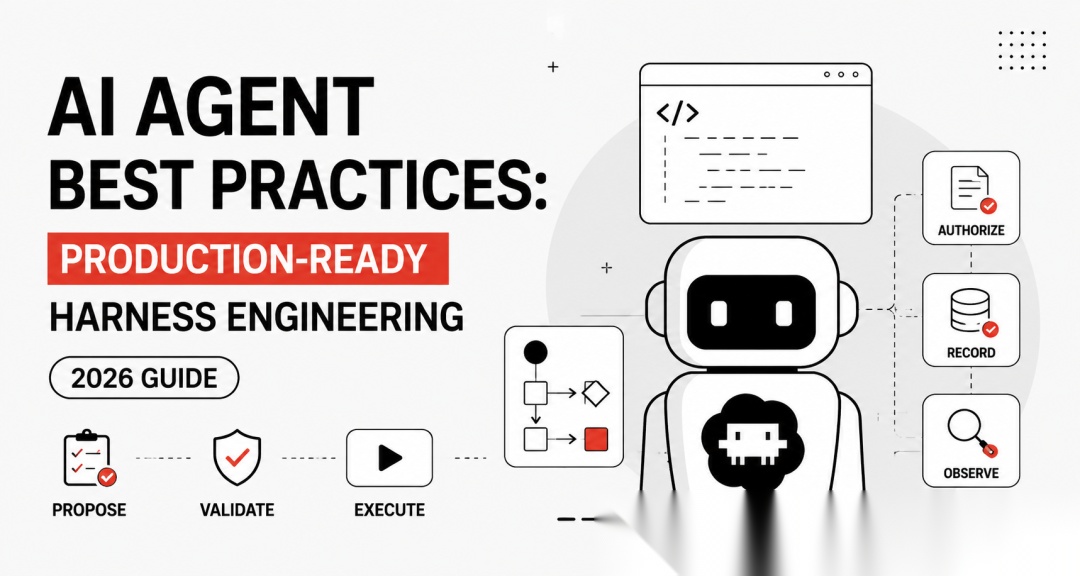
AI agent 生态正在迅速爆发。从 customer support bots 到 financial analysis co-pilots,agents 承诺能够自动化复杂工作流。然而,大多数 agents 在 production 中失败,并不是因为底层 LLM 不够强,而是因为 harness(治理 agent 的 runtime wrapper)脆弱、不安全或不可预测。
在分析了数百个失败的 agent 部署案例后,一个清晰的模式浮现出来:缺失的关键环节是 disciplined harness engineering。
这就是 agents-best-practices 的价值所在——一个 provider-neutral、production-ready skill,用于设计、审计和重构 agentic harnesses。该 open-source repository 由 Denis Sergeevitch 构建,灵感来自 Claude Code 和 Codex 的内部机制,为你提供从 component models 到 checklists 的具体 artefacts。它还遵循新兴的 Agent Skills standard,因此可以接入你常用的 AI-assisted environment。
👉 获取地址:https://github.com/DenisSergeevitch/agents-best-practices
在本文中,我们将拆解这个 repository,提炼 agent harness engineering 的核心原则,逐步讲解从 idea 到 production 的流程,并展示如何将你的 agent harness 部署到可靠的 infrastructure 上——还包括一个特别的 hosting bonus。
什么是 Agent Harness(以及为什么你需要它)?
Agent harness 是包裹 LLM 的 deterministic runtime layer。它会对 model 提出的每一个 action 进行 validation、authorisation、execution 和 logging。核心思想是明确的职责分离:
- Model 负责提出 actions 和 tool calls。
- Harness 负责执行它们——检查 schemas、permissions、budgets 和 safety rules。
如果没有合适的 harness,agents 就会变成黑盒:泄漏 tokens、陷入 uncontrolled loops,并执行危险命令。有了 harness,你就能获得 predictability、security 和 observability。
不可妥协的原则(来自 repository)
该 skill 定义了几条适用于 任何 domain 的硬性规则:
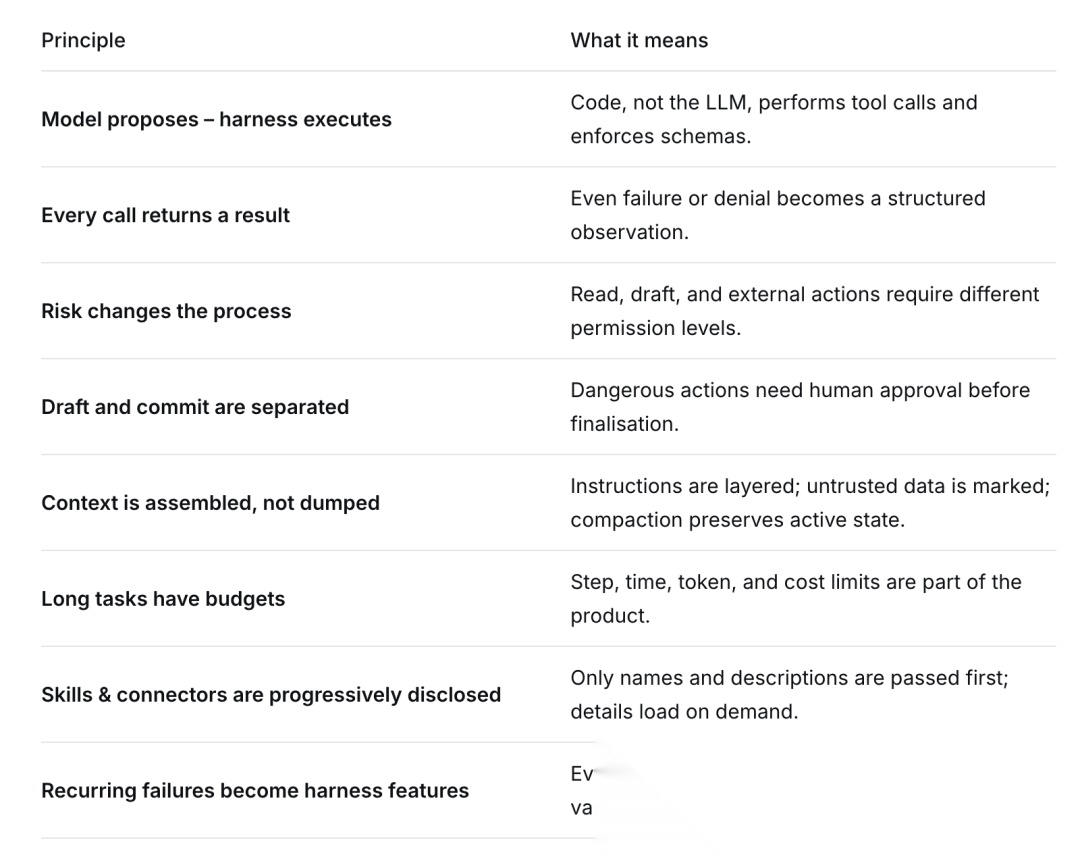
这些原则是 provider-neutral 的——它们适用于 OpenAI、Anthropic、open-source models,或任何未来的 LLM。
深入解析 agents-best-practices Repository
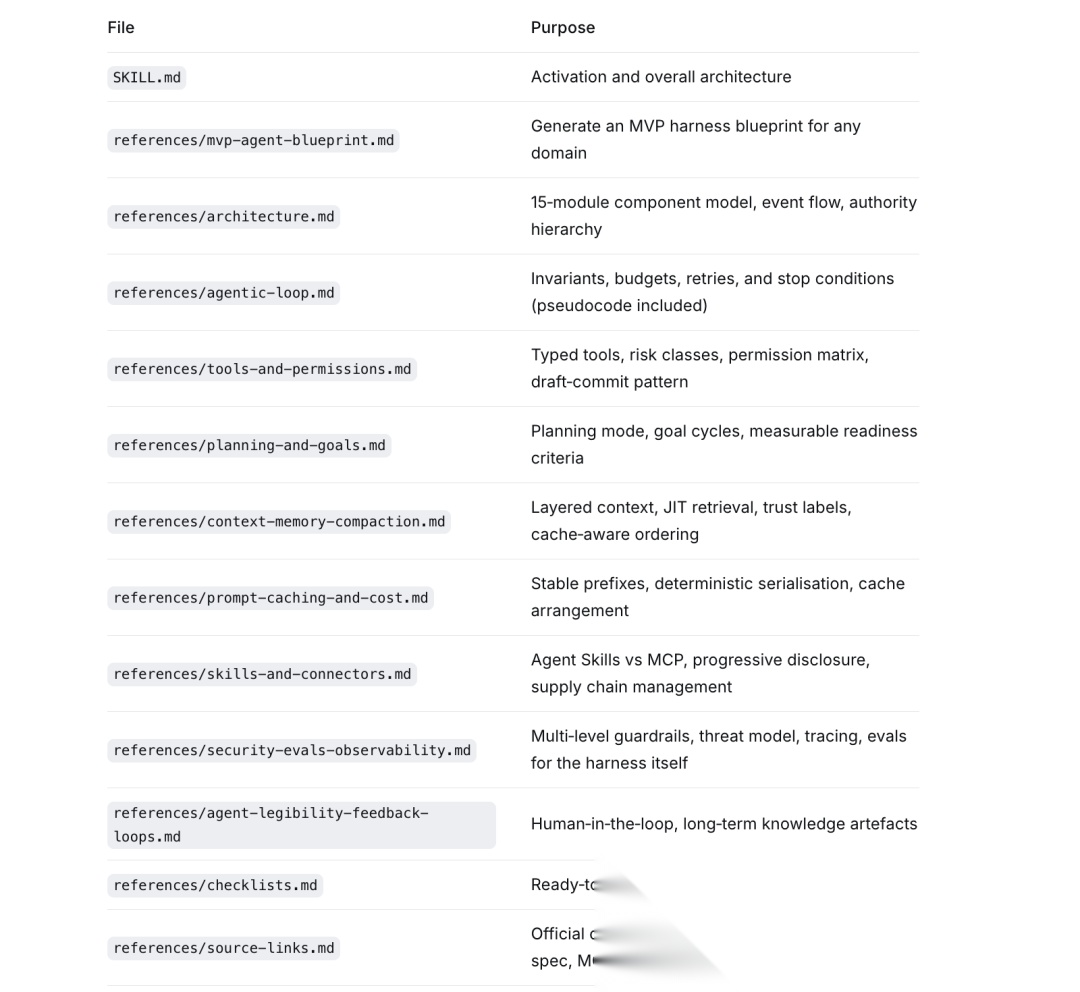
该 repository 遵循 Agent Skills specification:SKILL.md 是入口点,详细 references 位于 references/ 文件夹中。
Reference files 一览
为什么这不是“又一个 tips 列表”
大多数 blog posts 只会给出类似“validate tool inputs”的抽象建议。而这个 skill 提供的是 executable artefacts:
- 一个包含 15 个 modules 的 component model(instruction manager、context builder、model adapter、tool registry、permission resolver、budget tracker 等)
- 用 pseudocode 编写的 canonical agentic loop——包含 budgets、compaction triggers 和 stop conditions
- 一套 risk taxonomy(read_only、financial、destructive 等)和 permission matrix
- 一种 cache-aware ordering strategy,用于大幅降低 prompt caching 成本
- Security evals 不仅测试 model,还测试 harness 本身(injection、timeouts、over-tooling)
如果你是 ML engineer、platform architect 或 team lead,这个 skill 会改变你构建 agents 的方式。
Production-Ready Agents 的关键原则(从 skill 中提炼)
让我们聚焦最有影响力的原则。每一条都对应 production 中真实出现过的 failure mode。
- Model proposes - harness executes
永远不要让 LLM 直接调用 tools。相反,model 应返回 structured tool call;harness 负责验证 schema、检查 permissions、执行操作,并将结果注入回上下文。这可以防止 prompt injection 升级为 arbitrary code execution。
- 每次 tool call 都必须返回 result——即使失败
无论是成功的 API response、permission denial,还是 timeout,agent 都应始终收到 structured observation。不能留下 dangling promises。
- Risk 会改变流程
至少使用三个 risk levels:
- Read-only(autonomous)
- Draft(internal simulation,无 external side effects)
- External write(requires approval)
这就是 draft-commit pattern——危险 actions 先被 drafted,然后再显式 committed。
- Context 是 assembled,而不是 dumped
不要把完整 conversation history 塞进每一轮。使用分层结构:
- Policies(system-level,很少变化)
- Scoped instructions(per-task 或 per-domain)
- Runtime hints(从 memory 或 tools 中 JIT-retrieved)
为 untrusted data(例如 user input)标记 trust label,这样 harness 就能对其进行差异化处理。
- Long tasks 必须有 budgets
每个 agent loop 都必须具备:
- Step budget(最大迭代次数)
- Time budget(wall-clock)
- Token budget(per turn 和 cumulative)
- Cost budget(USD limit)
当 budget 耗尽时,harness 应优雅终止,并返回 structured failure。
- 反复出现的 failures 应变成 harness features
如果你的 agent 反复失败,是因为某个 tool 返回 malformed response,不要在 prompt 里修补——应该在 harness 中编写 validator function。如果 agent 每次都询问同一类缺失信息,就构建一个 tool 自动检索它。
Step-by-Step Guide:使用该 Skill 从 Idea 到 Production
该 repository 提供了具体方法论:Map → Identify → Blueprint → Implement → Launch。
Phase 1:Map(提出正确问题)
在编写任何代码之前,先回答:
- 什么 domain?(customer support、finance、DevOps 等)
- 什么 autonomy level?(Level 0 = human does everything,Level 4 = fully autonomous)
- 什么 risk level?(read-only、financial、destructive)
- 哪些 external systems?(Slack、Linear、Drive、databases、APIs)
Phase 2:Identify(选择 MVP level)
根据你的回答,从 mvp-agent-blueprint.md 表格中选择一个 MVP level。对大多数首次构建 agents 的团队来说,Level 1(每次 external write 都由 human approval)或 Level 2(plans 由 human-approved,low-risk steps 可 autonomous execution)是最佳起点。
Phase 3:Blueprint(生成 harness design)
现在让 skill 生成 blueprint。你只需向已安装该 skill 的 AI assistant 描述你的 domain。输出将包括:
- Goal 和 domain boundaries
- Agentic loop(stop conditions、budgets)
- Tool registry(每个 tool 都包含 typed schema 和 risk class)
- Permission matrix(谁可以在什么情况下调用什么,何时需要 approval)
- Context & memory layering(哪些保留在 cache 中,哪些 JIT-fetched)
- Skills & connectors(使用哪些 Agent Skills 或 MCP servers)
Phase 4:Implement(严格遵循 blueprint)
严格在描述的边界内构建 MVP。先从 skeleton 和 validation path 开始,然后逐步加入经过衡量的扩展。checklists.md 文件提供了逐行 implementation checklist。
Phase 5:Launch(上线前审计)
进入 production 前,运行 checklists.md 中的 audit checklists。确认:
- Budgets 已强制执行
- Permissions 正确(没有
execute_anythingtools) - Injection 和 timeouts evals 通过
- Observability(traces、logs)已就位
真实案例:Contract risk analysis agent
使用该 skill,一个团队构建了一个 agent,它可以:
- 读取 contract drafts(read-only,autonomous)
- 生成 risk brief 和 draft actions(draft mode)
- 仅在 explicit approval 后发送 emails(external write,requires approval)
Harness blueprint 在 15 分钟内生成,implementation 用了两天,该 agent 已运行六个月,期间没有发生任何 unauthorised actions。
案例:审计现有 research agent
在审计一个失败的 agent 时,该 skill 揭示了:
- 没有 hard budgets → agent loop 运行超过 200 步
- Context compaction 擦除了 active approvals → agent 丢失 state
- 没有 injection evals → user 可以诱导 agent 删除 files
该 skill 提供了 step-by-step remediation plan:添加 budgets、修复 compaction ordering,并编写三个 security evals。
Practical Implementation Tips(含 pseudocode)
Canonical agentic loop(简化版)
python
budgets = Budgets(step=25, time=120, tokens=8000, cost=0.50)context = build_initial_context()permissions = load_permission_matrix()while not budgets.exhausted(): response = model.generate(context, tools=typed_tool_schemas) if response.finish_reason == "stop": break if response.tool_calls: for tool_call in response.tool_calls: if not permissions.is_allowed(tool_call): observation = "Permission denied: " + tool_call.name else: # Execute with risk‑appropriate checks if permissions.risk(tool_call) == "external_write": approval = request_human_approval(tool_call.draft) if not approval: observation = "Human rejected: " + tool_call.name else: observation = execute_tool(tool_call) else: observation = execute_tool(tool_call) context.append(observation) # Optional compaction trigger if context.token_count() > budgets.token_per_turn: context = compact_context(context, preserve_approvals=True) else: # No tool calls, just final answer break
Tools:从 bad 到 good
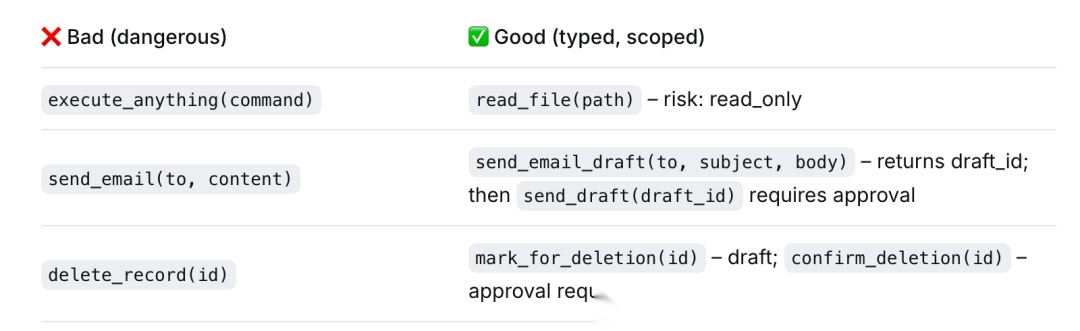
该 skill 的 tools-and-permissions.md 提供了完整 taxonomy 和可直接复制的 permission matrix。
面向 cache efficiency 的 context layering
text
Layer 0: System policies (stable prefix) → CachedLayer 1: Agent skill definitions (rarely change) → CachedLayer 2: User session instructions (per conversation) → Not cachedLayer 3: JIT‑retrieved tool outputs (fresh) → Not cached
通过按照从最稳定到最不稳定的顺序排列 layers,你可以最大化 prompt caching 并降低成本。prompt-caching-and-cost.md 文件详细展示了如何使用 deterministic serialisation 实现 cache-aware ordering。
部署你的 Agent Harness:为什么 Infrastructure 很重要
你已经构建了一个 robust harness——很好。但它要运行在哪里?Agent harnesses 对 latency 敏感,并且具有 stateful 特性。它们需要:
- Low-latency compute(LLM API calls + local validation)
- DDoS protection(agents 通常是 public-facing endpoints)
- Reliable uptime(production agents 不能宕机)
- Flexible scaling(从 MVP 扩展到数百万请求)
这就是 Aeza 的用武之地。
Aeza 是一家现代 cloud hosting provider,于 2021 年 12 月推出,专注于 VPS/VDS 和 dedicated servers,并内置 DDoS protection。其 infrastructure 非常适合运行 agent harnesses——无论你托管的是轻量级 Python loop,还是分布式 agent swarm。
为什么 agent workloads 适合用 Aeza?
- 多地区 low-latency VPS——最小化到 LLM APIs 的 round-trip time。
- Automatic DDoS protection——因为 agents 经常成为 prompt injection attacks 的目标,攻击者会试图耗尽资源。
- Flexible configurations——从小型 VPS 测试起步,再升级到 production 级 dedicated metal。
- Developer-friendly——没有隐藏 quotas,提供 full root access,支持 Docker 和 Kubernetes。
**👉 读者特别优惠:**通过 我的 Aeza referral link 注册后,你将在注册后的前 24 小时获得 15% bonus。使用这部分额外额度启动 VPS,部署你的 agent harness,并在真实负载下进行测试。
我已经在多个 agent deployments 中使用 Aeza——raw performance、DDoS protection 和 transparent pricing 的组合,使它成为欧洲 providers 中一颗被低估的宝石。
Security、Observability 和 Evals(不要跳过)
该 repository 的 security-evals-observability.md 非常有价值。它提供:
- Agent harnesses 的 threat model(injection、denial-of-service、tool abuse、approval spoofing)
- Multi-level guardrails(input sanitisation、permission checks、output validation)
- Tracing format(每一步:prompt、tool call、observation、latency、cost)
- 针对 harness 本身的 evals——不只是 model accuracy:
- Injection resistance:user prompt 是否能覆盖 system instructions?
- Timeout resilience:当 tool 卡住时,harness 是否会停止?
- Over-tooling:agent 是否请求了不必要的 tools?
上线前运行这些 evals。该 skill 包含 ready-to-use test cases。
Conclusion and Next Steps
agents-best-practices repository 是一份 practical、deep、provider-neutral 的指南,用于构建 production-grade agent harnesses。它不是抽象理论,而是一组具体 artefacts:component models、pseudocode、checklists 和 security evals。
无论你是:
- 构建下一代 autonomous agents 的 ML engineer,
- 设计 skill delivery 和 MCP infrastructure 的 platform architect,
- 审计现有 agent codebases 的 team lead,
- 或是在 model 外部实现 guardrails 的 security/compliance specialist,
……这个 skill 都能帮你节省数月试错时间。
Your immediate action plan
- 安装该 skill
npx skills add DenisSergeevitch/agents-best-practices -g
或手动 clone:
git clone https://github.com/DenisSergeevitch/agents-best-practices.git ~/.codex/skills/
- 阅读
SKILL.md,并选择一个与你当前痛点匹配的 reference file(例如,如果你的 agent 一直运行不停,就看agentic-loop.md)。 - 为你的 domain 生成 blueprint——让你的 AI assistant(Claude Code、Codex 等)使用该 skill,并生成 harness design。
- 将你的 harness 部署到可靠的 infrastructure 上。可以试试 Aeza,它提供 low-latency、DDoS-protected VPS——通过 我的链接 注册时,别忘了领取首日 15% bonus。
- 分享你的经验——在 GitHub repo 上提交 issue 或 PR。我们使用这些 patterns 构建的 production harnesses 越多,整个生态就会变得越好。
脆弱、不可预测 agents 的时代正在结束。通过 disciplined harness engineering,我们可以构建安全、可靠且 cost-effective 的 AI agents——并且能够扩展到任何规模。
01
什么是AI大模型应用开发工程师?
如果说AI大模型是蕴藏着巨大能量的“后台超级能力”,那么AI大模型应用开发工程师就是将这种能量转化为实用工具的执行者。
AI大模型应用开发工程师是基于AI大模型,设计开发落地业务的应用工程师。
这个职业的核心价值,在于打破技术与用户之间的壁垒,把普通人难以理解的算法逻辑、模型参数,转化为人人都能轻松操作的产品形态。
无论是日常写作时用到的AI文案生成器、修图软件里的智能美化功能,还是办公场景中的自动记账工具、会议记录用的语音转文字APP,这些看似简单的应用背后,都是应用开发工程师在默默搭建技术与需求之间的桥梁。
他们不追求创造全新的大模型,而是专注于让已有的大模型“听懂”业务需求,“学会”解决具体问题,最终形成可落地、可使用的产品。
CSDN粉丝独家福利
给大家整理了一份AI大模型全套学习资料,这份完整版的 AI 大模型学习资料已经上传CSDN,朋友们如果需要可以扫描下方二维码&点击下方CSDN官方认证链接免费领取 【保证100%免费】

02
AI大模型应用开发工程师的核心职责
需求分析与拆解是工作的起点,也是确保开发不偏离方向的关键。
应用开发工程师需要直接对接业务方,深入理解其核心诉求——不仅要明确“要做什么”,更要厘清“为什么要做”以及“做到什么程度算合格”。
在此基础上,他们会将模糊的业务需求拆解为具体的技术任务,明确每个环节的执行标准,并评估技术实现的可行性,同时定义清晰的核心指标,为后续开发、测试提供依据。
这一步就像建筑前的图纸设计,若出现偏差,后续所有工作都可能白费。
技术选型与适配是衔接需求与开发的核心环节。
工程师需要根据业务场景的特点,选择合适的基础大模型、开发框架和工具——不同的业务对模型的响应速度、精度、成本要求不同,选型的合理性直接影响最终产品的表现。
同时,他们还要对行业相关数据进行预处理,通过提示词工程优化模型输出,或在必要时进行轻量化微调,让基础模型更好地适配具体业务。
此外,设计合理的上下文管理规则确保模型理解连贯需求,建立敏感信息过滤机制保障数据安全,也是这一环节的重要内容。
应用开发与对接则是将方案转化为产品的实操阶段。
工程师会利用选定的开发框架构建应用的核心功能,同时联动各类外部系统——比如将AI模型与企业现有的客户管理系统、数据存储系统打通,确保数据流转顺畅。
在这一过程中,他们还需要配合设计团队打磨前端交互界面,让技术功能以简洁易懂的方式呈现给用户,实现从技术方案到产品形态的转化。
测试与优化是保障产品质量的关键步骤。
工程师会开展全面的功能测试,找出并修复开发过程中出现的漏洞,同时针对模型的响应速度、稳定性等性能指标进行优化。
安全合规性也是测试的重点,需要确保应用符合数据保护、隐私安全等相关规定。
此外,他们还会收集用户反馈,通过调整模型参数、优化提示词等方式持续提升产品体验,让应用更贴合用户实际使用需求。
部署运维与迭代则贯穿产品的整个生命周期。
工程师会通过云服务器或私有服务器将应用部署上线,并实时监控运行状态,及时处理突发故障,确保应用稳定运行。
随着业务需求的变化,他们还需要对应用功能进行迭代更新,同时编写完善的开发文档和使用手册,为后续的维护和交接提供支持。
03
薪资情况与职业价值
市场对这一职业的高度认可,直接体现在薪资待遇上。
据猎聘最新在招岗位数据显示,AI大模型应用开发工程师的月薪最高可达60k。
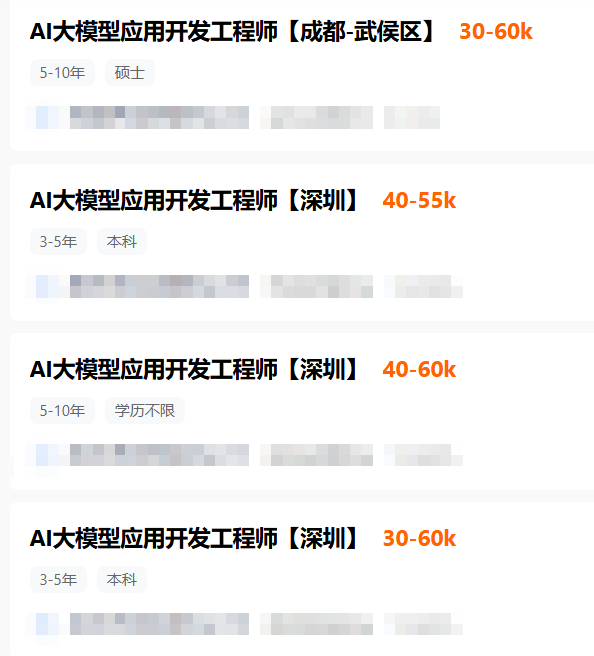
在AI技术加速落地的当下,这种“技术+业务”的复合型能力尤为稀缺,让该职业成为当下极具吸引力的就业选择。
AI大模型应用开发工程师是AI技术落地的关键桥梁。
他们用专业能力将抽象的技术转化为具体的产品,让大模型的价值真正渗透到各行各业。
随着AI场景化应用的不断深化,这一职业的重要性将更加凸显,也必将吸引更多人才投身其中,推动AI技术更好地服务于社会发展。
CSDN粉丝独家福利
给大家整理了一份AI大模型全套学习资料,这份完整版的 AI 大模型学习资料已经上传CSDN,朋友们如果需要可以扫描下方二维码&点击下方CSDN官方认证链接免费领取 【保证100%免费】


Agent 垂直技术社区,欢迎活跃、内容共建。
更多推荐
 5
5 0
0- 0


 已为社区贡献179条内容

所有评论(0)