C++开发基础之告别链表困惑,4种基础实现+10多种应用场景(附完整代码)
前言
链表是计算机科学中最基础也是最重要的数据结构之一,它在C++开发中有着广泛的应用。本文将深入探讨链表的分类、实现方式以及各种应用场景,帮助我们在实际开发中做出更合理的数据结构选择。
1. 链表基础概念
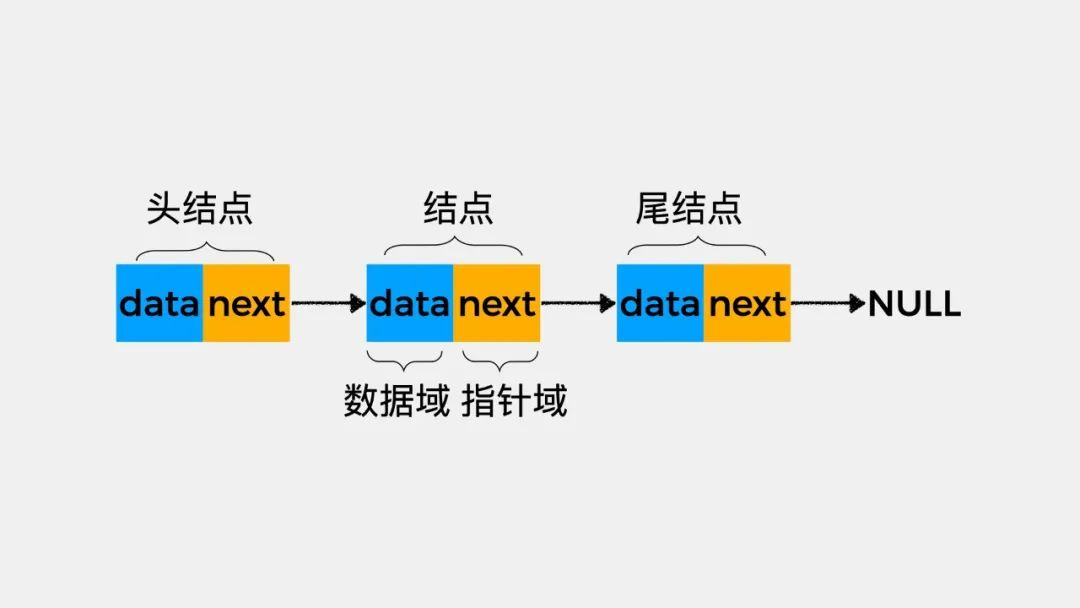
链表是一种线性数据结构,它通过"节点"的方式来存储数据。每个节点包含两部分:数据域和指针域。不同于数组的连续内存分配,链表中的节点可以存储在内存的任意位置,通过指针连接形成一个完整的数据序列。
1.1 链表的基本特性
- 动态内存分配:链表可以根据需要动态地分配内存
- 非连续存储:节点在内存中的位置不要求连续
- 插入删除高效:不需要像数组那样移动大量元素
- 随机访问低效:必须从头节点开始遍历才能访问特定位置的节点
1.2 链表与数组的对比
| 特性 | 链表 | 数组 |
|---|---|---|
| 内存分配 | 动态分配,使用时分配 | 静态分配,编译时确定或运行时一次性分配 |
| 内存效率 | 需要额外的指针空间 | 紧凑连续,无额外开销 |
| 随机访问 | O(n) | O(1) |
| 插入删除 | O(1)(已知位置的情况下) | O(n)(需要移动元素) |
| 缓存局部性 | 较差 | 优秀 |
你是否曾经在项目中遇到过需要频繁插入删除操作的场景?在这种情况下,你会选择使用数组还是链表呢?
2. 链表的分类
根据节点之间的连接方式,链表可以分为以下几种类型:
2.1 单向链表(Singly Linked List)
单向链表是最基本的链表形式,每个节点包含数据和一个指向下一个节点的指针。
特点:
- 只能从头到尾遍历
- 删除节点需要知道其前驱节点
- 内存开销较小
实现示例:
#include <iostream>
#include <memory>

class SinglyLinkedList {
private:
    struct Node {
        int data;
        std::unique_ptr<Node> next;

        Node(int value) : data(value), next(nullptr) {}
    };

    std::unique_ptr<Node> head;

public:
    SinglyLinkedList() : head(nullptr) {}

    // 在链表头部插入节点
    void pushFront(int value) {
        auto newNode = std::make_unique<Node>(value);
        newNode->next = std::move(head);
        head = std::move(newNode);
    }

    // 在链表尾部插入节点
    void pushBack(int value) {
        auto newNode = std::make_unique<Node>(value);

        if (!head) {
            head = std::move(newNode);
            return;
        }

        Node* current = head.get();
        while (current->next) {
            current = current->next.get();
        }

        current->next = std::move(newNode);
    }

    // 删除第一个值为value的节点
    bool remove(int value) {
        if (!head) return false;

        if (head->data == value) {
            head = std::move(head->next);
            return true;
        }

        Node* current = head.get();
        while (current->next && current->next->data != value) {
            current = current->next.get();
        }

        if (current->next) {
            current->next = std::move(current->next->next);
            return true;
        }

        return false;
    }

    // 打印链表
    void print() const {
        Node* current = head.get();
        while (current) {
            std::cout << current->data << " -> ";
            current = current->next.get();
        }
        std::cout << "nullptr" << std::endl;
    }
};

int main() {
    SinglyLinkedList list;

    list.pushBack(1);
    list.pushBack(2);
    list.pushBack(3);
    list.pushFront(0);

    std::cout << "原始链表: ";
    list.print();  // 输出: 0 -> 1 -> 2 -> 3 -> nullptr

    list.remove(2);
    std::cout << "删除值为2的节点后: ";
    list.print();  // 输出: 0 -> 1 -> 3 -> nullptr

    return 0;
}
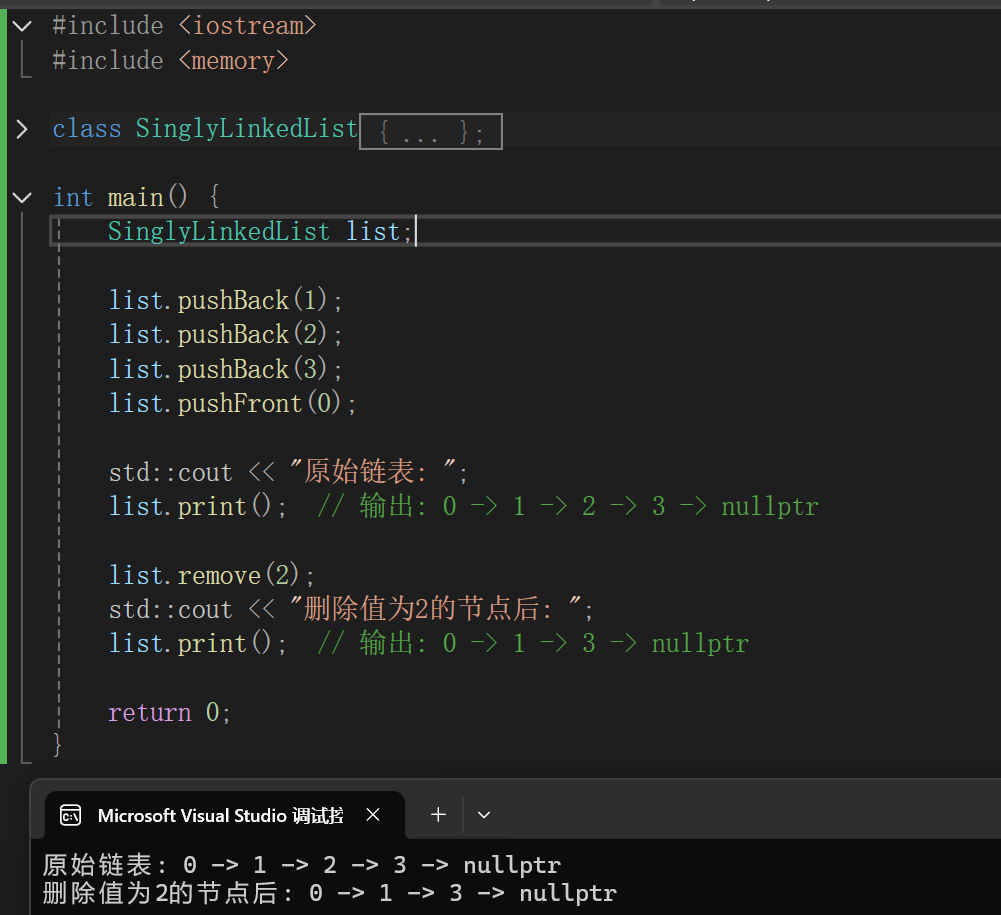
执行结果:
应用场景:
- 实现栈数据结构
- 历史记录(如浏览器的后退功能)
- 简单的内存管理(如空闲内存块链表)
- 符号表管理
2.2 双向链表(Doubly Linked List)
双向链表中的每个节点包含数据和两个指针,分别指向前一个节点和后一个节点。
特点:
- 可以双向遍历
- 删除节点不需要知道其前驱节点
- 内存开销较大
- 实现某些操作更高效(如在当前位置前插入节点)
实现示例:
#include <iostream>
#include <memory>

class DoublyLinkedList {
private:
    struct Node {
        int data;
        std::unique_ptr<Node> next;
        Node* prev;  // 使用原始指针避免循环引用

        Node(int value) : data(value), next(nullptr), prev(nullptr) {}
    };

    std::unique_ptr<Node> head;
    Node* tail;  // 尾指针,方便从尾部操作

public:
    DoublyLinkedList() : head(nullptr), tail(nullptr) {}

    // 在链表头部插入节点
    void pushFront(int value) {
        auto newNode = std::make_unique<Node>(value);

        if (!head) {
            head = std::move(newNode);
            tail = head.get();
            return;
        }

        newNode->next = std::move(head);
        newNode->next->prev = newNode.get();
        head = std::move(newNode);
    }

    // 在链表尾部插入节点
    void pushBack(int value) {
        auto newNode = std::make_unique<Node>(value);

        if (!head) {
            head = std::move(newNode);
            tail = head.get();
            return;
        }

        newNode->prev = tail;
        tail->next = std::move(newNode);
        tail = tail->next.get();
    }

    // 删除第一个值为value的节点
    bool remove(int value) {
        if (!head) return false;

        if (head->data == value) {
            if (head.get() == tail) {
                tail = nullptr;
            } else {
                head->next->prev = nullptr;
            }

            head = std::move(head->next);
            return true;
        }

        Node* current = head.get();
        while (current && current->data != value) {
            current = current->next.get();
        }

        if (!current) return false;

        if (current == tail) {
            tail = current->prev;
            tail->next = nullptr;
        } else {
            current->next->prev = current->prev;
            current->prev->next = std::move(current->next);
        }

        return true;
    }

    // 从头到尾打印链表
    void printForward() const {
        Node* current = head.get();
        while (current) {
            std::cout << current->data << " <-> ";
            current = current->next.get();
        }
        std::cout << "nullptr" << std::endl;
    }

    // 从尾到头打印链表
    void printBackward() const {
        Node* current = tail;
        while (current) {
            std::cout << current->data << " <-> ";
            current = current->prev;
        }
        std::cout << "nullptr" << std::endl;
    }
};

int main() {
    DoublyLinkedList list;

    list.pushBack(1);
    list.pushBack(2);
    list.pushBack(3);
    list.pushFront(0);

    std::cout << "正向遍历: ";
    list.printForward();  // 输出: 0 <-> 1 <-> 2 <-> 3 <-> nullptr

    std::cout << "反向遍历: ";
    list.printBackward();  // 输出: 3 <-> 2 <-> 1 <-> 0 <-> nullptr

    list.remove(2);
    std::cout << "删除值为2的节点后正向遍历: ";
    list.printForward();  // 输出: 0 <-> 1 <-> 3 <-> nullptr

    return 0;
}
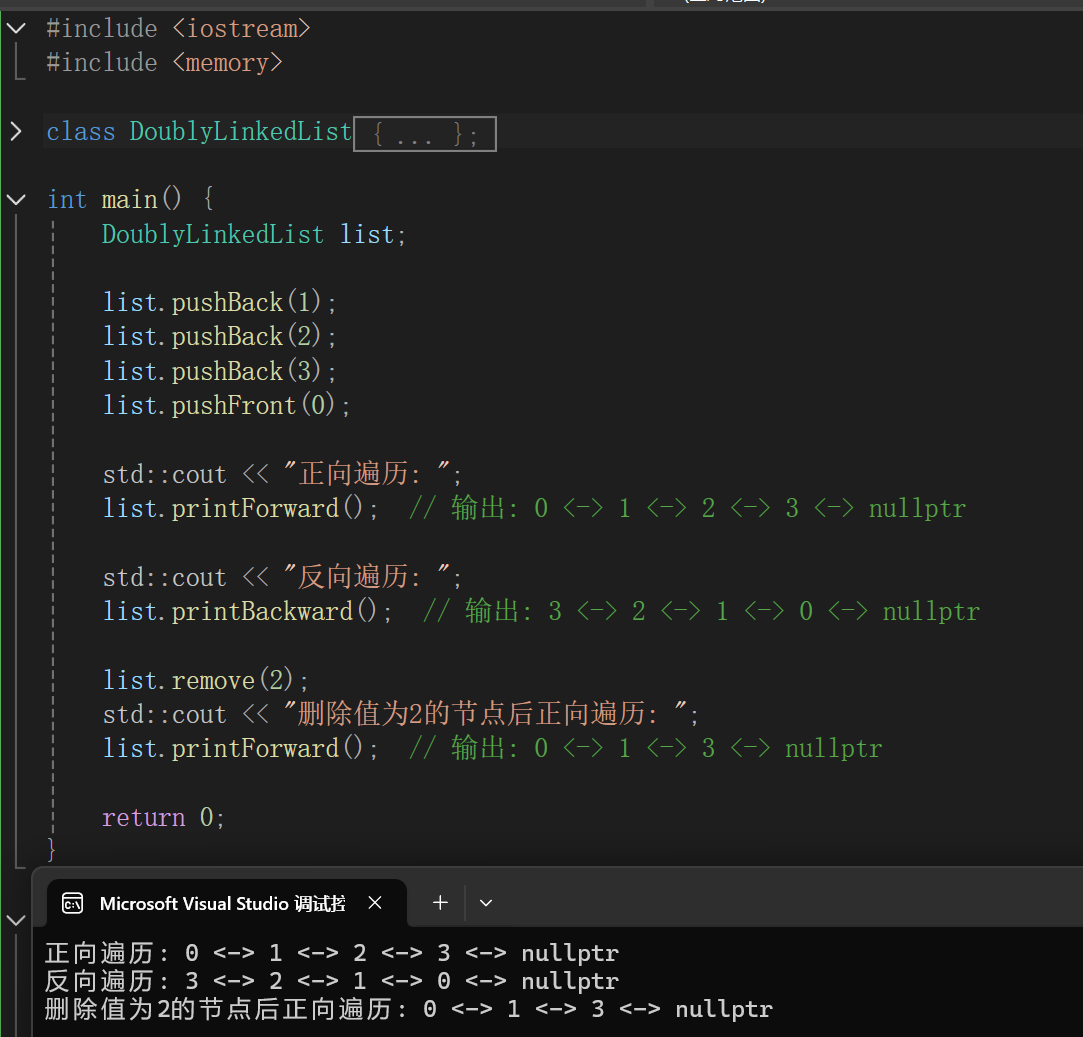
执行结果:
应用场景:
- 需要双向遍历的场景(如文本编辑器)
- 实现LRU缓存(最近最少使用缓存)
- 浏览器的前进/后退功能
- 音乐播放器的播放列表(前一首/后一首)
你觉得在实现一个文本编辑器时,为什么双向链表比单向链表更适合?
2.3 循环链表(Circular Linked List)
循环链表是一种特殊的链表,其最后一个节点指向第一个节点,形成一个环。循环链表可以是单向的,也可以是双向的。
特点:
- 没有明确的开始和结束节点
- 从任意节点出发都可以遍历整个链表
- 适合需要循环处理的场景
实现示例(单向循环链表):
#include <iostream>
#include <memory>

class CircularLinkedList {
private:
    struct Node {
        int data;
        std::shared_ptr<Node> next;  // 使用shared_ptr处理循环引用

        Node(int value) : data(value), next(nullptr) {}
    };

    std::shared_ptr<Node> head;

public:
    CircularLinkedList() : head(nullptr) {}

    // 在链表尾部插入节点
    void insert(int value) {
        auto newNode = std::make_shared<Node>(value);

        if (!head) {
            head = newNode;
            head->next = head;  // 指向自身形成循环
            return;
        }

        std::shared_ptr<Node> current = head;
        while (current->next != head) {
            current = current->next;
        }

        current->next = newNode;
        newNode->next = head;  // 新节点指向头节点形成循环
    }

    // 删除第一个值为value的节点
    bool remove(int value) {
        if (!head) return false;

        // 如果只有一个节点
        if (head->next == head) {
            if (head->data == value) {
                head = nullptr;
                return true;
            }
            return false;
        }

        // 如果要删除的是头节点
        if (head->data == value) {
            std::shared_ptr<Node> current = head;
            while (current->next != head) {
                current = current->next;
            }

            current->next = head->next;
            head = head->next;
            return true;
        }

        // 删除中间节点
        std::shared_ptr<Node> current = head;
        while (current->next != head && current->next->data != value) {
            current = current->next;
        }

        if (current->next != head) {
            current->next = current->next->next;
            return true;
        }

        return false;
    }

    // 打印链表(从头节点开始,遍历一圈)
    void print() const {
        if (!head) {
            std::cout << "空链表" << std::endl;
            return;
        }

        std::shared_ptr<Node> current = head;
        do {
            std::cout << current->data << " -> ";
            current = current->next;
        } while (current != head);

        std::cout << "(回到头节点: " << head->data << ")" << std::endl;
    }
};

int main() {
    CircularLinkedList list;

    list.insert(1);
    list.insert(2);
    list.insert(3);
    list.insert(4);

    std::cout << "原始循环链表: ";
    list.print();  // 输出: 1 -> 2 -> 3 -> 4 -> (回到头节点: 1)

    list.remove(2);
    std::cout << "删除值为2的节点后: ";
    list.print();  // 输出: 1 -> 3 -> 4 -> (回到头节点: 1)

    list.remove(1);  // 删除头节点
    std::cout << "删除头节点后: ";
    list.print();  // 输出: 3 -> 4 -> (回到头节点: 3)

    return 0;
}
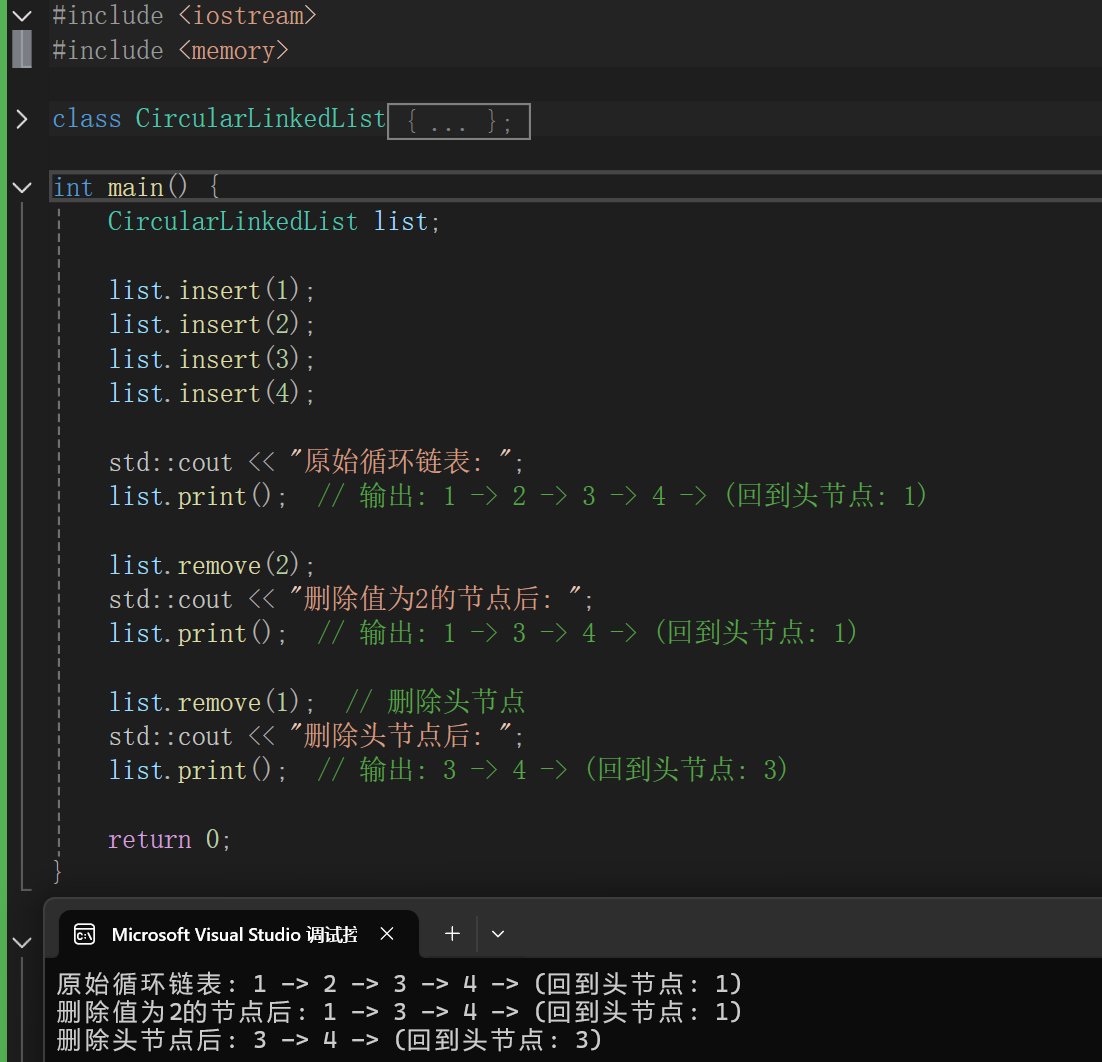
执行结果:
应用场景:
- 轮询调度算法(Round-Robin)
- 循环缓冲区
- 操作系统中的进程调度
- 多人游戏中的回合制系统
2.4 跳跃链表(Skip List)
跳跃链表是一种可以实现快速查找的数据结构,它通过在链表的基础上添加多级索引来加速查找过程。
特点:
- 平均查找时间为O(log n)
- 插入和删除操作也是O(log n)
- 实现相对复杂
- 空间复杂度为O(n)
实现示例:
#include <iostream>
#include <vector>
#include <memory>
#include <cstdlib>
#include <ctime>
#include <limits>

class SkipList {
private:
    static constexpr int MAX_LEVEL = 16;  // 最大层数
    static constexpr float P = 0.5f;      // 层级提升概率

    struct Node {
        int data;
        std::vector<std::shared_ptr<Node>> forward;  // 每层的前向指针

        Node(int value, int level) : data(value), forward(level, nullptr) {}
    };

    std::shared_ptr<Node> head;  // 头节点
    int level;                   // 当前最大层级

    // 随机生成层数
    int randomLevel() {
        int lvl = 1;
        while ((static_cast<float>(std::rand()) / RAND_MAX) < P && lvl < MAX_LEVEL) {
            lvl++;
        }
        return lvl;
    }

public:
    SkipList() : level(1) {
        // 使用最小值创建头节点
        head = std::make_shared<Node>(std::numeric_limits<int>::min(), MAX_LEVEL);
        std::srand(static_cast<unsigned int>(std::time(nullptr)));
    }

    // 查找节点
    bool search(int value) const {
        std::shared_ptr<Node> current = head;

        // 从最高层开始查找
        for (int i = level - 1; i >= 0; i--) {
            // 在当前层向前移动,直到下一个节点的值大于等于目标值
            while (current->forward[i] && current->forward[i]->data < value) {
                current = current->forward[i];
            }
        }

        // 移动到第0层的下一个节点
        current = current->forward[0];

        // 检查是否找到目标值
        return current && current->data == value;
    }

    // 插入节点
    void insert(int value) {
        std::vector<std::shared_ptr<Node>> update(MAX_LEVEL, head);
        std::shared_ptr<Node> current = head;

        // 从最高层开始查找插入位置
        for (int i = level - 1; i >= 0; i--) {
            while (current->forward[i] && current->forward[i]->data < value) {
                current = current->forward[i];
            }
            update[i] = current;
        }

        // 移动到第0层的下一个节点
        current = current->forward[0];

        // 如果当前节点不存在或者值不等于要插入的值,则创建新节点
        if (!current || current->data != value) {
            int newLevel = randomLevel();

            // 如果新层级大于当前层级,更新头节点的前向指针
            if (newLevel > level) {
                for (int i = level; i < newLevel; i++) {
                    update[i] = head;
                }
                level = newLevel;
            }

            // 创建新节点
            auto newNode = std::make_shared<Node>(value, newLevel);

            // 更新指针
            for (int i = 0; i < newLevel; i++) {
                newNode->forward[i] = update[i]->forward[i];
                update[i]->forward[i] = newNode;
            }
        }
    }

    // 删除节点
    bool remove(int value) {
        std::vector<std::shared_ptr<Node>> update(MAX_LEVEL, nullptr);
        std::shared_ptr<Node> current = head;

        // 从最高层开始查找要删除的节点
        for (int i = level - 1; i >= 0; i--) {
            while (current->forward[i] && current->forward[i]->data < value) {
                current = current->forward[i];
            }
            update[i] = current;
        }

        current = current->forward[0];

        // 如果找到了要删除的节点
        if (current && current->data == value) {
            // 更新所有层的指针
            for (int i = 0; i < level; i++) {
                if (update[i]->forward[i] != current) {
                    break;
                }
                update[i]->forward[i] = current->forward[i];
            }

            // 更新层级
            while (level > 1 && !head->forward[level - 1]) {
                level--;
            }

            return true;
        }

        return false;
    }

    // 打印跳跃链表
    void print() const {
        for (int i = level - 1; i >= 0; i--) {
            std::cout << "Level " << i << ": ";
            std::shared_ptr<Node> node = head->forward[i];
            while (node) {
                std::cout << node->data << " -> ";
                node = node->forward[i];
            }
            std::cout << "nullptr" << std::endl;
        }
    }
};

int main() {
    SkipList skipList;

    skipList.insert(3);
    skipList.insert(6);
    skipList.insert(7);
    skipList.insert(9);
    skipList.insert(12);
    skipList.insert(19);
    skipList.insert(17);
    skipList.insert(26);
    skipList.insert(21);
    skipList.insert(25);

    std::cout << "跳跃链表结构:" << std::endl;
    skipList.print();

    std::cout << "\n查找操作:" << std::endl;
    std::cout << "查找 19: " << (skipList.search(19) ? "找到" : "未找到") << std::endl;
    std::cout << "查找 15: " << (skipList.search(15) ? "找到" : "未找到") << std::endl;

    std::cout << "\n删除操作:" << std::endl;
    skipList.remove(19);
    std::cout << "删除 19 后:" << std::endl;
    skipList.print();

    return 0;
}
执行结果:
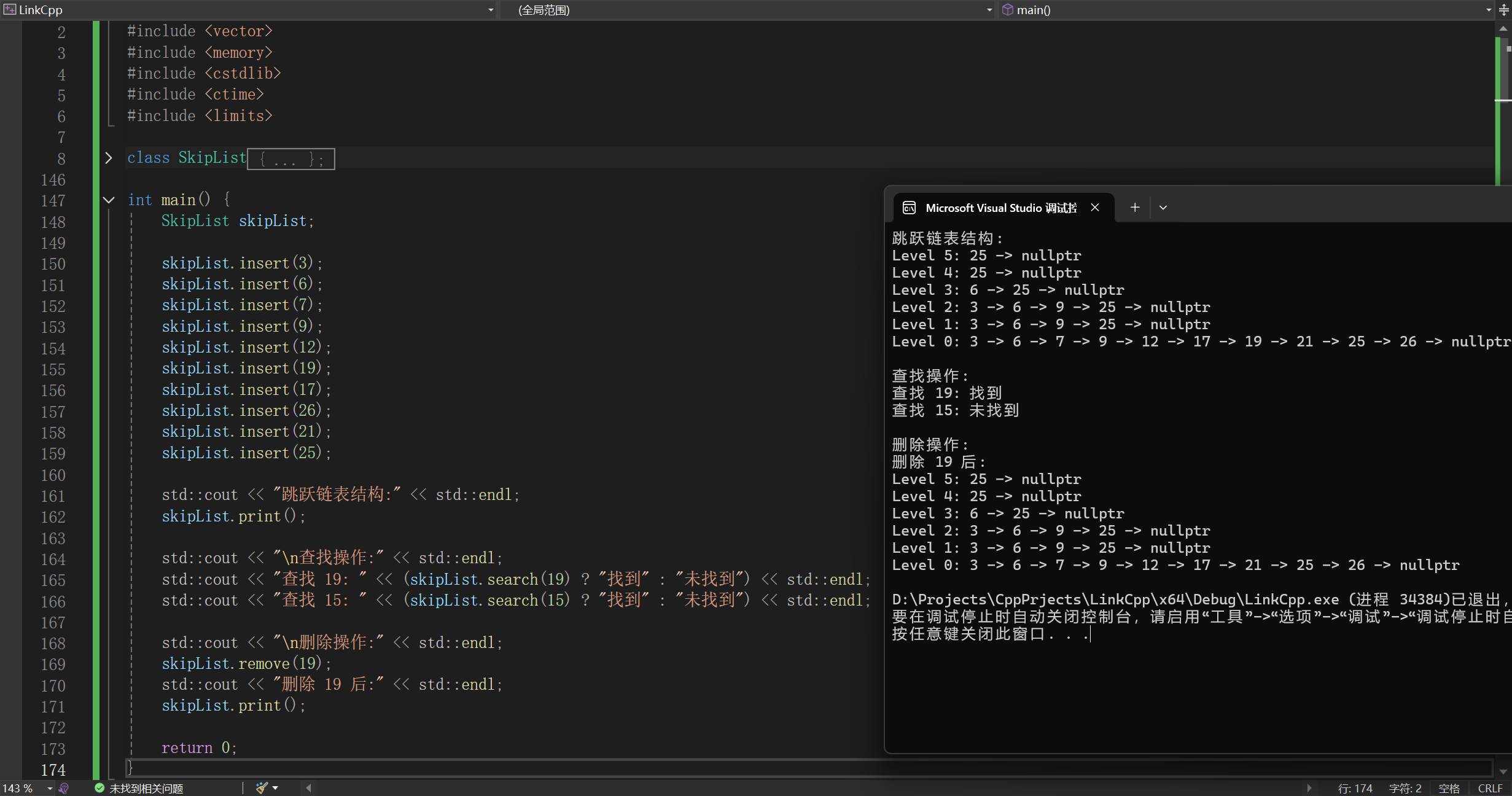
应用场景:
- 高效的查找操作(如数据库索引)
- Redis中的有序集合(Sorted Set)
- 需要快速查找和维护有序数据的场景
3. 链表的高级应用
3.1 自定义内存分配器
链表可以用于实现自定义内存分配器,管理内存池中的空闲块。
#include <iostream>
#include <cstddef>
#include <vector>

class SimpleMemoryPool {
private:
    struct MemoryBlock {
        size_t size;           // 内存块大小
        bool isFree;           // 是否空闲
        MemoryBlock* next;     // 指向下一个内存块
        void* data;            // 实际数据的起始位置

        MemoryBlock(size_t blockSize) : size(blockSize), isFree(true), next(nullptr) {}
    };

    void* poolStart;          // 内存池起始位置
    size_t poolSize;          // 内存池总大小
    MemoryBlock* freeList;    // 空闲块链表

public:
    SimpleMemoryPool(size_t size) : poolSize(size) {
        // 分配内存池
        poolStart = ::operator new(size);

        // 创建初始内存块
        freeList = new MemoryBlock(size);
        freeList->data = poolStart;
    }

    ~SimpleMemoryPool() {
        // 释放内存池
        ::operator delete(poolStart);

        // 释放内存块管理结构
        MemoryBlock* current = freeList;
        while (current) {
            MemoryBlock* next = current->next;
            delete current;
            current = next;
        }
    }

    // 分配内存
    void* allocate(size_t size) {
        // 对齐大小(简化版本)
        size = (size + 7) & ~7;  // 8字节对齐

        MemoryBlock* prev = nullptr;
        MemoryBlock* current = freeList;

        // 查找足够大的空闲块
        while (current) {
            if (current->isFree && current->size >= size) {
                // 找到合适的块

                // 如果块足够大,可以分割
                if (current->size > size + sizeof(MemoryBlock) + 8) {
                    // 创建新的空闲块
                    MemoryBlock* newBlock = new MemoryBlock(current->size - size - sizeof(MemoryBlock));
                    newBlock->data = static_cast<char*>(current->data) + size;

                    // 更新当前块
                    current->size = size;

                    // 插入新块到链表
                    newBlock->next = current->next;
                    current->next = newBlock;
                }

                // 标记为已使用
                current->isFree = false;

                return current->data;
            }

            prev = current;
            current = current->next;
        }

        // 没有找到合适的块
        return nullptr;
    }

    // 释放内存
    void deallocate(void* ptr) {
        if (!ptr) return;

        MemoryBlock* current = freeList;

        // 查找包含此指针的块
        while (current) {
            if (current->data == ptr) {
                // 标记为空闲
                current->isFree = true;

                // 合并相邻的空闲块(简化版本)
                mergeAdjacentFreeBlocks();
                return;
            }
            current = current->next;
        }
    }

    // 合并相邻的空闲块
    void mergeAdjacentFreeBlocks() {
        MemoryBlock* current = freeList;

        while (current && current->next) {
            if (current->isFree && current->next->isFree) {
                // 合并两个块
                current->size += current->next->size + sizeof(MemoryBlock);

                // 移除下一个块
                MemoryBlock* toDelete = current->next;
                current->next = toDelete->next;
                delete toDelete;
            } else {
                current = current->next;
            }
        }
    }

    // 打印内存池状态(用于调试)
    void printStatus() const {
        MemoryBlock* current = freeList;
        int blockCount = 0;

        std::cout << "内存池状态:" << std::endl;
        while (current) {
            std::cout << "块 " << blockCount++ << ": ";
            std::cout << "大小 = " << current->size << " 字节, ";
            std::cout << "状态 = " << (current->isFree ? "空闲" : "已使用") << std::endl;
            current = current->next;
        }
    }
};

int main() {
    // 创建一个1KB的内存池
    SimpleMemoryPool pool(1024);

    std::cout << "初始状态:" << std::endl;
    pool.printStatus();

    // 分配一些内存
    void* p1 = pool.allocate(100);
    void* p2 = pool.allocate(200);
    void* p3 = pool.allocate(300);

    std::cout << "\n分配后状态:" << std::endl;
    pool.printStatus();

    // 释放一些内存
    pool.deallocate(p2);

    std::cout << "\n释放p2后状态:" << std::endl;
    pool.printStatus();

    // 再次分配
    void* p4 = pool.allocate(150);

    std::cout << "\n再次分配后状态:" << std::endl;
    pool.printStatus();

    return 0;
}
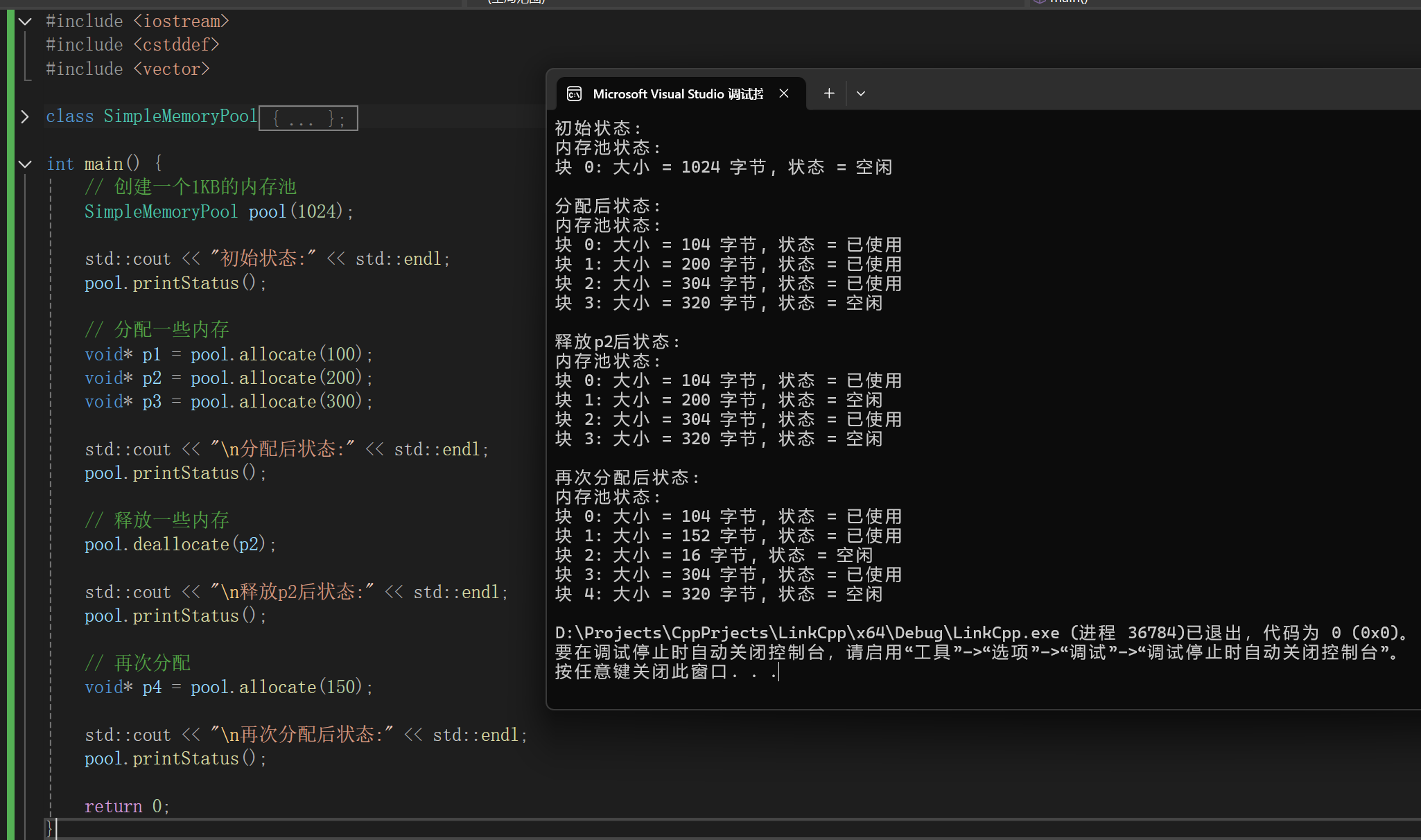
3.2 LRU缓存实现
使用双向链表和哈希表实现高效的LRU(最近最少使用)缓存。
#include <iostream>
#include <unordered_map>
#include <memory>

template<typename K, typename V>
class LRUCache {
private:
    struct Node {
        K key;
        V value;
        Node* prev;
        Node* next;

        Node(K k, V v) : key(k), value(v), prev(nullptr), next(nullptr) {}
    };

    int capacity;                          // 缓存容量
    Node* head;                            // 头节点(最近使用)
    Node* tail;                            // 尾节点(最久未使用)
    std::unordered_map<K, Node*> cache;    // 哈希表,用于O(1)查找

    // 将节点移动到链表头部(标记为最近使用)
    void moveToHead(Node* node) {
        if (node == head) return;

        // 从当前位置移除
        if (node == tail) {
            tail = node->prev;
            tail->next = nullptr;
        } else {
            node->prev->next = node->next;
            node->next->prev = node->prev;
        }

        // 插入到头部
        node->next = head;
        node->prev = nullptr;
        head->prev = node;
        head = node;
    }

    // 添加新节点到头部
    void addToHead(Node* node) {
        if (!head) {
            head = tail = node;
        } else {
            node->next = head;
            head->prev = node;
            head = node;
        }
    }

    // 移除尾部节点(最久未使用)
    void removeTail() {
        if (!tail) return;

        Node* oldTail = tail;

        if (head == tail) {
            head = tail = nullptr;
        } else {
            tail = tail->prev;
            tail->next = nullptr;
        }

        cache.erase(oldTail->key);
        delete oldTail;
    }

public:
    LRUCache(int cap) : capacity(cap), head(nullptr), tail(nullptr) {}

    ~LRUCache() {
        Node* current = head;
        while (current) {
            Node* next = current->next;
            delete current;
            current = next;
        }
    }

    // 获取值,如果存在则将其标记为最近使用
    V get(K key) {
        if (cache.find(key) == cache.end()) {
            throw std::runtime_error("Key not found");
        }

        Node* node = cache[key];
        moveToHead(node);
        return node->value;
    }

    // 检查键是否存在
    bool contains(K key) {
        return cache.find(key) != cache.end();
    }

    // 插入或更新值
    void put(K key, V value) {
        if (cache.find(key) != cache.end()) {
            // 更新现有节点
            Node* node = cache[key];
            node->value = value;
            moveToHead(node);
        } else {
            // 创建新节点
            Node* newNode = new Node(key, value);
            cache[key] = newNode;
            addToHead(newNode);

            // 如果超出容量,移除最久未使用的节点
            if (cache.size() > capacity) {
                removeTail();
            }
        }
    }

    // 打印缓存内容(从最近使用到最久未使用)
    void printCache() const {
        Node* current = head;
        std::cout << "LRU缓存内容 (最近使用 -> 最久未使用): ";
        while (current) {
            std::cout << "[" << current->key << ": " << current->value << "]";
            if (current->next) std::cout << " -> ";
            current = current->next;
        }
        std::cout << std::endl;
    }
};

int main() {
    LRUCache<std::string, int> cache(3);

    cache.put("one", 1);
    cache.put("two", 2);
    cache.put("three", 3);

    std::cout << "初始缓存:" << std::endl;
    cache.printCache();  // [three: 3] -> [two: 2] -> [one: 1]

    // 访问已有元素
    std::cout << "\n获取 'one': " << cache.get("one") << std::endl;
    cache.printCache();  // [one: 1] -> [three: 3] -> [two: 2]

    // 添加新元素,超出容量
    cache.put("four", 4);
    std::cout << "\n添加 'four' 后:" << std::endl;
    cache.printCache();  // [four: 4] -> [one: 1] -> [three: 3]

    // 检查被淘汰的元素
    std::cout << "\n'two' 是否存在: " << (cache.contains("two") ? "是" : "否") << std::endl;

    return 0;
}
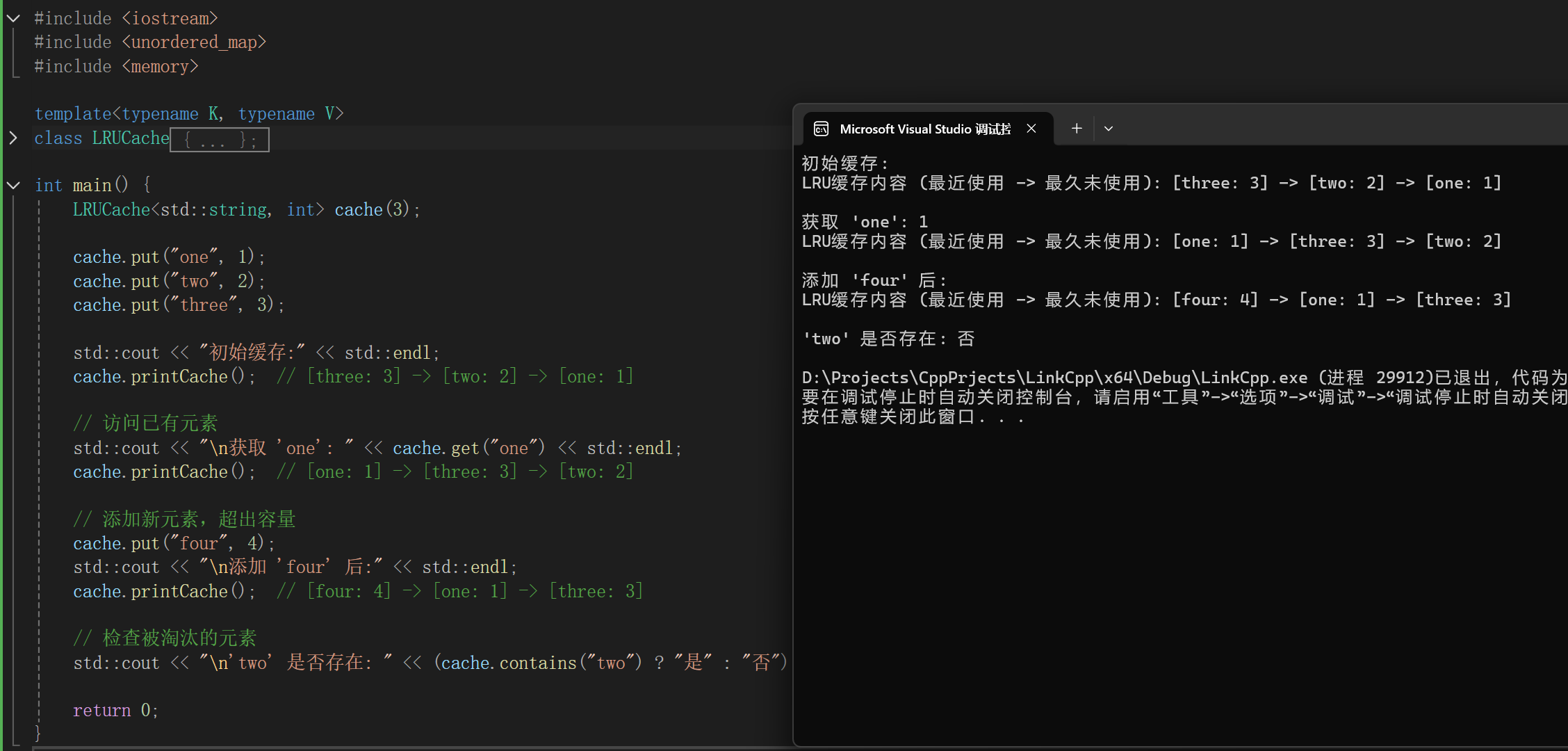
3.3 多项式表示与计算
链表可以用于表示多项式,每个节点存储一个项的系数和指数。
#include <iostream>
#include <memory>
#include <sstream>
#include <cmath>

class Polynomial {
private:
    struct Term {
        double coefficient;  // 系数
        int exponent;        // 指数
        std::unique_ptr<Term> next;

        Term(double coef, int exp) : coefficient(coef), exponent(exp), next(nullptr) {}
    };

    std::unique_ptr<Term> head;

    // 插入项,保持指数降序
    void insertTerm(double coef, int exp) {
        if (std::abs(coef) < 1e-10) return;  // 忽略系数为0的项

        auto newTerm = std::make_unique<Term>(coef, exp);

        if (!head || exp > head->exponent) {
            // 插入到头部
            newTerm->next = std::move(head);
            head = std::move(newTerm);
            return;
        }

        // 查找插入位置
        Term* current = head.get();
        while (current->next && current->next->exponent > exp) {
            current = current->next.get();
        }

        // 如果已存在相同指数的项,合并系数
        if (current->exponent == exp) {
            current->coefficient += coef;
            // 如果合并后系数为0,移除该项
            if (std::abs(current->coefficient) < 1e-10) {
                if (current == head.get()) {
                    head = std::move(head->next);
                } else {
                    Term* prev = head.get();
                    while (prev->next.get() != current) {
                        prev = prev->next.get();
                    }
                    prev->next = std::move(current->next);
                }
            }
        } else if (current->next && current->next->exponent == exp) {
            current->next->coefficient += coef;
            // 如果合并后系数为0,移除该项
            if (std::abs(current->next->coefficient) < 1e-10) {
                current->next = std::move(current->next->next);
            }
        } else {
            // 插入新项
            newTerm->next = std::move(current->next);
            current->next = std::move(newTerm);
        }
    }

public:
    Polynomial() : head(nullptr) {}

    // 从字符串解析多项式
    static Polynomial parse(const std::string& str) {
        Polynomial poly;
        std::istringstream iss(str);

        double coef;
        char var;
        char op;
        int exp;

        while (iss >> coef) {
            if (iss.peek() == '*') {
                iss >> op >> var >> op >> exp;
                poly.insertTerm(coef, exp);
            } else {
                poly.insertTerm(coef, 0);  // 常数项
            }

            if (iss.peek() == '+' || iss.peek() == '-') {
                if (iss.peek() == '+') {
                    iss >> op;
                } else {
                    iss >> op;
                    iss >> coef;
                    coef = -coef;
                    if (iss.peek() == '*') {
                        iss >> op >> var >> op >> exp;
                        poly.insertTerm(coef, exp);
                    } else {
                        poly.insertTerm(coef, 0);  // 常数项
                    }
                }
            }
        }

        return poly;
    }

    // 加法运算
    Polynomial operator+(const Polynomial& other) const {
        Polynomial result;

        // 复制当前多项式的所有项
        Term* current = head.get();
        while (current) {
            result.insertTerm(current->coefficient, current->exponent);
            current = current->next.get();
        }

        // 添加另一个多项式的所有项
        current = other.head.get();
        while (current) {
            result.insertTerm(current->coefficient, current->exponent);
            current = current->next.get();
        }

        return result;
    }

    // 减法运算
    Polynomial operator-(const Polynomial& other) const {
        Polynomial result;

        // 复制当前多项式的所有项
        Term* current = head.get();
        while (current) {
            result.insertTerm(current->coefficient, current->exponent);
            current = current->next.get();
        }

        // 减去另一个多项式的所有项
        current = other.head.get();
        while (current) {
            result.insertTerm(-current->coefficient, current->exponent);
            current = current->next.get();
        }

        return result;
    }

    // 乘法运算
    Polynomial operator*(const Polynomial& other) const {
        Polynomial result;

        // 遍历当前多项式的所有项
        Term* term1 = head.get();
        while (term1) {
            // 遍历另一个多项式的所有项
            Term* term2 = other.head.get();
            while (term2) {
                // 计算乘积项
                double newCoef = term1->coefficient * term2->coefficient;
                int newExp = term1->exponent + term2->exponent;
                result.insertTerm(newCoef, newExp);

                term2 = term2->next.get();
            }

            term1 = term1->next.get();
        }

        return result;
    }

    // 计算多项式在给定x值处的值
    double evaluate(double x) const {
        double result = 0.0;
        Term* current = head.get();

        while (current) {
            result += current->coefficient * std::pow(x, current->exponent);
            current = current->next.get();
        }

        return result;
    }

    // 转换为字符串表示
    std::string toString() const {
        if (!head) return "0";

        std::ostringstream oss;
        Term* current = head.get();
        bool isFirst = true;

        while (current) {
            // 处理系数
            if (current->coefficient > 0) {
                if (!isFirst) oss << " + ";
            } else {
                if (isFirst) oss << "-";
                else oss << " - ";
            }

            double absCoef = std::abs(current->coefficient);

            // 处理指数
            if (current->exponent == 0) {
                // 常数项
                oss << absCoef;
            } else if (current->exponent == 1) {
                // 一次项
                if (std::abs(absCoef - 1.0) < 1e-10) {
                    oss << "x";
                } else {
                    oss << absCoef << "*x";
                }
            } else {
                // 高次项
                if (std::abs(absCoef - 1.0) < 1e-10) {
                    oss << "x^" << current->exponent;
                } else {
                    oss << absCoef << "*x^" << current->exponent;
                }
            }

            isFirst = false;
            current = current->next.get();
        }

        return oss.str();
    }
};

int main() {
    // 创建多项式 p1 = 3*x^2 + 2*x + 1
    Polynomial p1 = Polynomial::parse("3*x^2 + 2*x + 1");
    std::cout << "p1(x) = " << p1.toString() << std::endl;

    // 创建多项式 p2 = x^3 - 2*x + 5
    Polynomial p2 = Polynomial::parse("1*x^3 - 2*x + 5");
    std::cout << "p2(x) = " << p2.toString() << std::endl;

    // 多项式加法
    Polynomial sum = p1 + p2;
    std::cout << "p1(x) + p2(x) = " << sum.toString() << std::endl;

    // 多项式减法
    Polynomial diff = p1 - p2;
    std::cout << "p1(x) - p2(x) = " << diff.toString() << std::endl;

    // 多项式乘法
    Polynomial product = p1 * p2;
    std::cout << "p1(x) * p2(x) = " << product.toString() << std::endl;

    // 计算多项式在x=2处的值
    double x = 2.0;
    std::cout << "p1(" << x << ") = " << p1.evaluate(x) << std::endl;
    std::cout << "p2(" << x << ") = " << p2.evaluate(x) << std::endl;

    return 0;
}
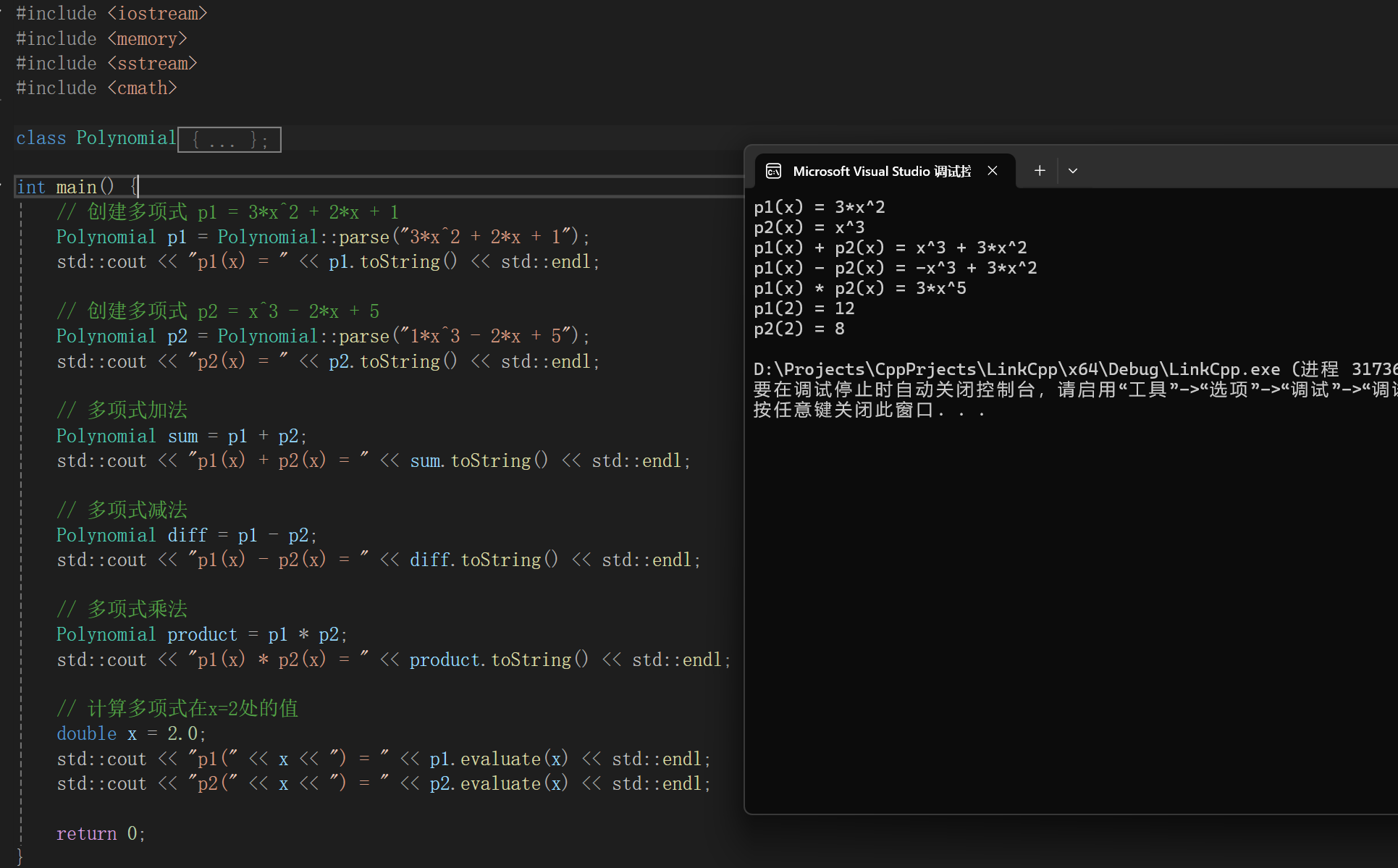
4. 链表的性能优化
4.1 内存池优化
频繁的动态内存分配和释放会影响链表的性能。使用内存池可以显著提高链表操作的效率。
4.2 缓存友好的链表
传统链表的节点分散在内存中,缓存命中率低。可以通过以下方式优化:
- 块状链表:每个节点包含多个元素,提高缓存局部性
- 紧凑链表:将节点存储在连续内存区域中
4.3 无锁链表
在多线程环境中,使用无锁算法实现链表可以避免锁竞争,提高并发性能。
5. 链表的选择与实践建议
5.1 何时选择链表
- 需要频繁插入和删除元素
- 元素数量不确定或经常变化
- 不需要随机访问
- 内存空间有限,需要动态分配
5.2 何时避免使用链表
- 需要频繁的随机访问
- 数据量较小且固定
- 缓存局部性很重要的场景
- 内存开销敏感的场景
5.3 实践建议
- 选择合适的链表类型:根据应用场景选择单向、双向或循环链表
- 使用智能指针:避免内存泄漏和悬挂指针问题
- 考虑使用标准库:C++ STL提供了
std::forward_list和std::list等现成实现 - 注意边界条件:处理空链表、单节点链表等特殊情况
- 优化频繁操作:针对最常用的操作进行优化
6. 总结
链表作为一种基础数据结构,在C++开发中有着广泛的应用。通过本文的介绍,我们了解了不同类型链表的特点、实现方式和应用场景。在实际开发中,需要根据具体需求选择合适的链表类型,并考虑性能优化和内存管理等因素。
你在实际项目中是否使用过链表?遇到了哪些挑战?欢迎在评论区分享你的经验和见解!

Agent 垂直技术社区,欢迎活跃、内容共建。
更多推荐



 13
13 0
0- 0



 已为社区贡献5条内容

所有评论(0)