【LangGraph 实战】打造 Agentic RAG 系统:评分机制与回答重写实现
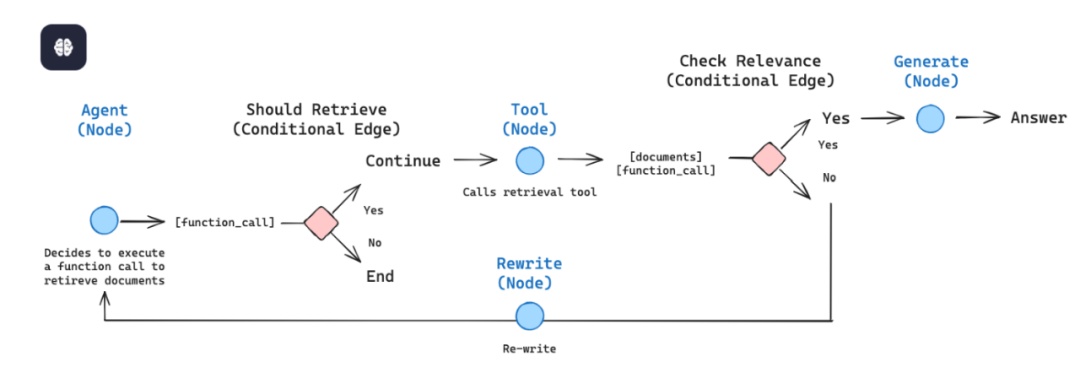
在本篇文章中,我们将基于LangGraph构建一个具备自主决策能力的检索代理。这个代理能让大语言模型(LLM)根据用户需求自主判断:是需要从向量库中检索相关上下文辅助回答,还是可以直接响应用户问题。
具体实现流程将分为三个核心步骤:
- 准备并预处理用于检索的文档资源,为后续语义理解奠定基础;
- 对文档进行语义搜索索引构建,并开发适配代理的检索工具;
- 搭建融合代理能力的RAG系统,使其具备"何时调用检索工具"的自主决策能力。
一 处理文档
首先获取文档以在我们的 RAG 系统中使用。我们将使用某个博客中的三个最新页面(https://lilianweng.github.io/)。然后使用 WebBaseLoader 实用程序获取页面的内容:
```python
from
 langchain_community.document_loaders
import
 WebBaseLoader
urls = [

"https://lilianweng.github.io/posts/2024-11-28-reward-hacking/"
,

"https://lilianweng.github.io/posts/2024-07-07-hallucination/"
,

"https://lilianweng.github.io/posts/2024-04-12-diffusion-video/"
,
]
docs = [WebBaseLoader(url).load()
for
 url
in
 urls]
print
(
"=== WebBaseLoader 加载结果 ==="
)
for
 i, doc
in

enumerate
(docs):

print
(
f"\nDocument
{i+
1
}
:"
)

for
 element
in
 doc:

print
(
f"Text:
{element.page_content[:
100
]}
..."
)
# Print first 100 characters

if

hasattr
(element,
'metadata'
):

print
(
"Metadata:"
, element.metadata)

else
:

print
(
"No metadata available."
)
print
(
"\n=== 完成 WebBaseLoader 文档加载 ==="
)
得出具体网站的输出内容之后,获取的文档拆分成更小的块,以便索引到我们的 vectorstore 中。
from langchain_text_splitters import RecursiveCharacterTextSplitter
docs_list = [item for sublist in docs for item in sublist]
text_splitter = RecursiveCharacterTextSplitter.from_tiktoken_encoder(
    chunk_size=100, chunk_overlap=50
)
doc_splits = text_splitter.split_documents(docs_list)
print(doc_splits[0].page_content.strip())
`
``
二 创建检索工具
现在我们有了拆分后的文档,我们可以将它们索引到用于语义搜索的向量存储中。我们可以使用内存中向量存储和 OpenAI 嵌入,
```python
from
 langchain_core.vectorstores
import
 InMemoryVectorStore
from
 langchain_openai
import
 OpenAIEmbeddings
vectorstore = InMemoryVectorStore.from_documents(
    documents=doc_splits, embedding=OpenAIEmbeddings()
)
retriever = vectorstore.as_retriever()
然后使用 LangChain 中预构建方式 create\_retriever\_tool 创建一个检索工具。
from langchain.tools.retriever
import

create_retriever_tool
retriever_tool

=
 create_retriever_tool(
    retriever,

"retrieve_blog_posts"
,

"Search and return information about Lilian Weng blog posts."
,
)
调用这个检索工具:
retriever_tool.invoke({"query": "types of reward hacking"})
`
``
三 生成查询
现在我们将开始为代理式 RAG 图构建组件(节点和边)。需要注意的是,这些组件将操作 MessagesState —— 一种图状态,包含一个 messages 键,其值为聊天消息的列表。首先我们要构建一个 generate_query_or_respond 节点。它将调用一个大语言模型(LLM),根据当前图状态(即消息列表)生成回复。根据输入的消息,它将决定是使用之前创建的 retriever 工具进行检索,还是直接回复用户。请注意,我们通过 .bind_tools 方法将之前创建的 retriever_tool 提供给了聊天模型使用。
```python
from
 langgraph.graph
import
 MessagesState
from
 langchain.chat_models
import
 init_chat_model
response_model = init_chat_model(
"openai:gpt-4.1"
, temperature=
0
)
def

generate_query_or_respond
(
state: MessagesState
):

"""Call the model to generate a response based on the current state. Given
    the question, it will decide to retrieve using the retriever tool, or simply respond to the user.
    """
    response = (
        response_model
        .bind_tools([retriever_tool]).invoke(state[
"messages"
])
    )

return
 {
"messages"
: [response]}
我们试着调用它:
input
 = {
"messages"
: [{
"role"
:
"user"
,
"content"
:
"hello!"
}]}
generate_query_or_respond(
input
)[
"messages"
][-
1
].pretty_print()
得到下面输出:
================================== Ai Message ==================================
Hello! How can I help you today?
`
``
可以看到他并没有调用工具,然后我们换一个问题,问一个需要语义搜索的问题:
```python
input
 = {

"messages"
: [
        {

"role"
:
"user"
,

"content"
:
"What does Lilian Weng say about types of reward hacking?"
,
        }
    ]
}
generate_query_or_respond(
input
)[
"messages"
][-
1
].pretty_print()
得到下面输出
================================== Ai Message ==================================
Tool Calls:
retrieve_blog_posts (call_tYQxgfIlnQUDMdtAhdbXNwIM)
Call ID: call_tYQxgfIlnQUDMdtAhdbXNwIM
Args:
    query: types of reward hacking
`
``
这个时候就调用了我们的retriever_tool搜索工具。
四 给文档评分
接下来我们添加一个条件边 —— grade_documents,用于判断检索到的文档是否与问题相关。我们将使用一个具有结构化输出模式 GradeDocuments 的模型来进行文档评分。grade_documents 函数将根据评分结果返回下一个要跳转的节点名称(generate_answer 或 rewrite_question)。
```python
from
 pydantic
import
 BaseModel, Field
from
 typing
import

Literal
GRADE_PROMPT = (

"You are a grader assessing relevance of a retrieved document to a user question. \n "

"Here is the retrieved document: \n\n {context} \n\n"

"Here is the user question: {question} \n"

"If the document contains keyword(s) or semantic meaning related to the user question, grade it as relevant. \n"

"Give a binary score 'yes' or 'no' score to indicate whether the document is relevant to the question."
)
class

GradeDocuments
(
BaseModel
):

"""Grade documents using a binary score for relevance check."""
    binary_score:
str
 = Field(
        description=
"Relevance score: 'yes' if relevant, or 'no' if not relevant"
    )
grader_model = init_chat_model(
"openai:gpt-4.1"
, temperature=
0
)
def

grade_documents
(
    state: MessagesState,
) ->
Literal
[
"generate_answer"
,
"rewrite_question"
]:

"""Determine whether the retrieved documents are relevant to the question."""
    question = state[
"messages"
][
0
].content
    context = state[
"messages"
][-
1
].content
    prompt = GRADE_PROMPT.
format
(question=question, context=context)
    response = (
        grader_model
        .with_structured_output(GradeDocuments).invoke(
            [{
"role"
:
"user"
,
"content"
: prompt}]
        )
    )
    score = response.binary_score

if
 score ==
"yes"
:

return

"generate_answer"

else
:

return

"rewrite_question"
在工具返回的结果中包含无关文档的情况下运行该流程:
from
 langchain_core.messages
import
 convert_to_messages
input
 = {

"messages"
: convert_to_messages(
        [
            {

"role"
:
"user"
,

"content"
:
"What does Lilian Weng say about types of reward hacking?"
,
            },
            {

"role"
:
"assistant"
,

"content"
:
""
,

"tool_calls"
: [
                    {

"id"
:
"1"
,

"name"
:
"retrieve_blog_posts"
,

"args"
: {
"query"
:
"types of reward hacking"
},
                    }
                ],
            },
            {
"role"
:
"tool"
,
"content"
:
"meow"
,
"tool_call_id"
:
"1"
},
        ]
    )
}
grade_documents(
input
)
确认相关文档被正确分类为“相关”问题。
input
 = {

"messages"
: convert_to_messages(
        [
            {

"role"
:
"user"
,

"content"
:
"What does Lilian Weng say about types of reward hacking?"
,
            },
            {

"role"
:
"assistant"
,

"content"
:
""
,

"tool_calls"
: [
                    {

"id"
:
"1"
,

"name"
:
"retrieve_blog_posts"
,

"args"
: {
"query"
:
"types of reward hacking"
},
                    }
                ],
            },
            {

"role"
:
"tool"
,

"content"
:
"reward hacking can be categorized into two types: environment or goal misspecification, and reward tampering"
,

"tool_call_id"
:
"1"
,
            },
        ]
    )
}
grade_documents(
input
)
五 重写问题

我们构建一个 rewrite\_question 节点。检索工具可能返回不了相关的文档,说明我们需要改进原始用户的提问问题。所以,我们将调用 rewrite\_question 节点:
REWRITE_PROMPT = (

"Look at the input and try to reason about the underlying semantic intent / meaning.\n"

"Here is the initial question:"

"\n ------- \n"

"{question}"

"\n ------- \n"

"Formulate an improved question:"
)
def

rewrite_question
(
state: MessagesState
):

"""Rewrite the original user question."""
    messages = state[
"messages"
]
    question = messages[
0
].content
    prompt = REWRITE_PROMPT.
format
(question=question)
    response = response_model.invoke([{
"role"
:
"user"
,
"content"
: prompt}])

return
 {
"messages"
: [{
"role"
:
"user"
,
"content"
: response.content}]}
然后试一下
input
 = {

"messages"
: convert_to_messages(
        [
            {

"role"
:
"user"
,

"content"
:
"What does Lilian Weng say about types of reward hacking?"
,
            },
            {

"role"
:
"assistant"
,

"content"
:
""
,

"tool_calls"
: [
                    {

"id"
:
"1"
,

"name"
:
"retrieve_blog_posts"
,

"args"
: {
"query"
:
"types of reward hacking"
},
                    }
                ],
            },
            {
"role"
:
"tool"
,
"content"
:
"meow"
,
"tool_call_id"
:
"1"
},
        ]
    )
}
response = rewrite_question(
input
)
print
(response[
"messages"
][-
1
][
"content"
])
输出下面内容
What are the different types of reward hacking described by Lilian Weng, and how does she explain them?
`
``
六 生成答案
我们构建 generate_answer 节点:如果通过评分器的检查,我们可以基于原始问题和检索到的上下文生成最终答案。
```python
GENERATE_PROMPT = (

"You are an assistant for question-answering tasks. "

"Use the following pieces of retrieved context to answer the question. "

"If you don't know the answer, just say that you don't know. "

"Use three sentences maximum and keep the answer concise.\n"

"Question: {question} \n"

"Context: {context}"
)
def

generate_answer
(
state: MessagesState
):

"""Generate an answer."""
    question = state[
"messages"
][
0
].content
    context = state[
"messages"
][-
1
].content
    prompt = GENERATE_PROMPT.
format
(question=question, context=context)
    response = response_model.invoke([{
"role"
:
"user"
,
"content"
: prompt}])

return
 {
"messages"
: [response]}
input
 = {

"messages"
: convert_to_messages(
        [
            {

"role"
:
"user"
,

"content"
:
"What does Lilian Weng say about types of reward hacking?"
,
            },
            {

"role"
:
"assistant"
,

"content"
:
""
,

"tool_calls"
: [
                    {

"id"
:
"1"
,

"name"
:
"retrieve_blog_posts"
,

"args"
: {
"query"
:
"types of reward hacking"
},
                    }
                ],
            },
            {

"role"
:
"tool"
,

"content"
:
"reward hacking can be categorized into two types: environment or goal misspecification, and reward tampering"
,

"tool_call_id"
:
"1"
,
            },
        ]
    )
}
response = generate_answer(
input
)
response[
"messages"
][-
1
].pretty_print()
输出下面内容
==================================
 Ai Message
==================================
Lilian Weng categorizes reward hacking
into
 two types: environment
or
 goal misspecification,
and
 reward tampering. She considers reward hacking
as
 a broad concept that includes
both

of
 these categories. Reward hacking occurs
when
 an agent exploits flaws
or
 ambiguities
in
 the reward
function

to
 achieve high rewards
without
 performing the intended behaviors.
七 组装Graph

从 generate\_query\_or\_respond 开始,并确定我们是否需要调用 retriever\_tool,使用 tools\_condition的下一步路由:如果 generate\_query\_or\_respond 返回 tool\_calls ,呼叫 retriever\_tool 检索上下文

否则,直接响应用户,评分检索文档内容,(grade\_documents)如果不相关,请使 rewrite\_question重写问题,如果相关,请继续使用ToolMessage 使 generate\_answer进行最终响应。
from
 langgraph.graph
import
 StateGraph, START, END
from
 langgraph.prebuilt
import
 ToolNode
from
 langgraph.prebuilt
import
 tools_condition
workflow = StateGraph(MessagesState)
# Define the nodes we will cycle between
workflow.add_node(generate_query_or_respond)
workflow.add_node(
"retrieve"
, ToolNode([retriever_tool]))
workflow.add_node(rewrite_question)
workflow.add_node(generate_answer)
workflow.add_edge(START,
"generate_query_or_respond"
)
# Decide whether to retrieve
workflow.add_conditional_edges(

"generate_query_or_respond"
,

# Assess LLM decision (call `retriever_tool` tool or respond to the user)
    tools_condition,
    {

# Translate the condition outputs to nodes in our graph

"tools"
:
"retrieve"
,
        END: END,
    },
)
# Edges taken after the `action` node is called.
workflow.add_conditional_edges(

"retrieve"
,

# Assess agent decision
    grade_documents,
)
workflow.add_edge(
"generate_answer"
, END)
workflow.add_edge(
"rewrite_question"
,
"generate_query_or_respond"
)
# Compile
graph = workflow.
compile
()
大致的图形是这样子:

运行我们构建的的Graph:
for chunk in graph
.stream
(
    {
        "messages": [
            {
                "role":
"user"
,

"content"
:
"What does Lilian Weng say about types of reward hacking?"
,
            }
        ]
    }
):
    for node, update in chunk.
items
():

print
(
"Update from node"
, node)
        update[
"messages"
][-
1
].
pretty_print
()

print
(
"\n\n"
)
得到下面内容:
Update
from
 node generate_query_or_respond
================================== Ai Message ==================================
Tool Calls:

retrieve_blog_posts
 (call_NYu2vq4km9nNNEFqJwefWKu1)
 Call ID: call_NYu2vq4km9nNNEFqJwefWKu1
  Args:
    query: types of reward hacking
Update
from
 node retrieve
================================= Tool Message ==================================
Name:
retrieve_blog_posts
(
Note
: Some work defines reward tampering
as
 a distinct category of misalignment behavior
from
 reward hacking. But I consider reward hacking
as
 a broader concept here.)
At a high level, reward hacking can be categorized into two types: environment
or
 goal misspecification,
and
 reward tampering.
Why does Reward Hacking Exist?
#
Pan et al. (
2022
) investigated reward hacking
as
 a
function

of

agent

capabilities
,
including
 (
1
)
model

size
, (
2
)
action

space

resolution
, (
3
)
observation

space

noise
,
and
 (
4
)
training

time
.
They

also

proposed

a

taxonomy

of

three

types

of

misspecified

proxy

rewards
:
Let
'
s

Define

Reward

Hacking
#
Reward

shaping

in

RL

is

challenging
.
Reward

hacking

occurs

when

an

RL

agent

exploits

flaws

or

ambiguities

in

the

reward

function

to

obtain

high

rewards

without

genuinely

learning

the

intended

behaviors

or

completing

the

task

as

designed
.
In

recent

years
,
several

related

concepts

have

been

proposed
,
all

referring

to

some

form

of

reward

hacking
:
Update

from

node

generate_answer
==================================
Ai

Message
 ==================================
Lilian

Weng

categorizes

reward

hacking

into

two

types
:
environment

or

goal

misspecification
,
and

reward

tampering
.
She

considers

reward

hacking

as

a

broad

concept

that

includes

both

of

these

categories
.
Reward

hacking

occurs

when

an

agent

exploits

flaws

or

ambiguities

in

the

reward

function

to

achieve

high

rewards

without

performing

the

intended

behaviors
.
ied

proxy

rewards
:
Let
'
s

Define

Reward

Hacking
#
Reward

shaping

in

RL

is

challenging
.
Reward

hacking

occurs

when

an

RL

agent

exploits

flaws

or

ambiguities

in

the

reward

function

to

obtain

high

rewards

without

genuinely

learning

the

intended

behaviors

or

completing

the

task

as

designed
.
In

recent

years
,
several

related

concepts

have

been

proposed
,
all

referring

to

some

form

of

reward

hacking
:
Update

from

node

generate_answer
==================================
Ai

Message
 ==================================
Lilian

Weng

categorizes

reward

hacking

into

two

types
:
environment

or

goal

misspecification
,
and

reward

tampering
.
She

considers

reward

hacking

as

a

broad

concept

that

includes

both

of

these

categories
.
Reward

hacking

occurs

when

an

agent

exploits

flaws

or

ambiguities

in

the

reward

function

to

achieve

high

rewards

without

performing

the

intended

behaviors
.
到这里,通过我们的代码实现了一个智能问答流程,集成了网页内容加载、文本拆分、向量检索、相关性评分、问题改写和答案生成,利用状态图组织流程控制,实现了一个能够动态判断是否检索和如何回答用户问题的智能代理。这就是一个通过LangGrah来实现RAG评分和重写的完整流程。
读者福利大放送:如果你对大模型感兴趣,想更加深入的学习大模型**,那么这份精心整理的大模型学习资料,绝对能帮你少走弯路、快速入门**
如果你是零基础小白,别担心——大模型入门真的没那么难,你完全可以学得会!
👉 不用你懂任何算法和数学知识,公式推导、复杂原理这些都不用操心;
👉 也不挑电脑配置,普通家用电脑完全能 hold 住,不用额外花钱升级设备;
👉 更不用你提前学 Python 之类的编程语言,零基础照样能上手。
你要做的特别简单:跟着我的讲解走,照着教程里的步骤一步步操作就行。
包括:大模型学习线路汇总、学习阶段,大模型实战案例,大模型学习视频,人工智能、机器学习、大模型书籍PDF。带你从零基础系统性的学好大模型!
现在这份资料免费分享给大家,有需要的小伙伴,直接VX扫描下方二维码就能领取啦😝↓↓↓
为什么要学习大模型?
数据显示,2023 年我国大模型相关人才缺口已突破百万,这一数字直接暴露了人才培养体系的严重滞后与供给不足。而随着人工智能技术的飞速迭代,产业对专业人才的需求将呈爆发式增长,据预测,到 2025 年这一缺口将急剧扩大至 400 万!!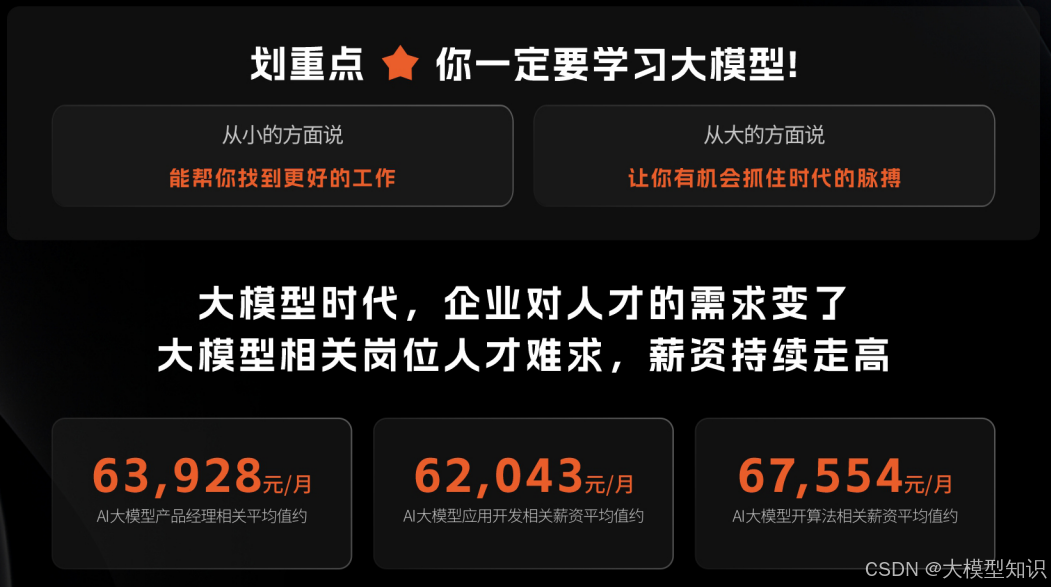
大模型学习路线汇总
整体的学习路线分成L1到L4四个阶段,一步步带你从入门到进阶,从理论到实战,跟着学习路线一步步打卡,小白也能轻松学会!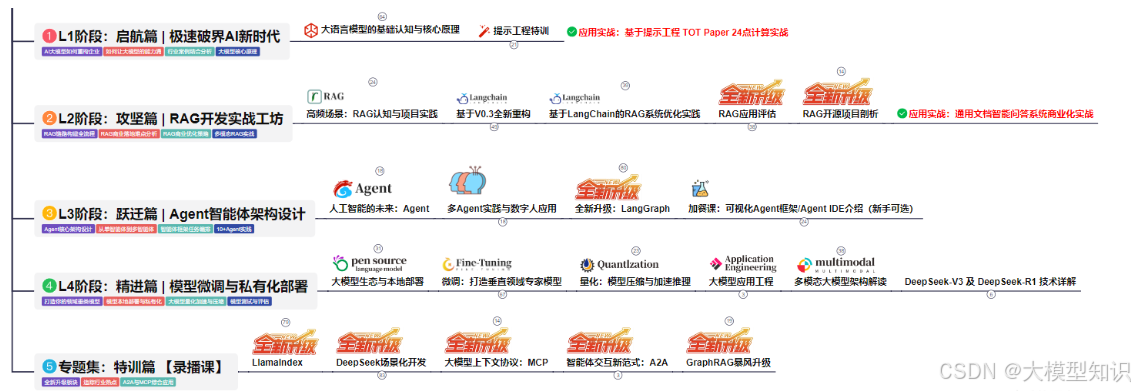
大模型实战项目&配套源码
光学理论可不够,这套学习资料还包含了丰富的实战案例,让你在实战中检验成果巩固所学知识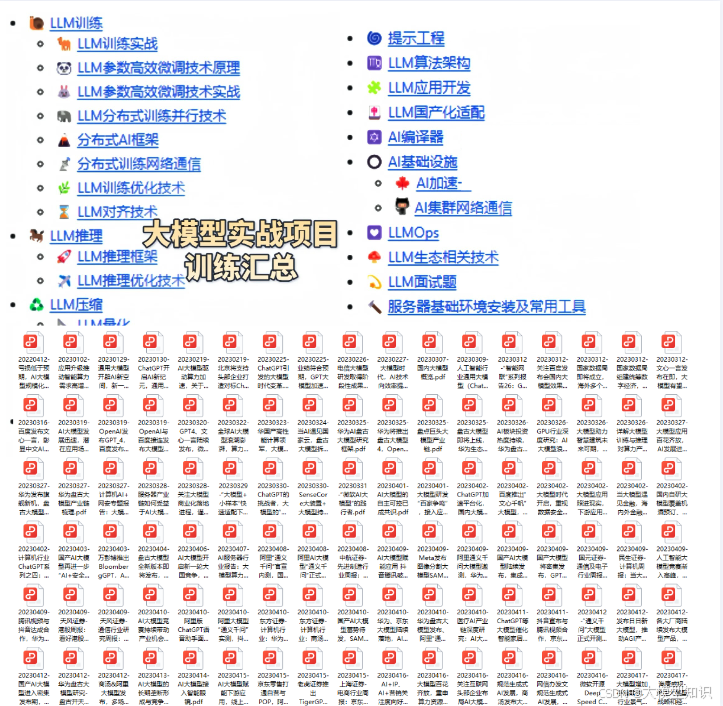
大模型学习必看书籍PDF
我精选了一系列大模型技术的书籍和学习文档(电子版),它们由领域内的顶尖专家撰写,内容全面、深入、详尽,为你学习大模型提供坚实的理论基础。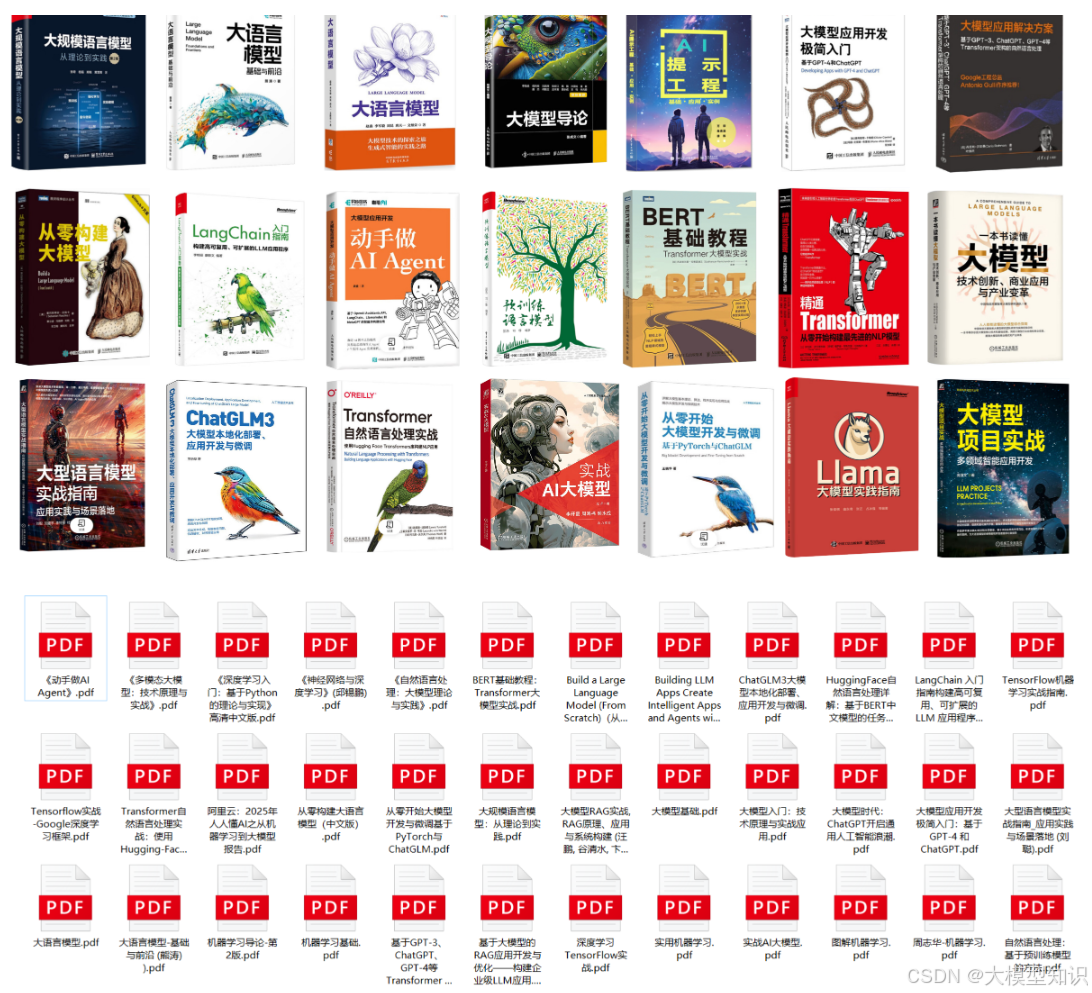
大模型超全面试题汇总
在面试过程中可能遇到的问题,我都给大家汇总好了,能让你们在面试中游刃有余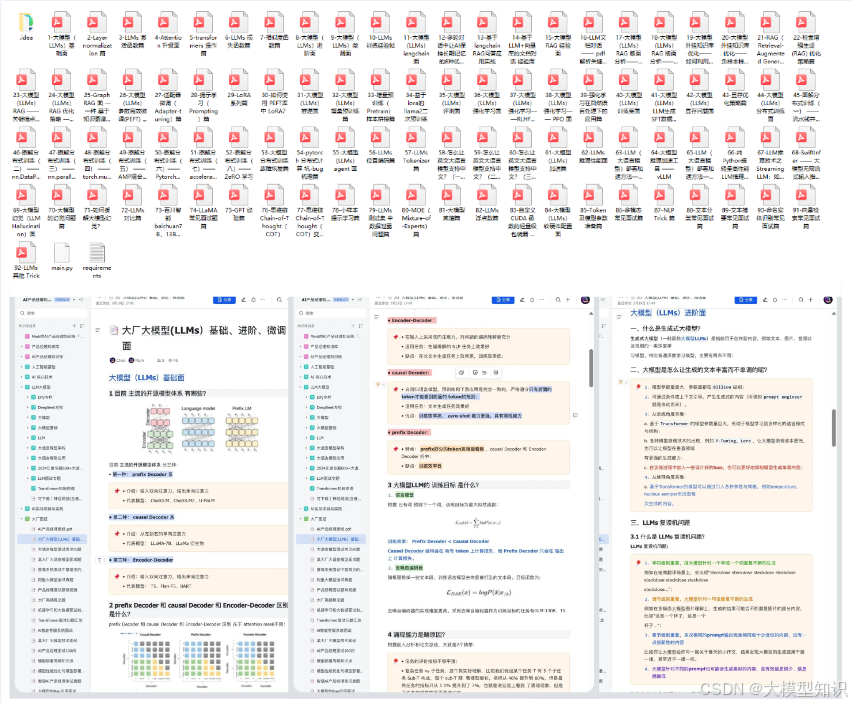
这些资料真的有用吗?
这份资料由我和鲁为民博士(北京清华大学学士和美国加州理工学院博士)共同整理,现任上海殷泊信息科技CEO,其创立的MoPaaS云平台获Forrester全球’强劲表现者’认证,服务航天科工、国家电网等1000+企业,以第一作者在IEEE Transactions发表论文50+篇,获NASA JPL火星探测系统强化学习专利等35项中美专利。本套AI大模型课程由清华大学-加州理工双料博士、吴文俊人工智能奖得主鲁为民教授领衔研发。
资料内容涵盖了从入门到进阶的各类视频教程和实战项目,无论你是小白还是有些技术基础的技术人员,这份资料都绝对能帮助你提升薪资待遇,转行大模型岗位。
👉获取方式:
😝有需要的小伙伴,可以保存图片到VX扫描下方二维码免费领取【保证100%免费】
相信我,这套大模型系统教程将会是全网最齐全 最适合零基础的!!

Agent 垂直技术社区,欢迎活跃、内容共建。
更多推荐

 25
25 0
0- 0


 已为社区贡献179条内容

所有评论(0)