C++进阶:swtich语句特殊的作用域
·
我们知道语句块{ } 会被视为单个语句执行。
在if语句中如果程序员没有在 if statement或者else statement 声明块,编译器将隐式声明一个。
if (condition)
    true_statement;
else
    false_statement;
实际上相当于
if (condition)
{
    true_statement;
}
else
{
    false_statement;
}
大多数情况下,这没什么问题。然而,新程序员有时会尝试在隐式块中定义变量,如下所示:
#include <iostream>

int main()
{
    if (true)
    {
        int x{ 5 };
    } // x destroyed here
    else
    {
        int x{ 6 };
    } // x destroyed here

    std::cout << x << '\n'; // x isn't in scope here

    return 0;
}
在这种情况下,变量x具有块作用域,并在块结束时被销毁,这一点更加清晰。当我们到达该std::cout行时,x它已经不存在了。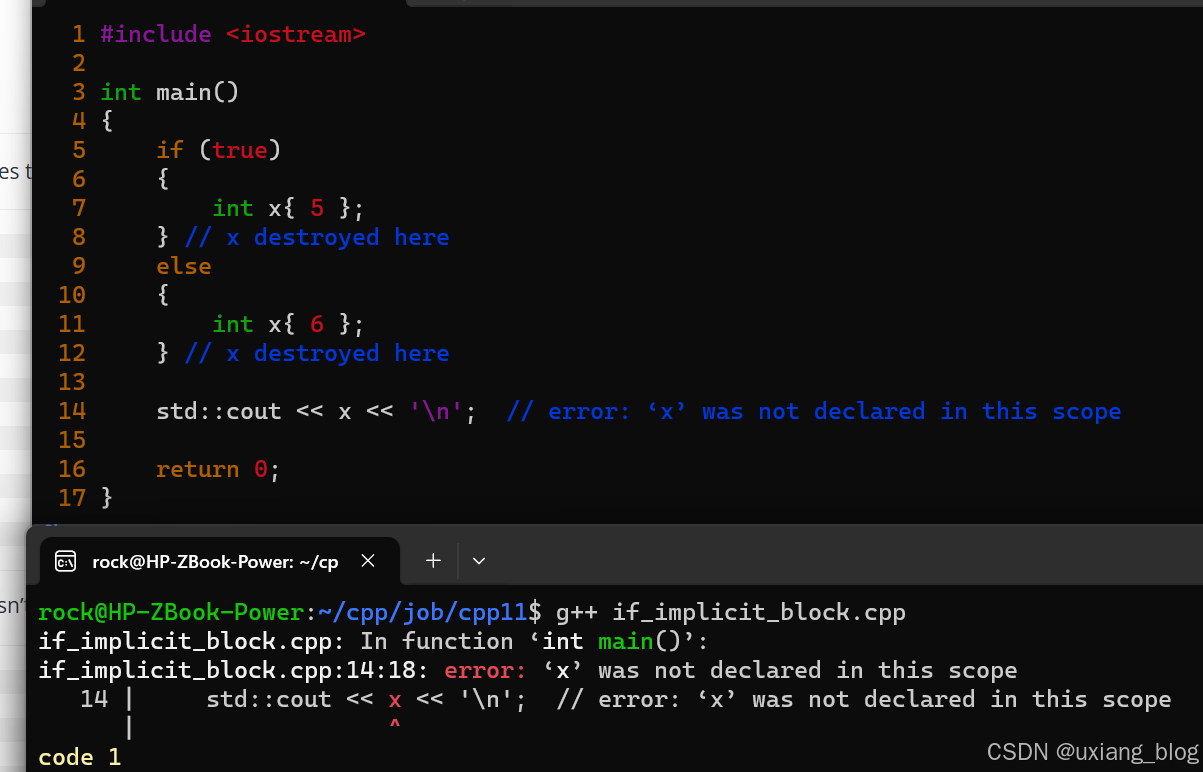
当然因为块作用域的缘故,下面代码将无法运行(当然没有人会这么写代码)。
#include <iostream>

int main()
{
	bool contrl { false };

	if (contrl)
	{
		int y {};
		std::cout << y << '\n';
	}
	else
	{
		y = 5;
		std::cout << y << '\n'; // error: ‘y’ was not declared in this scope
	}

   return 0;
}
然而作为同为控制流语句(选择语句)的switch语句并非如此,它确实可以这么做。
#include <iostream>

int main()
{
    switch(2)
    {
    case 1:
        int y;  // okay but bad practice: definition is allowed within a case
        y = 4;
        std::cout << y << '\n';
        break;
    case 2:
        y = 5;  // okay: y was declared above, so we can use it here too
        std::cout << y << '\n';
        break;
    case 3:
        break;
    }

    return 0;
}
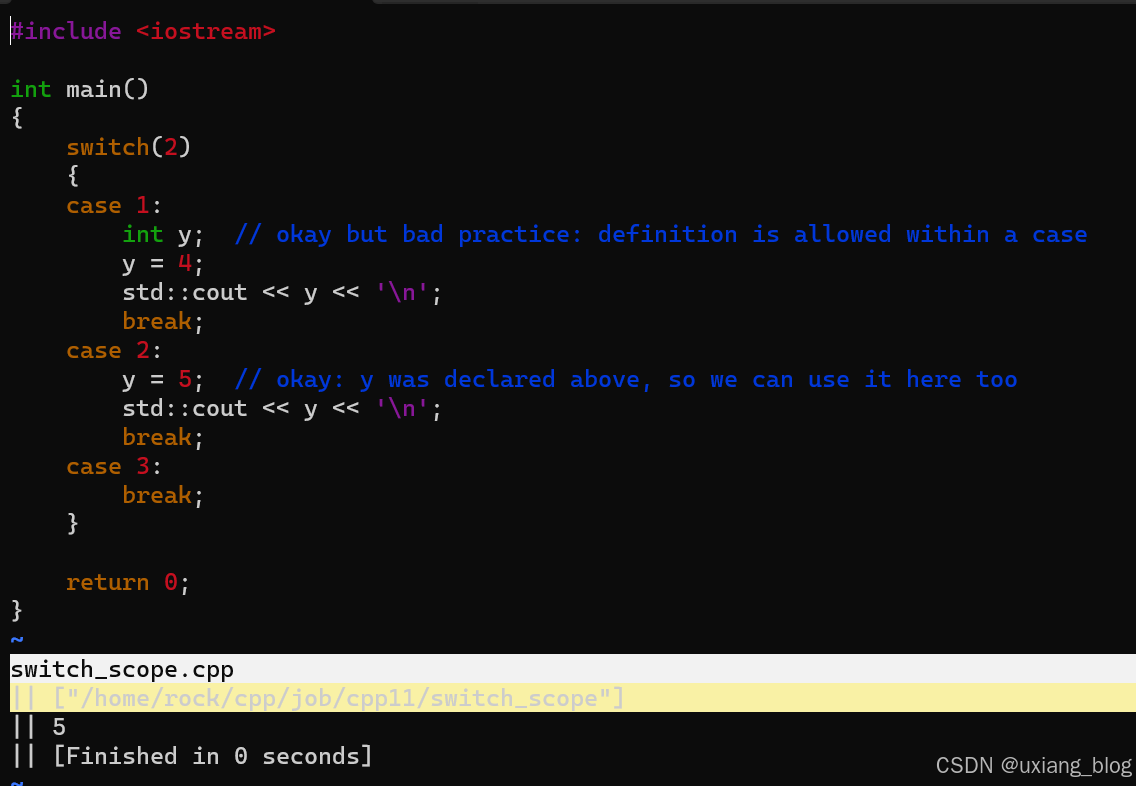
因为switch 中的所有语句都被视为同一作用域的一部分。
如果我们给它加上块会怎么样?----它将会破坏switch这种标签的作用域。
#include <iostream>

int main()
{
    switch(2)
    {
    case 1:
        {
            int y;  // okay but bad practice: definition is allowed within a case
            y = 4;
            std::cout << y << '\n';
            break;
        }
    case 2:
        {
            y = 5;  // okay: y was declared above, so we can use it here too
            std::cout << y << '\n';
            break;
        }
    case 3:
        {
            break;
        }
    }

    return 0;
}
输出结果如下,加上嵌入块之后,由于case 1,case 2和case 3 之间共有的作用域被分割,而变量y在case 1语句块末尾被销毁后就不能使用,所以当匹配到case 2 中的变量y时,编译器会告诉你y在这个作用域未声明。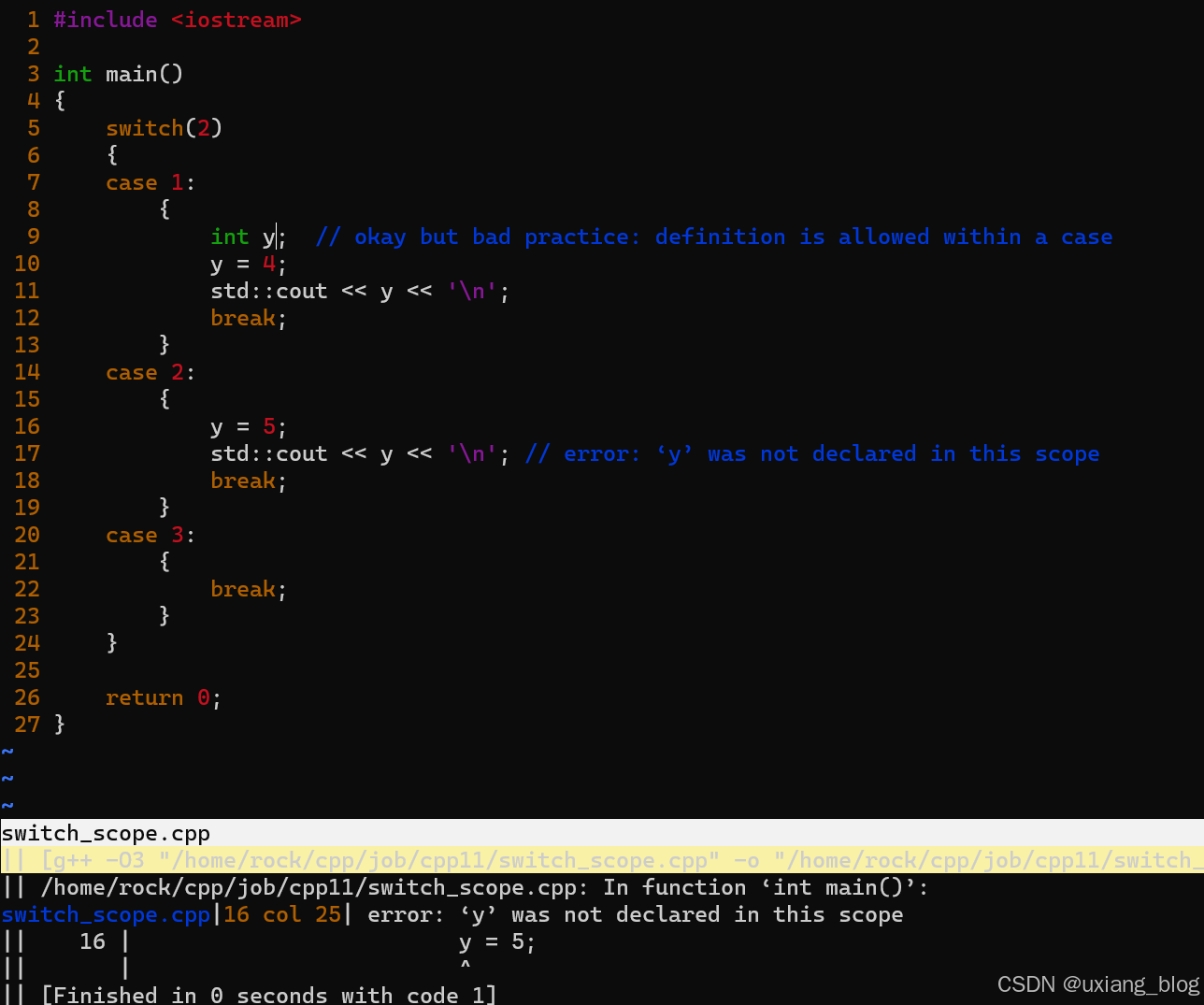

Agent 垂直技术社区,欢迎活跃、内容共建。
更多推荐



 7
7 0
0- 0


 已为社区贡献14条内容

所有评论(0)