C++set与map的用法以及用AVL树封装
set与map的常见用法
set
set是有序容器,容器里的元素默认按从小到大的顺序,且容器里不会存在重复元素(自动去重),其底层一般用红黑树实现,插入、删除、查找的效率都是O(logN)
1.构造
void test_set01()
{
    set<int> s1;    // 默认构造
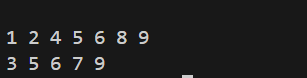
    set<int> s2 = {4,4,4,4,2,2,2,1,8,6,5,9};  // 列表构造

    int a[] = {6,3,5,7,9,2};
    set<int> s3(a, a + 5);   // 迭代器区间构造

    for(auto& e : s1) cout << e << ' ';
    cout << endl;

    for(auto& e : s2) cout << e << ' ';
    cout << endl;

    for(auto& e : s3) cout << e << ' ';
    cout << endl;
}
运行结果
也可以自定义set里面元素的顺序
struct my_cmp
{
    // 判断a是否在b之前。
    bool operator() (int a, int b) const
    {
        return abs(a) < abs(b); // 若|a| < |b|,则a在b前面
    }
};
void test_set01()
{
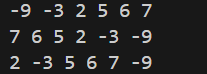
    int a[6] = {6,-3,5,7,-9,2};
    set<int> s(a, a + 6);       // 默认升序
    set<int, greater<int>> s1(a, a + 6);    // 降序
    set<int, my_cmp> s2(a, a + 6);      // 按绝对值升序

    for(auto& e : s) cout << e << ' ';
    cout << endl;

    for(auto& e : s1) cout << e << ' ';
    cout << endl;

    for(auto& e : s2) cout << e << ' ';
    cout << endl;
}
运行结果
2.查找元素
void test_set02()
{
    set<int> s = { 2,3,5,6,7,9 };

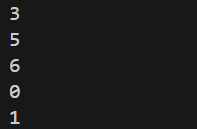
    auto it = s.find(3);    // 查找元素3。找到了返回指向元素的迭代器,否则返回s.end()
    cout << *it << endl;

    it = s.lower_bound(5);  // 查找第一个 >= 5 的元素,找到了返回其迭代器,否则返回s.end();
    cout << *it << endl;

    it = s.upper_bound(5);  // 查找第一个 > 5 的元素,找到了返回其迭代器,否则返回s.end();
    cout << *it << endl;

    int cnt = s.count(4);   // 查询容器中元素4的个数。对于set而言,找到了返回1,否则返回0
    cout << cnt << endl;
    cnt = s.count(5);
    cout << cnt << endl;
}
运行结果
3.插入元素
void test_set03()
{
    set<int> s;
    int a[] = { 2,3,5,6,7,9 };
    for(auto e : a)
        s.insert(e);    // 把a数组的所有元素插入到s中

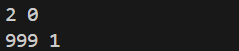
    auto p = s.insert(2);    // 由于容器中已经有2了,这里会插入失败
    // insert的返回值:
    // 成功插入返回 pair<插入元素的迭代器, true>,否则返回 pair<插入元素的迭代器, false>
    cout << *(p.first) << " " << p.second << endl;

    p = s.insert(999);
    cout << *(p.first) << " " << p.second << endl;
}
运行结果
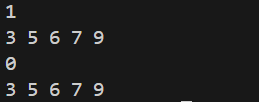
4.删除元素
void test_set04()
{
    set<int> s = { 2,3,5,6,7,9 };
    int cnt = s.erase(2);   // 删除2。
    // erase的返回值是成功删除的元素个数。对于set而言成功删除返回1,否则返回0
    cout << cnt << endl;
    for(auto& e : s) cout << e << ' ';
    cout << endl;

    cnt = s.erase(100);
    cout << cnt << endl;
    for(auto& e : s) cout << e << ' ';
    cout << endl;
}
运行结果
5.其他
void test_set05()
{
    set<int> s = { 2,3,5,6,7,9 };

    // 1.迭代器。begin()返回第一个元素的迭代器;end()返回最后一个元素的下一个元素的迭代器
    auto it = s.begin();
    while(it != s.end())
    {
        cout << *it << ' ';
        // *it = 999; // err 注意不可修改set内部的元素。因为set容器的元素之间相互关联
        ++it;
    }

    // 2.容量相关
    cout << s.size() << endl;   // 返回容器里的元素个数
    cout << s.empty() << endl;  // 判断容器里是否为空。为空返回true,否则返回false
    s.clear();  // 清空容器
}
set不支持插入重复元素,而multiset支持,其用法与set类似。 参考官方文档
map
set存储是单一元素key,set中的元素是按key的先后顺序排列的。
map在set之上又对key绑定了数据,map存储的的元素是pair<key, value>,map中的元素按key先后顺序排列【注意不是按pair<key, value>先后顺序排列】。
1.构造
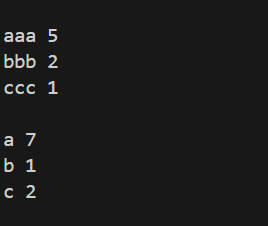
void test_map01()
{
    map<string, int> m;     // 默认构造
    pair<string, int> p[3] = { {"aaa", 5}, {"bbb", 2}, {"ccc", 1} };
    map<string, int> m1(p, p + 3);  // 迭代器区间构造

    map<string, int> m2 = { {"c", 2}, {"b", 1}, {"a", 7} };   // 列表构造

    for(auto& p : m)
        cout << p.first << ' ' << p.second << endl;
    cout << endl;

    for(auto& p : m1)
        cout << p.first << ' ' << p.second << endl;
    cout << endl;

    for(auto& p : m2)
        cout << p.first << ' ' << p.second << endl;
    cout << endl;
}
运行结果
与set类似,map也可以自定义元素的顺序
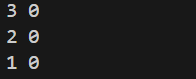
void test_map01()
{
    map<int, int, greater<int>> m = { {1,0}, {2,0}, {3,0} };	// 按key从大到小
    for(auto& p : m)
        cout << p.first << ' ' << p.second << endl;
    cout << endl;

    // 错误写法:
    // map<int, int, greater<pair<int,int>>> m = { {1,0}, {2,0}, {3,0} };
    // 注意是按key比较,而非pair<key, value>
}
运行结果
2.查找元素
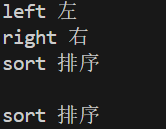
void test_map02()
{
    map<string, string> m = { {"left", "左"}, {"right", "右"}, {"sort", "排序"} };
    for(auto& p : m)
        cout << p.first << ' ' << p.second << endl;
    cout << endl;

    auto it = m.find("sort");   // 查找key为sort的元素。找到了返回该元素的迭代器,否则返回m.end()
    cout << it->first << " " << it->second << endl;
    it = m.find("xxx");
}
map的lower_bound与upper_bound与set类似,这里不过多讲解
3.插入元素
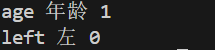
void test_map03()
{
    map<string, string> m = { {"left", "左"}, {"right", "右"}, {"sort", "排序"} };

    auto it = m.insert({"age", "年龄"});    // m内部元素类型为pair<string,string>,插入的元素类型应当也是pair<string,string>
    // insert的返回值:
    // 成功插入返回 pair<指向该元素的迭代器, true>,否则返回pair<指向该元素的迭代器, false>
    cout << it.first->first << ' ' <<  it.first->second << ' ' << it.second << endl;

    it = m.insert({"left", "剩余"});    // m中已经有key值为"left"的元素了,这里会插入失败
    cout << it.first->first << ' ' <<  it.first->second << ' ' << it.second << endl;
}
运行结果
4.[]重载
map还重载了[],函数原型及用法如下:
value& operator[](const key& k);
查找key值为k的元素,并返回该元素对应的value。
若k不存在,则会先插入 {k, value()} (第二个是value的默认值),再返回其对应的value。
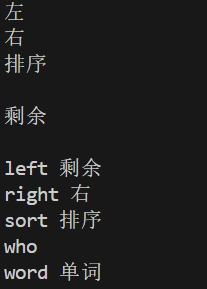
void test_map03()
{
    map<string, string> m = { {"left", "左"}, {"right", "右"}, {"sort", "排序"} };

    // 1.通过key查找value
    cout << m["left"] << endl;
    cout << m["right"] << endl;
    cout << m["sort"] << endl << endl;

    m["left"] = "剩余"; // 修改value
    cout << m["left"] << endl << endl;

    // 2.充当插入
    m["word"] = "单词"; // 插入{"word", "单词"}。
    // 【其实底层是先插入{"word", string()}, 然后再将value修改为"单词”】 插入{"word", string()}时,由于已经存在key为"word"的元素了,会插入失败

    m["who"];       // 没有给value,会用其默认构造,相当于插入{"who", string()}

    for(auto& p : m)
        cout << p.first << ' ' << p.second << endl;
    cout << endl;
}
运行结果
5.删除元素
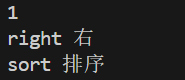
void test_map04()
{
    map<string, string> m = { {"left", "左"}, {"right", "右"}, {"sort", "排序"} };

    int cnt = m.erase("left"); // 删除key为left的元素。返回成功删除的元素个数,对map而言:成功删除返回1,否则返回0
    cout << cnt << endl;

    for(auto& p : m)
        cout << p.first << ' ' << p.second << endl;
    cout << endl;
}
运行结果
6.其他
void test_map05()
{
    map<int, int> m = { {2,3}, {5,6}, {7,9} };  // m存储的元素类型为 pair<int,int>

    // 1.迭代器。begin()返回第一个元素的迭代器;end()返回最后一个元素的下一个元素的迭代器
    auto it = m.begin();
    while(it != m.end())
    {
        cout << it->first << ' ' << it->second << endl;
        // cout << (*it).first << ' ' << (*it).second << endl; // 也可以这样写。it是指向 pair<int,int> 的迭代器

        // it->first = 999;  // err 注意:key不可修改
        ++it;
    }

    // 2.容量相关
    cout << m.size() << endl;   // 返回容器里的元素个数
    cout << m.empty() << endl;  // 判断容器里是否为空。为空返回true,否则返回false
    m.clear();  // 清空容器
}
map不支持插入key值重复的元素,multimap支持,其用法与map类似。参考官方文档
set与map可以当哈希表使用,其用法需多刷题加以巩固。
AVL树封装set与map
此部分内容建立在上篇 C++平衡树之AVL树 之上
开始此部分前,请确保会AVL树的查找、插入、求前驱、求后继操作(删除操作为拓展内容)
AVL树回顾
相较于上篇,我简化了一下AVL树
#include<iostream>
using namespace std;

template<class T>
struct AVLtree_node
{
    T _val; // 权值
    int _h = 1; // 以该节点为根的子树的高度(为了保持平衡)
    int _size = 1;  // 以该节点为根的子树的大小(为了可以查询树中排名第k的节点)
	// 相较于上篇,这里删除了_cnt,不支持插入重复元素

    AVLtree_node* _left = nullptr;    // 左儿子
    AVLtree_node* _right = nullptr;   // 右儿子
    AVLtree_node* _parent = nullptr;  // 父节点
    AVLtree_node(const T& x = T())
        :_val(x)
    {}
};


template<class T>
class AVLtree
{
	typedef AVLtree_node<T> node;
	typedef AVLtree_node<T>* node_ptr;
protected:
	node* _root = nullptr;
public:

    构造、析构、拷贝构造、赋值重载等与上篇的一致

    // 找到了返回该节点的指针,否则返回其应当插入位置的父节点的指针
	node* find(const T& val)
	{
		node* cur = _root;
		node* p = nullptr;	// 记录cur的父节点
		while (cur)
		{
			p = cur;
			if (val < cur->_val)
				cur = cur->_left;
			else if (val > cur->_val)
				cur = cur->_right;
			else
				return cur;
		}
		return p;
	}
	// 成功插入返回true,否则返回false
	bool insert(const T& val)
	{
		if (!_root)
		{
			_root = get_node(val);
			return true;
		}
		node* cur = find(val);
		if (cur->_val == val)
			return false;
		else
		{
			// 到这里说明未找到,cur是val应插入的位置的父节点
			node* p = cur;
			cur = get_node(val);
			cur->_parent = p;
			if (val < p->_val) p->_left = cur;
			else p->_right = cur;
            update(cur);
            return true;
		}
	}

    int size() { return size(_root); }
    bool empty() { return !_root; }
    void clear()
    {
        _clear(_root);
        _root = nullptr;
    }

protected:
    void _clear(node* x)
    {
        if(!x) return;
        _clear(x->_left);
        _clear(x->_right);
        del_node(x);
    }

	node* get_node(const T& val)  {  return new node(val);  }
	void del_node(node* x) { delete x; }
	int height(node* x) { return x ? x->_h : 0; }
	int size(node* x) { return x ? x->_size : 0; }

	// 更新x的_h与_size
	void push_up(node* x)
	{
		if (x)
		{
			x->_h = max(height(x->_left), height(x->_right)) + 1;
			x->_size = size(x->_left) + size(x->_right) + 1;
		}
	}
    void update(node* p)
    {
        while(p)
        {
            node* g = p->_parent;
            int l = height(p->_left), r =height(p->_right);
            if(abs(l - r) <= 1)
                push_up(p);
            else       // 平衡破坏,需旋转调整
                balance(p);
            p = g;
        }
    }
	void balance(node* p)
	{
		int l = height(p->_left), r = height(p->_right);
		if (l > r)
		{
			int ll = height(p->_left->_left), lr = height(p->_left->_right);
			// LL型
			if (ll >= lr)
				rotateR(p);
			// LR型
			else {
				rotateL(p->_left);
				rotateR(p);
			}
		}
		else {
			int rr = height(p->_right->_right), rl = height(p->_right->_left);
			// RR型
			if (rr >= rl)
				rotateL(p);
			// RL型
			else {
				rotateR(p->_right);
				rotateL(p);
			}
		}
	}
	//     g               g
	//     |               |
    //     p               x
    //    / \             / \
    //   x   C   ====>   A   p
    //  / \                 / \
    // A   B               B   C
    void rotateR(node* p)	// 右旋
    {
        node* g = p->_parent;
        node* x = p->_left;
        p->_left = x->_right;
        if(x->_right) x->_right->_parent = p;

        x->_right = p;
        p->_parent = x;

        x->_parent = g;
        if(g){
            if(p == g->_left) g->_left = x;
            else g->_right = x;
        }
		// 注意需先更新p,再更新x
        push_up(p);
        push_up(x);
        if(_root == p) // 注意可能需要更新根节点
			_root = x;
    }

	//     g               g
	//     |               |
    //     p               x
    //    / \             / \
    //   x   C   <====   A   p
    //  / \                 / \
    // A   B               B   C
    void rotateL(node* x)	// 左旋,与右旋类似
    {
        node* g = x->_parent;
        node* p = x->_right;
        x->_right = p->_left;
        if(p->_left) p->_left->_parent = x;

        p->_left = x;
        x->_parent = p;

        p->_parent = g;
        if(g){
            if(x == g->_left) g->_left = p;
            else g->_right = p;
        }
        push_up(x);
        push_up(p);
        if(_root == x) _root = p;
    }
AVL树迭代器
与之前讲的list迭代器类似,这里也需要把AVL树节点的指针封装一下,然后用运算符重载修改其行为。迭代器按中序遍历的顺序。operator++就相当于求后继,operator--就相当于求前驱
// 普通迭代器 ==> 封装node*
template<class T>
struct AVLtree_iterator
{
    typedef AVLtree_node<T>		node;
	typedef node*				node_ptr;
    typedef AVLtree_iterator	Self;

    node_ptr _ptr;		// 封装节点的指针
    node_ptr _root;		// 为了处理--end(), 还需额外封装一个_root指向树的根节点

    AVLtree_iterator(node_ptr p = nullptr, node_ptr r = nullptr)
        :_ptr(p)
		,_root(r)
    {}

	// 前置++,找后继
    Self& operator++()
    {
		// 特判迭代器为end()的情况
		if (!_ptr)
			assert(false);
		// 右子树存在,则右子树的最左侧节点即为后继
        if(_ptr->_right)
        {
            _ptr = _ptr->_right;
            while(_ptr->_left)
                _ptr = _ptr->_left;
        }
        // 右子树不存在,向上找第一个右拐的节点
        else{
            node_ptr p = _ptr->_parent;
            while(p && _ptr == p->_right)
            {
                _ptr = p;
                p = p->_parent;
            }
            _ptr = p;
        }
        return *this;
    }
	// 后置++
	Self operator++(int)
	{
		Self tmp(*this);
		++(*this);
		return tmp;
	}

	// 前置--,找前驱
    Self& operator--()
    {
        // 特判迭代器为end()的情况
        if(!_ptr){
			if (!_root)		// 空树应当直接报错
				assert(false);

			// 找最后一个节点
            _ptr = _root;
            while(_ptr->_right)
                _ptr = _ptr->_right;
            return *this;
        }
        // 左子树存在,则左子树的最右侧节点即为前驱
        if(_ptr->_left)
        {
            _ptr = _ptr->_left;
            while(_ptr->_right)
                _ptr = _ptr->_right;
        }
        // 左子树不存在,向上找第一个左拐的节点
        else{
            node_ptr p = _ptr->_parent;
            while(p && _ptr == p->_left)
            {
                _ptr = p;
                p = p->_parent;
            }
            _ptr = p;
        }
        return *this;
    }
	// 后置--
	Self operator--(int)
	{
		Self tmp(*this);
		--(*this);
		return tmp;
	}

    bool operator==(const Self& it) const
    { return _ptr == it._ptr; }
    bool operator!=(const Self& it) const
    { return _ptr != it._ptr; }

    // 下面两个函数已经在list那篇介绍过了
    T& operator* () { return _ptr->_val; }
    T* operator-> () { return &_ptr->_val; }
};

// const迭代器 ==> 封装 const node*
template<class T>
struct AVLtree_const_iterator
{
    typedef AVLtree_node<T>			node;
	typedef const node*				node_ptr;
    typedef AVLtree_const_iterator	Self;

    node_ptr _ptr;		// 封装节点的指针
    node_ptr _root;		// 为了处理--end(), 还需额外封装一个_root指向树的根节点

    AVLtree_const_iterator(node_ptr p = nullptr, node_ptr r = nullptr)
        :_ptr(p)
		,_root(r)
    {}

    // 有时候可能需要用普通迭代器构造const迭代器
	AVLtree_const_iterator(const AVLtree_iterator<T>& it)
		:_ptr(it._ptr)
		,_root(it._root)
	{}

	//  ++/--/==/!= 的代码与普通迭代器的一样

    const T& operator* () { return _ptr->_val; }
    const T* operator-> () { return &_ptr->_val; }
};
再添加begin与end函数
template<class T>
class AVLtree
{
	// ...省略其他代码
public:

	typedef AVLtree_iterator<T> iterator;
	iterator begin()	// 返回中序遍历第一个,即最左侧元素
	{
		if (!_root) return { _root, _root };
		node* cur = _root;
		while (cur->_left) cur = cur->_left;
		return { cur, _root };
	}
	iterator end() { return { nullptr, _root }; }

	typedef AVLtree_const_iterator<T> const_iterator;
	const_iterator begin() const
	{
		if (!_root) return { _root, _root };
		node* cur = _root;
		while (cur->_left) cur = cur->_left;
		return { cur, _root };
	}
	const_iterator end() const { return { nullptr, _root }; }

	// ...省略其他代码
};
注:若树中执行插入/删除,根节点可能会改变,迭代器就会失效。
(拓展:如果AVL树额外设置了哨兵节点,例如哨兵节点的有个指针指向_root,然后end()返回的并不是nullptr而是哨兵,这样的话–end()也能找到最右侧节点,迭代器就无需添加根节点指针了。)
测试
void test01()
{
	int a[] = { -16, 3, 7, -11, -9, 26, 18, -14, -15 };
	AVLtree<int> t;
	for (auto e : a) t.insert(e);
	for (auto it = t.begin(); it != t.end(); ++it)
		cout << *it << ' ';
	cout << endl;

	auto it = t.begin();
	*it = 999;	// 普通迭代器,可修改内容
	for (auto it = t.begin(); it != t.end(); ++it)
		cout << *it << ' ';
	cout << endl;

	const AVLtree<int> t1;
	for (auto e : a) t1.insert(e);
	for (auto it = t1.begin(); it != t1.end(); ++it)
	{
		cout << *it << ' ';
		//*it = 10; // err 不可修改
	}
}
运行结果
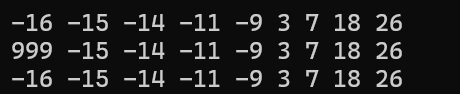
但是有个问题,二叉搜索树每个节点都是有关联性的(根据节点权值排列),如果通过迭代器修改了树中节点的权值,可能会破坏二叉搜索树的性质,为此需要将AVL树进一步封装成set、map
AVL树自定义比较顺序
上篇写的AVL树中序遍历只能按从小到大的顺序,但有时候可能会按其他顺序(例如按绝对值从小到大等),为此需要额外提供比较函数。
template<class T, class Compare = less<T>>
class AVLtree
{
	typedef AVLtree_node<T> node;
protected:
	node* _root = nullptr;
	Compare _cmp;
	// _cmp(t1, t2): 若t1在t2的前面,返回true,否则返回false
public:

	// ...省略迭代器等代码

	// 顺便把find与insert的返回值改为迭代器
	// find返回值:找到了返回 值为val的迭代器,否则返回val应当插入位置的父节点的迭代器
	iterator find(const T& val)
	{
		node* cur = _root;
		node* p = nullptr;	// 记录cur的父节点
		while (cur)
		{
			p = cur;
			if (_cmp(val, cur->_val))	// val < cur->_val
				cur = cur->_left;
			else if (_cmp(cur->_val, val))	// val > cur->_val
				cur = cur->_right;
			else
				return { cur, _root };		// 迭代器提供了相关的构造
		}
		return { p, _root };
	}

	// insert返回值:值为val的迭代器
	iterator insert(const T& val)
	{
		if (!_root)
		{
			_root = get_node(val);
			return {_root, _root};
		}
		node* cur = find(val)._ptr;
		if(_cmp(cur->_val, val) || _cmp(val, cur->_val))	// cur->_val != val
		{
			node* p = cur;
			cur = get_node(val);
			cur->_parent = p;
			if (_cmp(val, p->_val))		// val < p->_val
				p->_left = cur;
			else
				p->_right = cur;
			update(cur);
		}
		return {cur, _root};;
	}

	// ...省略其他代码
};
测试
struct my_cmp
{
	// 按绝对值大小比较
	bool operator()(int a, int b) const
	{
		return abs(a) < abs(b);
	}
};
void test02()
{
	int a[] = {-16, 3, 7, -11, -9, 26, 18, -14, -15};
	AVLtree<int> t;
	AVLtree<int, my_cmp> t1;

	for (auto e : a)
	{
		t.insert(e);
		t1.insert(e);
	}

	for (auto e : t)
		cout << e << ' ';
	cout << endl;

	for (auto e : t1)
		cout << e << ' ';
}
运行结果

兼容set与map
我们上述实现的AVL只能封装set,因为AVL内部元素key的排列方式就按key的先后顺序。
由于map存储的元素是pair<key, value>,排列顺序是按key而非pair<key, value>。为了兼容map,需再额外修改一下AVL树
template<class K, class T, class K_of_T, class Compare = less<K>>
class AVLtree
{
	typedef AVLtree_node<T> node;
	typedef AVLtree_node<T>* node_ptr;
protected:
	node* _root = nullptr;
    Compare _cmp;
    K_of_T _get_key;
}

新增了两个模板参数:K与K_of_T
K:代表key的类型。容器中的元素需按key的先后顺序排列
T:容器中的元素类型。例如set存储的是key,而map存储的是pair<key,value>
K_of_T:仿函数,用于根据容器中的元素求得对应的key。例如set的key就是其存储的元素,而map的key是存储的元素.first
Compare:仿函数,用于确定key的先后顺序
然后再修该一下find与insert函数
    // 根据key查找
	iterator find(const K& key)
	{
		node* cur = _root;
		node* p = nullptr;
		while (cur)
		{
			p = cur;
            // 需要对_val再套一层_get_key求其key值
			if (_cmp(key, _get_key(cur->_val)))	// val < cur->_val
				cur = cur->_left;
			else if (_cmp(_get_key(cur->_val), key))	// val > cur->_val
				cur = cur->_right;
			else
				return { cur, _root };
		}
		return { p, _root };
	}

	// 插入的元素应该是T
	iterator insert(const T& val)
	{
		if (!_root)
		{
			_root = get_node(val);
			return {_root, _root};
		}
		// 下面也是类似,对_val再套一层_get_key
		node* cur = find(_get_key(val))._ptr;
		if(_cmp(_get_key(cur->_val), _get_key(val)) || _cmp(_get_key(val), _get_key(cur->_val)))	// cur->_val != val
		{
			node* p = cur;
			cur = get_node(val);
			cur->_parent = p;
			if (_cmp(_get_key(val), _get_key(p->_val)))		// val < p->_val
				p->_left = cur;
			else
				p->_right = cur;
			update(cur);
		}
		return {cur, _root};;
	}
封装set
成员变量
由于不可以修改set内部元素(修改会破坏二叉搜索树性质),所以我们对其数据类型加上const
template<class T, class Compare = less<T>>
class set
{
protected:
    typedef T K; // set就是根据存储的元素排序的

    struct set_key_of_T
    {
        const K& operator()(const T& t) const
        {
            return t;
        }
    };

    // 存储的元素类型加上const,防止修改
    typedef AVLtree<K, const T, set_key_of_T, Compare> tree_type;
    tree_type _t;
};
迭代器
直接用AVL的即可
    typedef tree_type::iterator         iterator;
    typedef tree_type::const_iterator   const_iterator;
    iterator begin() { return _t.begin(); }
    iterator end() { return _t.end(); }
    const_iterator begin() const { return _t.begin(); }
    const_iterator end() const { return _t.end(); }
由于树的节点_val是const T类型,AVL树的普通迭代器解引用会返回const T&,AVL树的const迭代器解引用会返回const const K&。
补充知识:const const K&是什么类型呢?
答:const重复修饰同一个类型时,编译器会将其视为冗余,最终类型不变。const const K&等价于const K&。
例如:
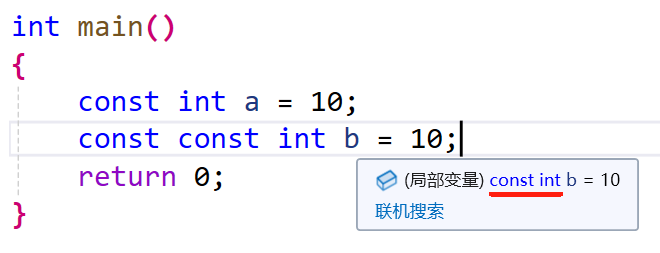
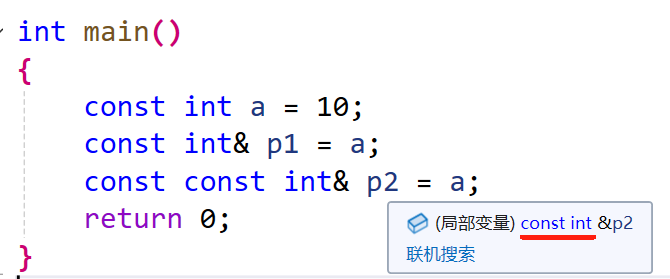
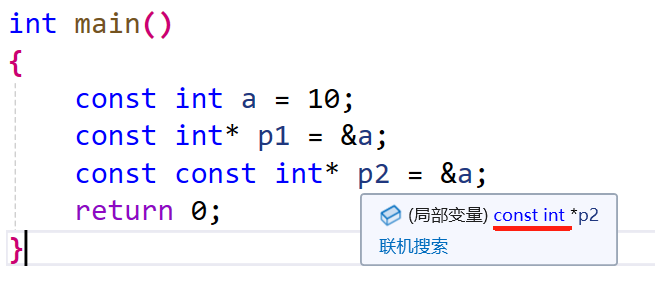
这样的话无论用普通迭代器还是const迭代器,都不能修改内部数据
封装find与insert
    // 注意set的find与AVL的find不同
    // AVL的find:找到了返回对应权值的迭代器,否则返回其父节点的迭代器
    // set的find:找到了返回对应权值的迭代器,否则返回end()
    iterator find(const K& key)
    {
        if(_t.empty()) return _t.end();

        Compare cmp;
        auto it = _t.find(key);
        if(!cmp(*it, key) && !cmp(key, *it))    // *it == key
            return it;
        return _t.end();
    }

    // 基于find,我们顺便封装一下count
    // 返回set中值为key的元素个数。找到了返回1,否则返回0
    int count(const K& key) {
        return find(key) != end();
    }

    // 注意set的insert与AVL的insert不同
    // AVL的insert:返回值为val的迭代器
	// set的insert:返回值是pair类型,<值为val的迭代器, bool>
    pair<iterator, bool> insert(const T& val)
    {
        int old_size = _t.size();
        auto it = _t.insert(val);
        if(_t.size() == old_size) // 插入后容器大小不变,说明插入失败;否则插入成功
            return {it, false};
        else
            return {it, true};
    }
封装lower_bound与upper_bound
    // 查询set中 >= key的最小的元素
    iterator lower_bound(const K& key)
    {
        if(_t.empty()) return _t.end();

        Compare cmp;
        auto it = _t.find(key);
        // 存在key,返回的就是key;
        // 否则返回的是key应该插入位置的父节点的迭代器,其父节点只能是key的前驱或后继!!!
        if(cmp(*it, key))   // *it < key
            ++it;
        return it;
    }

    // 查询set中 > key的最小的元素
    iterator upper_bound(const K& key)
    {
        if(_t.empty()) return _t.end();

        Compare cmp;
        auto it = _t.find(key);
        if(cmp(key, *it))   // *it > key
            return it;
        return ++it;
    }

	// 顺便提供size与empty函数
    int size() { return _t.size(); }
    bool empty() { return _t.empty(); }
封装erase(选看)
AVL树中的erase如下:(加上迭代器、比较函数、以及K_of_T)
	bool erase(const K& key)
    {
        if(!_root) return false;
        node* cur = find(key)._ptr;
        if(!_cmp(_get_key(cur->_val), key) && !_cmp(key, _get_key(cur->_val))) // key == cur->_val
        {
            node* p = cur->_parent;
            // 1.叶子节点:直接删除
            if(!cur->_left && !cur->_right)
            {
                if(!p) _root = nullptr; // 特判只有一个节点
                else if(cur == p->_left)
                    p->_left = nullptr;
                else
                    p->_right = nullptr;
                del_node(cur);
                update(p);	// 删除后从父节点往上更新
            }
            // 2.只有一个儿子:用儿子替代
            else if(!cur->_left || !cur->_right)
            {
                node* child = cur->_left ? cur->_left : cur->_right;
                if(!p) _root = child;   // 特判只有一个节点
                else if(p->_left == cur)
                    p->_left = child;
                else
                    p->_right = child;
                child->_parent = p;		// 别忘记连接父节点
                del_node(cur);
                update(p);	// 删除后从父节点往上更新
            }
            // 3.有两个儿子: 用前驱替代,然后删除前驱
            else{
                // 找前驱
                node* pre = cur->_left;
                node* pre_parent = cur;
                while(pre->_right)
                {
                    pre_parent = pre;
                    pre = pre->_right;
                }
                // 交换,然后删除前驱节点
                std::swap(cur->_val, pre->_val);
                // 到这里pre必定没有右儿子
                if(pre_parent->_left == pre)
                    pre_parent->_left = pre->_left;
                else
                    pre_parent->_right = pre->_left;
                if(pre->_left)
                    pre->_left->_parent = pre_parent;
                del_node(pre);
                update(pre_parent);	// 删除pre后,需从其父节点往上更新
            }
            return true;
        }
        return false;
    }

由于我set为了防止修改存储的元素,给其加上了const。
但erase的第三种情况(被删除节点有两个儿子),我是把两个节点的值进行交换std::swap(cur->_val, pre->_val);这就会报错。
为此需要修改指针,将pre直接移动到cur的位置
情况三修改后的代码:
            // 3.有两个儿子: 用前驱替代,然后删除前驱
            else{
                // 找前驱
                node* pre = cur->_left;
                node* pre_parent = cur;
                while(pre->_right)
                {
                    pre_parent = pre;
                    pre = pre->_right;
                }
                // 移动指针需特判pre就是cur的左儿子的情况
                node* x = cur, *y = pre;
                node* xp = x->_parent, *xl = x->_left, *xr = x->_right;
                node* yp = y->_parent, *yl = y->_left;
                if(yp->_left == y){
                    // 该情况说明y的父节点就是x
                    y->_parent = xp;
                    if(xp){
                        if(xp->_left == x) xp->_left = y;
                        else xp->_right = y;
                    }
                    else    _root = y;
                    y->_right = xr;
                    xr->_parent = y;
                    update(y);
                }
                else{
                    // 该情况说明y的父节点不是x
                    yp->_right = yl;
                    if(yl) yl->_parent = yp;
                    y->_parent = x->_parent;
                    if(x->_parent){
                        if(x->_parent->_left == x)
                            x->_parent->_left = y;
                        else
                            x->_parent->_right = y;
                    }
                    else _root = y;

                    y->_left = xl;
                    xl->_parent = y;
                    y->_right = xr;
                    xr->_parent = y;
                    update(yp);
                }
                del_node(x);
            }


然后set封装的erase就可以这样写了:
    int erase(const key_type& key) { return _t.erase(key); }
封装map
此部分与封装set类似,只不过需要按K比较
成员变量
template<class K, class V, class Compare = less<K>>
class map
{
protected:
	// map存储的元素类型实际是pair<K, V>
    typedef pair<const K, V> T; // 防止key被修改,这里加上const

    struct map_key_of_T
    {
        const K& operator()(const T& t) const
        {
            return t.first;
        }
    };
    typedef AVLtree<K, T, map_key_of_T, Compare> tree_type;
    tree_type _t;
};
迭代器
直接用AVL的即可
    typedef tree_type::iterator         iterator;
    typedef tree_type::const_iterator   const_iterator;
    iterator begin() { return _t.begin(); }
    iterator end() { return _t.end(); }
    const_iterator begin() const { return _t.begin(); }
    const_iterator end() const { return _t.end(); }
封装find与insert
	// 按K类型查找
    iterator find(const K& key)
    {
        if(_t.empty()) return _t.end();

        Compare cmp;
        auto it = _t.find(key);
        // 注意是按K比较,而非T
        if(!cmp(it->first, key) && !cmp(key, it->first))    // *it == key
            return it;
        return _t.end();
    }

    // 插入T类型元素
    pair<iterator, bool> insert(const T& val)
    {
        int old_size = _t.size();
        auto it = _t.insert(val);
        if(_t.size() == old_size) // 插入后容器大小不变,说明插入失败;否则插入成功
            return {it, false};
        else
            return {it, true};
    }
封装operator[]
    V& operator[](const K& key)
    {
        return insert({key, V()}).first->second;
    }
封装lower_bound与upper_bound
    iterator lower_bound(const K& key)
    {
        if(_t.empty()) return _t.end();

        Compare cmp;
        auto it = _t.find(key);
        if(cmp(it->first, key))   // *it < key
            ++it;
        return it;
    }

    iterator upper_bound(const K& key)
    {
        if(_t.empty()) return _t.end();

        Compare cmp;
        auto it = _t.find(key);
        if(cmp(key, it->first))   // *it > key
            return it;
        return ++it;
    }
封装erase与set那部分类似(需要对AVL的erase额外修改一下)
int erase(const K& key) { return _t.erase(key); }
完整代码
额外补充了const类型的函数封装
AVLtree.h
#pragma once
#include<iostream>
#include<assert.h>
using namespace std;

template<class T>
struct AVLtree_node
{
    T _val; // 权值
    int _h; // 以该节点为根的子树的高度(为了保持平衡)
    int _size;  // 以该节点为根的子树的大小(为了可以查询树中排名第k的节点)

    AVLtree_node* _left;    // 左儿子
    AVLtree_node* _right;   // 右儿子
    AVLtree_node* _parent;  // 父节点
    AVLtree_node(const T& x = T())
        :_val(x)
        ,_h(1)
        ,_size(1)
        ,_left(nullptr)
        ,_right(nullptr)
        ,_parent(nullptr)
    {}
};

template<class T>
struct AVLtree_iterator
{
    typedef AVLtree_node<T>		node;
	typedef node*				node_ptr;
    typedef AVLtree_iterator	Self;

    node_ptr _ptr;		// 封装节点的指针
    node_ptr _root;		// 为了处理--end(), 还需额外封装一个_root指向树的根节点

    AVLtree_iterator(node_ptr p = nullptr, node_ptr r = nullptr)
        :_ptr(p)
		,_root(r)
    {}

	// 前置++,找后继
    Self& operator++()
    {
		// 特判迭代器为end()的情况
		if (!_ptr)
			assert(false);
		// 右子树存在,则右子树的最左侧节点即为后继
        if(_ptr->_right)
        {
            _ptr = _ptr->_right;
            while(_ptr->_left)
                _ptr = _ptr->_left;
        }
        // 右子树不存在,向上找第一个右拐的节点
        else{
            node_ptr p = _ptr->_parent;
            while(p && _ptr == p->_right)
            {
                _ptr = p;
                p = p->_parent;
            }
            _ptr = p;
        }
        return *this;
    }
	// 后置++
	Self operator++(int)
	{
		Self tmp(*this);
		++(*this);
		return tmp;
	}

	// 前置--,找前驱
    Self& operator--()
    {
        // 特判迭代器为end()的情况
        if(!_ptr){
			if (!_root)		// 空树应当直接报错
				assert(false);

			// 找最后一个节点
            _ptr = _root;
            while(_ptr->_right)
                _ptr = _ptr->_right;
            return *this;
        }
        // 左子树存在,则左子树的最右侧节点即为前驱
        if(_ptr->_left)
        {
            _ptr = _ptr->_left;
            while(_ptr->_right)
                _ptr = _ptr->_right;
        }
        // 左子树不存在,向上找第一个左拐的节点
        else{
            node_ptr p = _ptr->_parent;
            while(p && _ptr == p->_left)
            {
                _ptr = p;
                p = p->_parent;
            }
            _ptr = p;
        }
        return *this;
    }
	// 后置--
	Self operator--(int)
	{
		Self tmp(*this);
		--(*this);
		return tmp;
	}

    bool operator==(const Self& it) const
    { return _ptr == it._ptr; }
    bool operator!=(const Self& it) const
    { return _ptr != it._ptr; }

    // 下面两个函数已经在list那篇介绍过了
    T& operator* () { return _ptr->_val; }
    T* operator-> () { return &_ptr->_val; }
};

template<class T>
struct AVLtree_const_iterator
{
    typedef AVLtree_node<T>			node;
	typedef const node*				node_ptr;
    typedef AVLtree_const_iterator	Self;

    node_ptr _ptr;		// 封装节点的指针
    node_ptr _root;		// 为了处理--end(), 还需额外封装一个_root指向树的根节点

    AVLtree_const_iterator(node_ptr p = nullptr, node_ptr r = nullptr)
        :_ptr(p)
		,_root(r)
    {}

    // 有时候可能需要用普通迭代器构造const迭代器
	AVLtree_const_iterator(const AVLtree_iterator<T>& it)
		:_ptr(it._ptr)
		,_root(it._root)
	{}

	// 前置++,找后继
    Self& operator++()
    {
		// 特判迭代器为end()的情况
		if (!_ptr)
			assert(false);
		// 右子树存在,则右子树的最左侧节点即为后继
        if(_ptr->_right)
        {
            _ptr = _ptr->_right;
            while(_ptr->_left)
                _ptr = _ptr->_left;
        }
        // 右子树不存在,向上找第一个右拐的节点
        else{
            node_ptr p = _ptr->_parent;
            while(p && _ptr == p->_right)
            {
                _ptr = p;
                p = p->_parent;
            }
            _ptr = p;
        }
        return *this;
    }
	// 后置++
	Self operator++(int)
	{
		Self tmp(*this);
		++(*this);
		return tmp;
	}

	// 前置--,找前驱
    Self& operator--()
    {
        // 特判迭代器为end()的情况
        if(!_ptr){
			if (!_root)		// 空树应当直接报错
				assert(false);

			// 找最后一个节点
            _ptr = _root;
            while(_ptr->_right)
                _ptr = _ptr->_right;
            return *this;
        }
        // 左子树存在,则左子树的最右侧节点即为前驱
        if(_ptr->_left)
        {
            _ptr = _ptr->_left;
            while(_ptr->_right)
                _ptr = _ptr->_right;
        }
        // 左子树不存在,向上找第一个左拐的节点
        else{
            node_ptr p = _ptr->_parent;
            while(p && _ptr == p->_left)
            {
                _ptr = p;
                p = p->_parent;
            }
            _ptr = p;
        }
        return *this;
    }
	// 后置--
	Self operator--(int)
	{
		Self tmp(*this);
		--(*this);
		return tmp;
	}

    bool operator==(const Self& it) const
    { return _ptr == it._ptr; }
    bool operator!=(const Self& it) const
    { return _ptr != it._ptr; }


    const T& operator* () { return _ptr->_val; }
    const T* operator-> () { return &_ptr->_val; }
};

template<class K, class T, class K_of_T, class Compare = less<K>>
class AVLtree
{
	typedef AVLtree_node<T> node;
	typedef AVLtree_node<T>* node_ptr;
protected:
	node* _root = nullptr;
    Compare _cmp;
    K_of_T _get_key;

public:
    void print() { _print(_root); }
    void _print(node* x)
    {
        if(!x) return;
        _print(x->_left);
        cout << x->_val << ' ';
        _print(x->_right);
    }
    typedef AVLtree_iterator<T> iterator;
	iterator begin()	// 返回中序遍历第一个,即最左侧元素
	{
		if (!_root) return { _root, _root };
		node* cur = _root;
		while (cur->_left) cur = cur->_left;
		return { cur, _root };
	}
	iterator end() { return { nullptr, _root }; }

    typedef AVLtree_const_iterator<T> const_iterator;
	const_iterator begin() const
	{
		if (!_root) return { _root, _root };
		node* cur = _root;
		while (cur->_left) cur = cur->_left;
		return { cur, _root };
	}
	const_iterator end() const { return { nullptr, _root }; }


    // 根据key查找
	iterator find(const K& key)
	{
		node* cur = _root;
		node* p = nullptr;
		while (cur)
		{
			p = cur;
            // 需要对_val再套一层_get_key求的其key值
			if (_cmp(key, _get_key(cur->_val)))	// val < cur->_val
				cur = cur->_left;
			else if (_cmp(_get_key(cur->_val), key))	// val > cur->_val
				cur = cur->_right;
			else
				return { cur, _root };
		}
		return { p, _root };
	}

    // 新增const类型的find
	const_iterator find(const K& key) const
	{
		const node* cur = _root;
		const node* p = nullptr;
		while (cur)
		{
			p = cur;
            // 需要对_val再套一层_get_key求的其key值
			if (_cmp(key, _get_key(cur->_val)))	// val < cur->_val
				cur = cur->_left;
			else if (_cmp(_get_key(cur->_val), key))	// val > cur->_val
				cur = cur->_right;
			else
				return { cur, _root };
		}
		return { p, _root };
	}

	// 插入的元素应该是T
	iterator insert(const T& val)
	{
		if (!_root)
		{
			_root = get_node(val);
			return {_root, _root};
		}
		node* cur = find(_get_key(val))._ptr;
        // 这里也是类似,对_val再套一层_get_key
		if(_cmp(_get_key(cur->_val), _get_key(val)) || _cmp(_get_key(val), _get_key(cur->_val)))	// cur->_val != val
		{
			node* p = cur;
			cur = get_node(val);
			cur->_parent = p;
			if (_cmp(_get_key(val), _get_key(p->_val)))		// val < p->_val
				p->_left = cur;
			else
				p->_right = cur;
			update(cur);
		}
		return {cur, _root};;
	}

	bool erase(const K& key)
    {
        if(!_root) return false;
        node* cur = find(key)._ptr;
        if(!_cmp(_get_key(cur->_val), key) && !_cmp(key, _get_key(cur->_val)))
        {
            node* p = cur->_parent;
            // 1.叶子节点:直接删除
            if(!cur->_left && !cur->_right)
            {
                if(!p) _root = nullptr; // 特判只有一个节点
                else if(cur == p->_left)
                    p->_left = nullptr;
                else
                    p->_right = nullptr;
                del_node(cur);
                update(p);	// 删除后从父节点往上更新
            }
            // 2.只有一个儿子:用儿子替代
            else if(!cur->_left || !cur->_right)
            {
                node* child = cur->_left ? cur->_left : cur->_right;
                if(!p) _root = child;   // 特判只有一个节点
                else if(p->_left == cur)
                    p->_left = child;
                else
                    p->_right = child;
                child->_parent = p;		// 别忘记连接父节点
                del_node(cur);
                update(p);	// 删除后从父节点往上更新
            }
            // 3.有两个儿子: 用前驱替代,然后删除前驱
            else{
                // 找前驱
                node* pre = cur->_left;
                node* pre_parent = cur;
                while(pre->_right)
                {
                    pre_parent = pre;
                    pre = pre->_right;
                }
                // // 交换,然后删除前驱节点
                // std::swap(cur->_val, pre->_val);
                // // 到这里pre必定没有右儿子
                // if(pre_parent->_left == pre)
                //     pre_parent->_left = pre->_left;
                // else
                //     pre_parent->_right = pre->_left;
                // if(pre->_left)
                //     pre->_left->_parent = pre_parent;
                // del_node(pre);
                // update(pre_parent);	// 删除pre后,需从其父节点往上更新

                node* x = cur, *y = pre;
                node* xp = x->_parent, *xl = x->_left, *xr = x->_right;
                node* yp = y->_parent, *yl = y->_left;
                if(yp->_left == y){
                    // 该情况说明y的父节点就是x
                    y->_parent = xp;
                    if(xp){
                        if(xp->_left == x) xp->_left = y;
                        else xp->_right = y;
                    }
                    else    _root = y;
                    y->_right = xr;
                    xr->_parent = y;
                    update(y);
                }
                else{
                    // 该情况说明y的父节点不是x
                    yp->_right = yl;
                    if(yl) yl->_parent = yp;
                    y->_parent = x->_parent;
                    if(x->_parent){
                        if(x->_parent->_left == x)
                            x->_parent->_left = y;
                        else
                            x->_parent->_right = y;
                    }
                    else _root = y;

                    y->_left = xl;
                    xl->_parent = y;
                    y->_right = xr;
                    xr->_parent = y;
                    update(yp);
                }
                del_node(x);
            }
            return true;
        }
        return false;
    }

    int size() const { return size(_root); }
    bool empty() const { return !_root; }
    void clear()
    {
        _clear(_root);
        _root = nullptr;
    }
protected:
    void _clear(node* x)
    {
        if(!x) return;
        _clear(x->_left);
        _clear(x->_right);
        del_node(x);
    }
	node* get_node(const T& val)  {  return new node(val);  }
	void del_node(node* x) { delete x; }

	// 计算以x为根的子树的高度
	int height(node* x) { return x ? x->_h : 0; }

	// 计算以x为根的子树的大小
	int size(node* x) const { return x ? x->_size : 0; }

	// 更新x的_h与_size
	void push_up(node* x)
	{
		if (x)
		{
			x->_h = max(height(x->_left), height(x->_right)) + 1;
			x->_size = size(x->_left) + size(x->_right) + 1;
		}
	}
    void update(node* p)
    {
        while(p)
        {
            node* g = p->_parent;
            int l = height(p->_left), r =height(p->_right);
            if(abs(l - r) <= 1)
                push_up(p);
            else       // 平衡破坏,需旋转调整
                balance(p);
            p = g;
        }
    }
	void balance(node* p)
	{
		int l = height(p->_left), r = height(p->_right);
		if (l > r)
		{
			int ll = height(p->_left->_left), lr = height(p->_left->_right);
			// LL型
			if (ll >= lr)
				rotateR(p);
			// LR型
			else {
				rotateL(p->_left);
				rotateR(p);
			}
		}
		else {
			int rr = height(p->_right->_right), rl = height(p->_right->_left);
			// RR型
			if (rr >= rl)
				rotateL(p);
			// RL型
			else {
				rotateR(p->_right);
				rotateL(p);
			}
		}
	}
	//     g               g
	//     |               |
    //     p               x
    //    / \             / \
    //   x   C   ====>   A   p
    //  / \                 / \
    // A   B               B   C
    void rotateR(node* p)	// 右旋
    {
        node* g = p->_parent;
        node* x = p->_left;
        p->_left = x->_right;
        if(x->_right) x->_right->_parent = p;

        x->_right = p;
        p->_parent = x;

        x->_parent = g;
        if(g){
            if(p == g->_left) g->_left = x;
            else g->_right = x;
        }
		// 注意需先更新p,再更新x
        push_up(p);
        push_up(x);
        if(_root == p) // 注意可能需要更新根节点
			_root = x;
    }

	//     g               g
	//     |               |
    //     p               x
    //    / \             / \
    //   x   C   <====   A   p
    //  / \                 / \
    // A   B               B   C
    void rotateL(node* x)	// 左旋,与右旋类似
    {
        node* g = x->_parent;
        node* p = x->_right;
        x->_right = p->_left;
        if(p->_left) p->_left->_parent = x;

        p->_left = x;
        x->_parent = p;

        p->_parent = g;
        if(g){
            if(x == g->_left) g->_left = p;
            else g->_right = p;
        }
        push_up(x);
        push_up(p);
        if(_root == x) _root = p;
    }
};
set_map.h
#include"AVLtree.h"

template<class T, class Compare = less<T>>
class set
{
public:
    typedef T K;
protected:

    struct set_key_of_T
    {
        const K& operator()(const T& t) const
        {
            return t;
        }
    };

    // 存储的元素类型加上const,防止修改
    typedef AVLtree<K, const T, set_key_of_T, Compare> tree_type;
    tree_type _t;

public:
    set(){}
    set(initializer_list<T> il)
    {
        for(auto& e : il)
            _t.insert(e);
    }
    template<class InputIterator>
    set(InputIterator first, InputIterator last)
    {
        while(first != last)
        {
            _t.insert(*first);
            ++first;
        }
    }
    typedef tree_type::iterator         iterator;
    typedef tree_type::const_iterator   const_iterator;
    iterator begin() { return _t.begin(); }
    iterator end() { return _t.end(); }
    const_iterator begin() const { return _t.begin(); }
    const_iterator end() const { return _t.end(); }

    // 注意set的find与AVL的find不同
    // AVL的find:找到了返回对应权值的迭代器,否则返回其父节点的迭代器
    // set的find:找到了返回对应权值的迭代器,否则返回end()
    iterator find(const K& key)
    {
        if(_t.empty()) return _t.end();

        Compare cmp;
        auto it = _t.find(key);
        if(!cmp(*it, key) && !cmp(key, *it))    // *it == key
            return it;
        return _t.end();
    }

    // 新增const类型的find
    const_iterator find(const K& key) const
    {
        if(_t.empty()) return _t.end();

        Compare cmp;
        auto it = _t.find(key);
        if(!cmp(*it, key) && !cmp(key, *it))    // *it == key
            return it;
        return _t.end();
    }

    int count(const K& key) const
    {
        return find(key) != end();
    }

    // 查询set中 >= key的最小的元素
    iterator lower_bound(const K& key)
    {
        if(_t.empty()) return _t.end();

        Compare cmp;
        auto it = _t.find(key);     // 存在key,返回的就是key;否则只能是key的前驱/后继
        if(cmp(*it, key))   // *it < key
            ++it;
        return it;
    }
    // 新增const类型的lower_bound
    const_iterator lower_bound(const K& key) const
    {
        if(_t.empty()) return _t.end();

        Compare cmp;
        auto it = _t.find(key);     // 存在key,返回的就是key;否则只能是key的前驱/后继
        if(cmp(*it, key))   // *it < key
            ++it;
        return it;
    }
    // 查询set中 > key的最小的元素
    iterator upper_bound(const K& key)
    {
        if(_t.empty()) return _t.end();

        Compare cmp;
        auto it = _t.find(key);
        if(cmp(key, *it))   // *it > key
            return it;
        return ++it;
    }
    // 新增const类型的upper_bound
    const_iterator upper_bound(const K& key) const
    {
        if(_t.empty()) return _t.end();

        Compare cmp;
        auto it = _t.find(key);
        if(cmp(key, *it))   // *it > key
            return it;
        return ++it;
    }

    pair<iterator, bool> insert(const T& val)
    {
        int old_size = _t.size();
        auto it = _t.insert(val);
        if(_t.size() == old_size) // 插入后容器大小不变,说明插入失败;否则插入成功
            return {it, false};
        else
            return {it, true};
    }
    int erase(const K& key) { return _t.erase(key); }

    int size() const { return _t.size(); }
    bool empty() const { return _t.empty(); }
    void clear() { return _t.clear(); }
};

template<class K, class V, class Compare = less<K>>
class map
{
protected:
    typedef pair<const K, V> T; // 防止key被修改,这里加上const

    struct map_key_of_T
    {
        const K& operator()(const T& t) const
        {
            return t.first;
        }
    };
    typedef AVLtree<K, T, map_key_of_T, Compare> tree_type;
    tree_type _t;

public:
    map(){}
    map(initializer_list<T> il)
    {
        for(auto& e : il)
            _t.insert(e);
    }
    template<class InputIterator>
    map(InputIterator first, InputIterator last)
    {
        while(first != last)
        {
            _t.insert(*first);
            ++first;
        }
    }
    typedef tree_type::iterator         iterator;
    typedef tree_type::const_iterator   const_iterator;
    iterator begin() { return _t.begin(); }
    iterator end() { return _t.end(); }
    const_iterator begin() const { return _t.begin(); }
    const_iterator end() const { return _t.end(); }

    // 注意set的find与AVL的find不同
    // AVL的find:找到了返回对应权值的迭代器,否则返回其父节点的迭代器
    // set的find:找到了返回对应权值的迭代器,否则返回end()
    iterator find(const K& key)
    {
        if(_t.empty()) return _t.end();

        Compare cmp;
        auto it = _t.find(key);
        if(!cmp(it->first, key) && !cmp(key, it->first))    // *it == key
            return it;
        return _t.end();
    }

    // 新增const类型的find
    const_iterator find(const K& key) const
    {
        if(_t.empty()) return _t.end();

        Compare cmp;
        auto it = _t.find(key);
        if(!cmp(it->first, key) && !cmp(key, it->first))    // *it == key
            return it;
        return _t.end();
    }

    int count(const K& key) const
    {
        return find(key) != end();
    }

    iterator lower_bound(const K& key)
    {
        if(_t.empty()) return _t.end();

        Compare cmp;
        auto it = _t.find(key);     // 存在key,返回的就是key;否则只能是key的前驱/后继
        if(cmp(it->first, key))   // *it < key
            ++it;
        return it;
    }
    // 新增const类型的lower_bound
    const_iterator lower_bound(const K& key) const
    {
        if(_t.empty()) return _t.end();

        Compare cmp;
        auto it = _t.find(key);     // 存在key,返回的就是key;否则只能是key的前驱/后继
        if(cmp(it->first, key))   // *it < key
            ++it;
        return it;
    }
    iterator upper_bound(const K& key)
    {
        if(_t.empty()) return _t.end();

        Compare cmp;
        auto it = _t.find(key);
        if(cmp(key, it->first))   // *it > key
            return it;
        return ++it;
    }
    // 新增const类型的upper_bound
    const_iterator upper_bound(const K& key) const
    {
        if(_t.empty()) return _t.end();

        Compare cmp;
        auto it = _t.find(key);
        if(cmp(key, it->first))   // *it > key
            return it;
        return ++it;
    }

    pair<iterator, bool> insert(const T& val)
    {
        int old_size = _t.size();
        auto it = _t.insert(val);
        if(_t.size() == old_size) // 插入后容器大小不变,说明插入失败;否则插入成功
            return {it, false};
        else
            return {it, true};
    }

    V& operator[](const K& key)
    {
        return insert({key, V()}).first->second;
    }

    int erase(const K& key) { return _t.erase(key); }

    int size() const { return _t.size(); }
    bool empty() const { return _t.empty(); }
    void clear() { return _t.clear(); }
};
感谢观看

Agent 垂直技术社区,欢迎活跃、内容共建。
更多推荐

 31
31 0
0- 0


 已为社区贡献10条内容

所有评论(0)