本地部署中文流式语音识别模型:基于 FastAPI + FunASR 实现(离线版本)
本文介绍如何使用FunASR模型和FastAPI搭建本地流式语音识别服务。FunASR是阿里巴巴开源的中文语音识别模型,支持流式处理,配合FastAPI异步框架可实现高效音频分块上传和实时返回识别结果。环境需要Python 3.8+及相关依赖库,核心实现包括音频格式检查、分块处理及流式响应。服务部署后支持Web、Android和Flutter等多端调用,并提供CORS跨域访问支持。文中给出了完整的
·
一、前言
随着语音识别技术的发展,越来越多的开发者希望能够在本地环境中部署一个高效的语音识别服务,而不需要依赖云端接口。本文将详细介绍如何使用阿里巴巴开源的 FunASR 模型 和 FastAPI 构建一个支持流式识别的语音识别服务,并提供 Web 页面、Android App、Flutter App 多端测试方案。
二、技术选型与优势
| 技术 | 说明 |
|---|---|
| FunASR ModelScope | 提供的中文语音识别模型,支持流式识别 |
| FastAPI | 异步高性能 API 框架,支持 Streaming 响应 |
| 流式识别 | 支持分块上传音频并实时返回识别结果 |
| CORS 支持 | 兼容 Web 页面调用 |
| FunASR ModelScope | 提供的中文语音识别模型,支持流式识别 |
三**、环境准备**
Python 3.8+
安装依赖:
fastapi>=0.95.0
uvicorn>=0.21.1
faster-whisper>=0.9.0
python-multipart>=0.06
gunicorn>=21.2.0
torch>=1.13.0
下载模型地址
模型库
四、核心代码实现
以下是一个完整的 main.py 文件示例:
import json
import shutil

from fastapi import FastAPI, UploadFile, File, HTTPException
import uvicorn
import soundfile
import os
import logging
from fastapi.middleware.cors import CORSMiddleware
from tempfile import NamedTemporaryFile
from funasr import AutoModel
from starlette.responses import StreamingResponse

# 设置日志
logging.basicConfig(level=logging.INFO)
logger = logging.getLogger("FunASR")

# 模型参数(与你原始代码一致)
chunk_size = [0, 10, 5]  # [0, 10, 5] 对应600ms分块
encoder_chunk_look_back = 4
decoder_chunk_look_back = 1

# 初始化模型(仅加载一次)
# 修改为本地模型路径
model_path = "./models/paraformer-zh-streaming"

logger.info(f"🧠 加载本地 FunASR 模型: {model_path} ...")
model = AutoModel(model=model_path)

app = FastAPI()

# 允许跨域(前端访问需要)
app.add_middleware(
    CORSMiddleware,
    allow_origins=["*"],  # 实际生产环境建议限制具体域名
    allow_credentials=True,
    allow_methods=["*"],
    allow_headers=["*"],
)

# 支持的音频格式(根据soundfile支持的格式扩展)
ALLOWED_EXTENSIONS = {".wav", ".flac", ".ogg"}


def allowed_file(filename: str) -> bool:
    """检查文件扩展名是否合法"""
    ext = os.path.splitext(filename)[1].lower()
    return ext in ALLOWED_EXTENSIONS

@app.post("/transcribe")
async def asr_stream_endpoint(file: UploadFile = File(...)):
    """接收音频文件并流式返回每个 chunk 的识别结果"""

    if not allowed_file(file.filename):
        raise HTTPException(status_code=400, detail="不支持的文件格式")

    with NamedTemporaryFile(delete=False, suffix=os.path.splitext(file.filename)[1]) as temp_file:
        temp_file.write(await file.read())
        temp_path = temp_file.name
        print("temp_path{}", temp_path)
    try:
        speech, sample_rate = soundfile.read(temp_path)
        chunk_stride = chunk_size[1] * 960
        cache = {}
        total_chunk_num = int((len(speech) - 1) / chunk_stride + 1)

        # 使用 FastAPI 的 StreamingResponse
        async def generate():
            for i in range(total_chunk_num):
                start = i * chunk_stride
                end = (i + 1) * chunk_stride
                speech_chunk = speech[start:end]
                is_final = (i == total_chunk_num - 1)

                res = model.generate(
                    input=speech_chunk,
                    cache=cache,
                    is_final=is_final,
                    chunk_size=chunk_size,
                    encoder_chunk_look_back=encoder_chunk_look_back,
                    decoder_chunk_look_back=decoder_chunk_look_back
                )
                # 提取 text 字段内容
                if res and isinstance(res, list):
                    texts = [item.get("text", "") for item in res]
                    full_text = " ".join(texts).strip()  # 或者用 ''.join 拼接成完整句子
                else:
                    full_text = ""
                print("full_text{}", full_text)
                yield json.dumps({"text": full_text}, ensure_ascii=False) + "\n"

        return StreamingResponse(generate(), media_type="application/json")

    except Exception as e:
        logger.error(f"识别失败: {str(e)}")
        raise HTTPException(status_code=500, detail=f"服务端错误: {str(e)}")

    finally:
        if os.path.exists(temp_path):
            os.remove(temp_path)


if __name__ == "__main__":
    uvicorn.run(app, host="0.0.0.0", port=8081)```
截图示例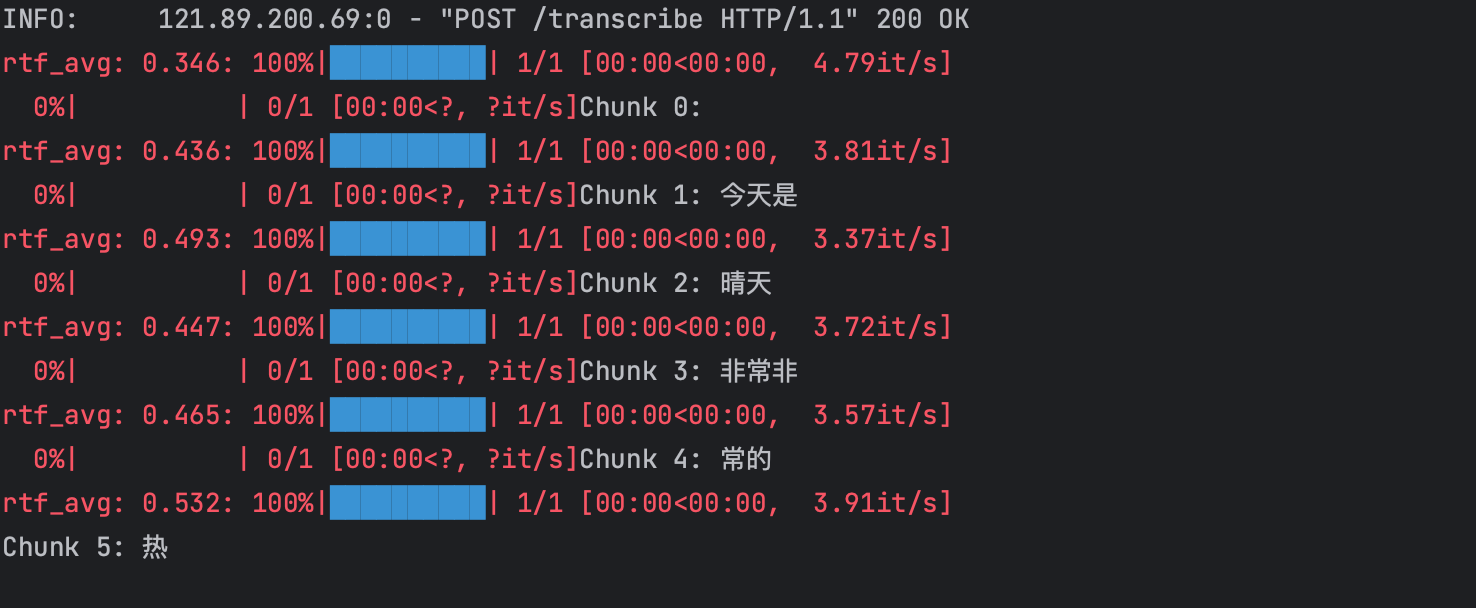

Agent 垂直技术社区,欢迎活跃、内容共建。
更多推荐

 5
5 0
0- 0


 已为社区贡献1条内容

所有评论(0)